

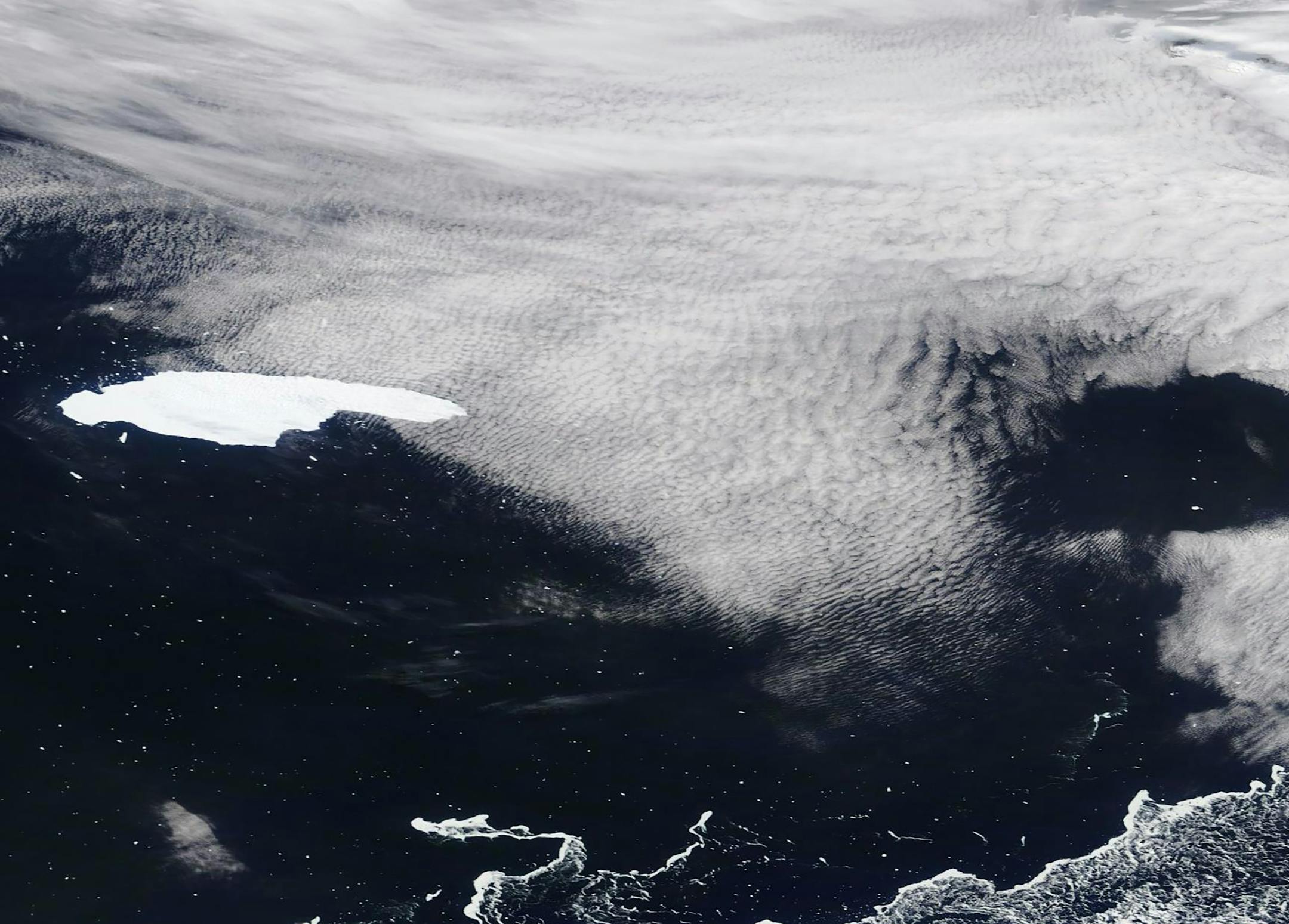
An iceberg about the size of Delaware that is headed toward the sub-Antarctic island of South Georgia has experts worried about the possibility of it blocking wildlife from food sources and threatening the island's ecosystem.
The iceberg, known as A68a, was about 250 miles from the coast of the British island territory of South Georgia as of Wednesday, the British Antarctic Survey said.
The iceberg may run aground near the island and be a few weeks out from the island's coast, said Andrew Fleming, a remote sensing manager with the survey.
The iceberg broke off from the Antarctic Peninsula in 2017 and is about 100 miles long and 30 miles wide. The trajectory of the iceberg could change and steer clear of the island, because it's in the strongest ocean current where waters are not impeded by continents. This means the iceberg could easily sail past the island, depending on the course nature takes.
It's unpredictable what could happen if the iceberg were to run aground near South Georgia, said M Jackson, a glaciologist and an explorer with the National Geographic Society. Such episodes are not unheard-of, but greater attention is usually given to them when they pose a threat to people and wildlife, she said.
There is a chance that if A68a does run aground, it could disrupt part of South Georgia's ecosystem, affecting some of the areas and paths that animals, such as seals and penguins, travel to hunt and gather food.
"Essentially, seals and penguins birth on land, then commute back and forth into the ocean to source and return with food to feed their young," Jackson said. "The iceberg might disrupt this, and seals and penguins might not be able to source and deliver food to their land-based pups and chicks, potentially triggering widespread starvation."
Douglas MacAyeal, a professor of geophysical sciences at the University of Chicago who has studied the patterns of large icebergs, compared A68a with another large iceberg, B-15A.


