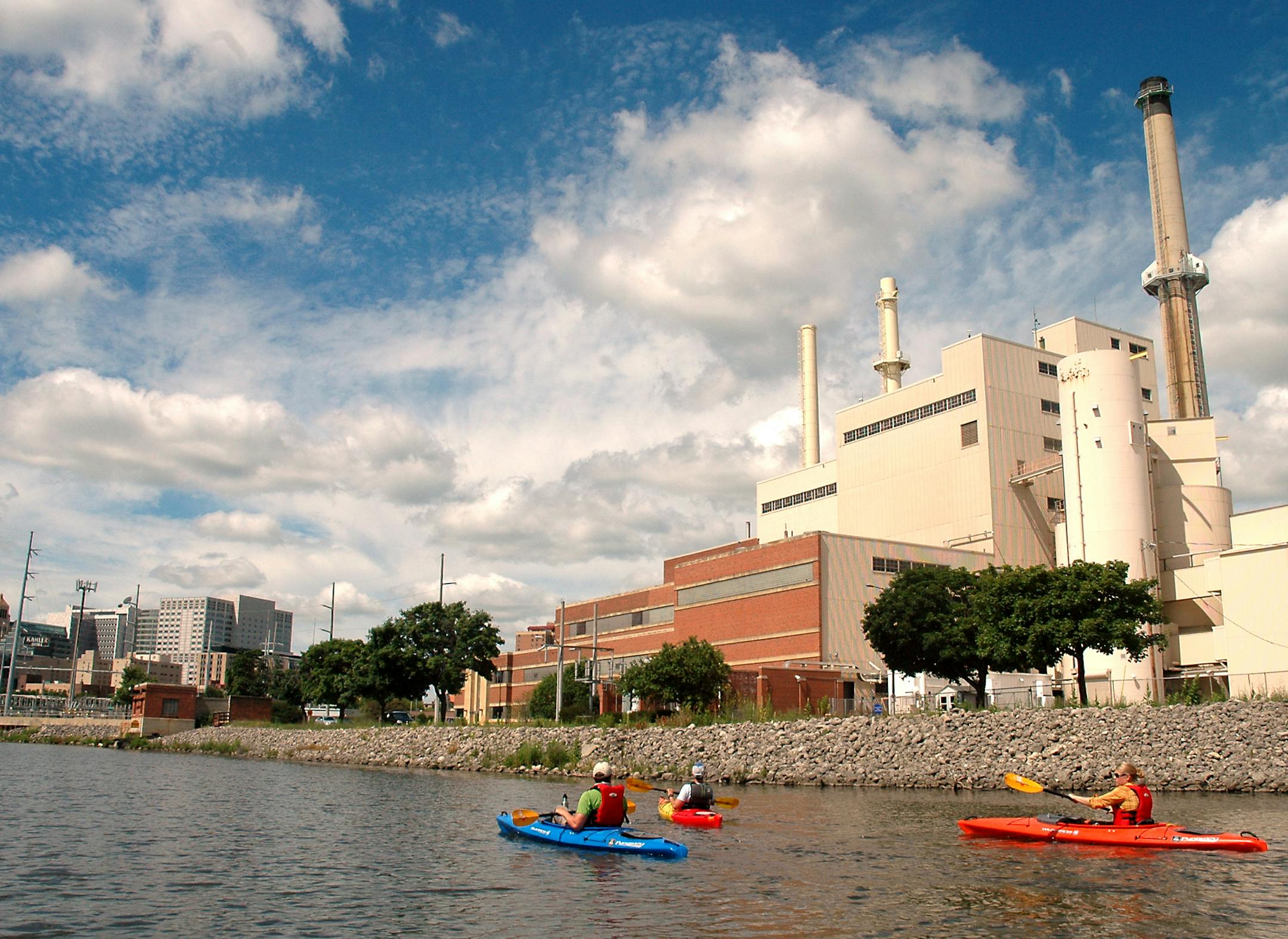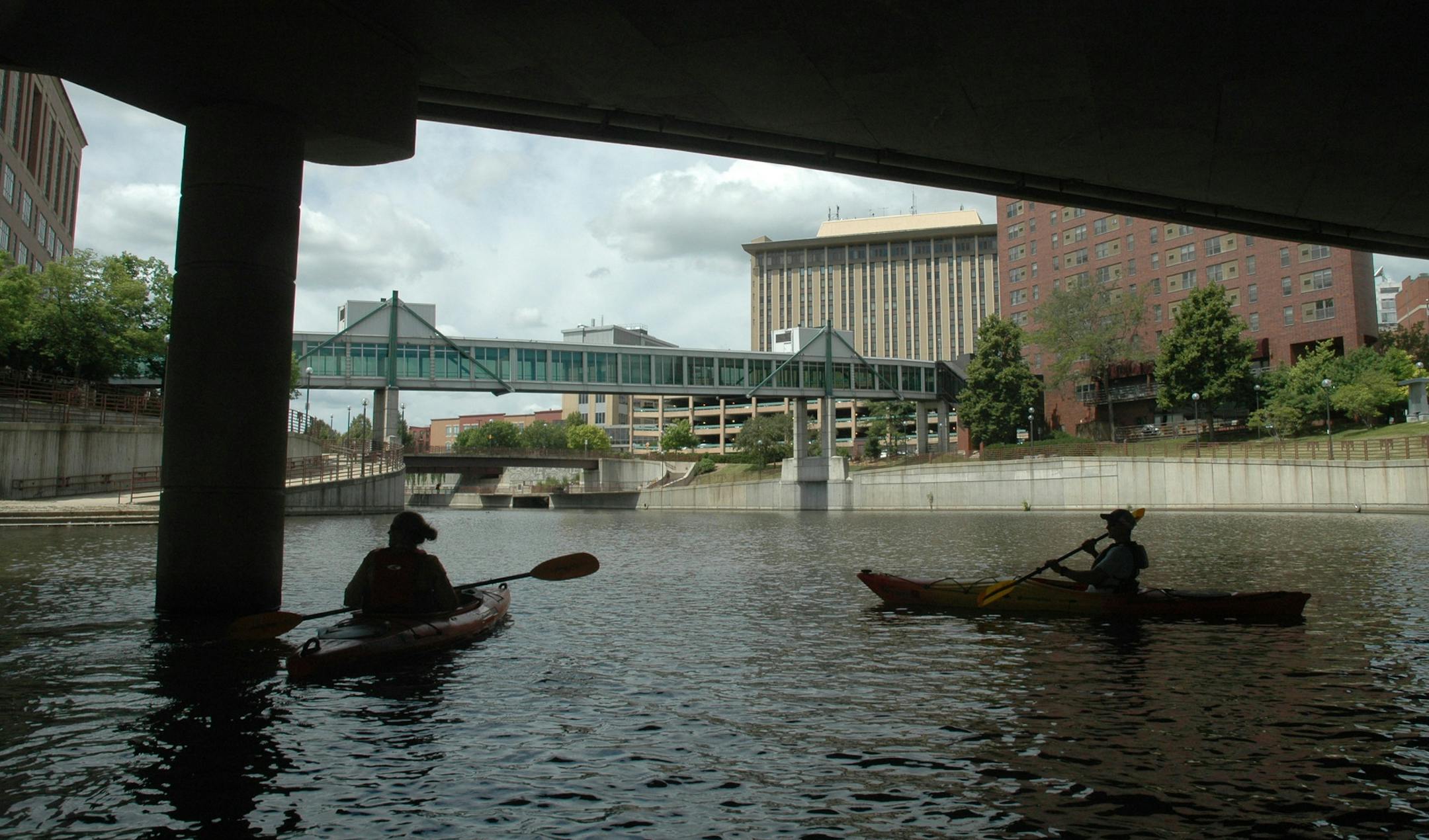
ROCHESTER – Geese paddling its surface, rapids riffling its length, the South Fork of the Zumbro River passes through the heart of downtown Rochester, a stone's throw from City Hall. Yet thanks to an engineering project meant to tame the flood-prone waters, it's difficult to think of this city as a river town.
High concrete barriers wall off large sections of the Zumbro to prevent flooding. At the bottom of those walls, the river meanders far below the sidewalks and street life above. Few of the buildings that sit along the river acknowledge its existence with decks or large windows that would afford a better view.
That could be changing, slowly, now that the city is engaged in a major economic redevelopment project known as Destination Medical Center (DMC), meant to secure the Mayo Clinic's place as a global leader in medicine, health care and research.
At least among river fans, there's hope that the billions of dollars invested in Rochester over the lifetime of the 20-year DMC project will amplify their calls for restoring the river's water quality and opening up new recreational uses for it.
Their hopes have been buoyed by projects that embrace the riverfront: A $200 million residential and retail tower proposed along one block would bring a water wall, a wading pool and possibly a canoe or kayak launch, according to its Abu Dhabi-based developer Bloom Holding.
A four-story, 29-unit residential project across the river from Mayo Park is under construction, with marketing materials trumpeting its views of the Zumbro. And the 12-year-old Rochester Art Center cantilevers over the river with floor-to-ceiling windows looking out at the water.
That's a change from the past, said Kevin Strauss, education coordinator for the Zumbro Watershed Partnership, a local nonprofit.
History of flooding
"For years the Zumbro was feared by the community," he said. Major floods in 1908 and 1942 put townspeople on notice that their city was flood-prone.