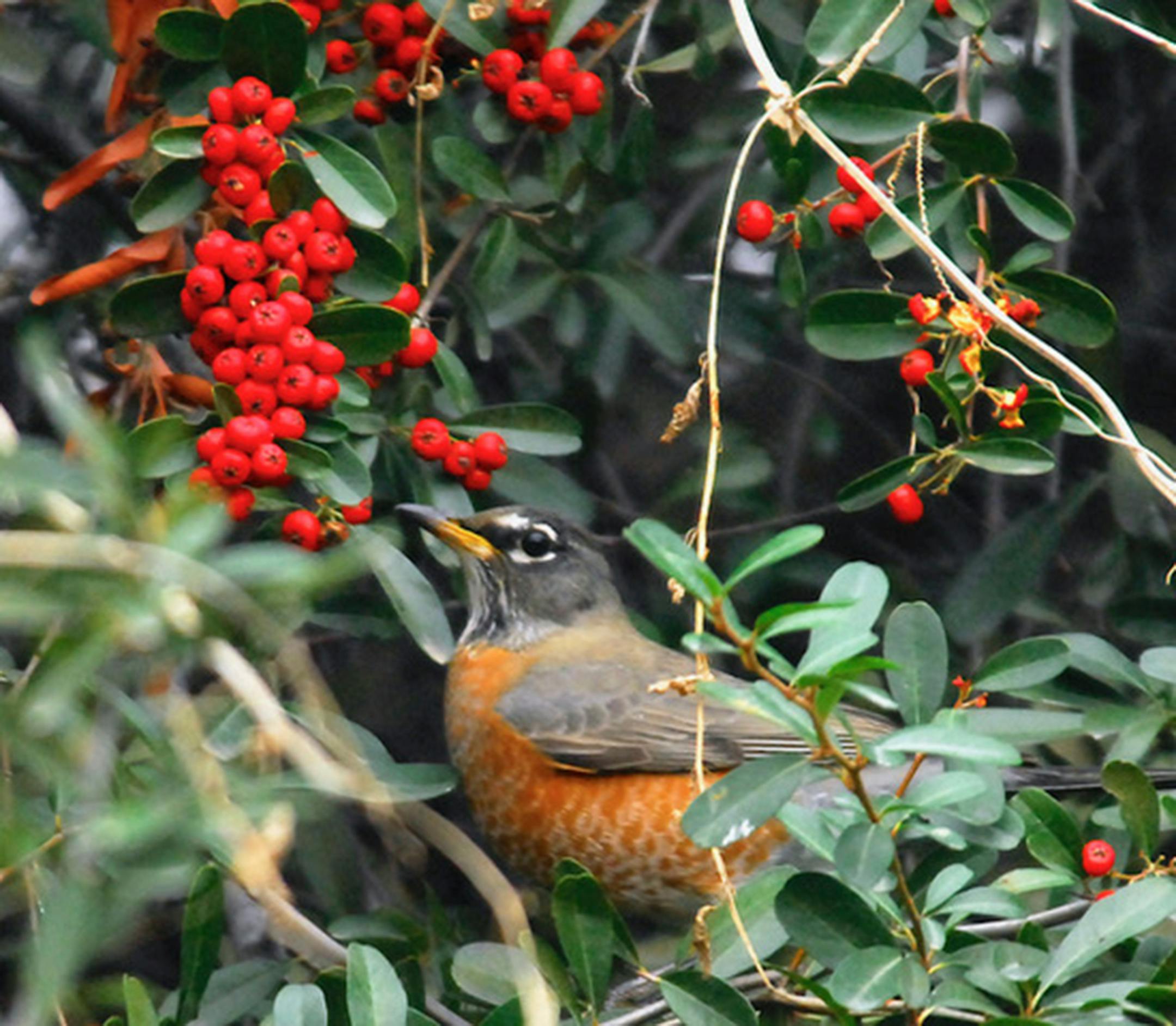
Q: I was watching robins in October and noticed that they seemed really aggressive, charging and chasing each other around my crabapple tree and at the birdbath. This seemed strange, with nesting season over months ago.
A: That's a good observation, and I turned to someone who really knows her robins, Laura Erickson, Duluth's premier observer of birds. Erickson noted that by October most young robins and females had migrated away, leaving adult males to spar over the ever- scarcer food resources. Also, they seem to be affected by autumn's shorter days, whose length is about as long as those in spring, which seems to inspire contention in robins. "The bossier robins might have an advantage in getting the best of what's left of the most popular fruits," Erickson said. In winter, robins enjoy the fruits of winterberry, hackberry and crabapple trees, and dogwood shrubs, among others.
Long-term view
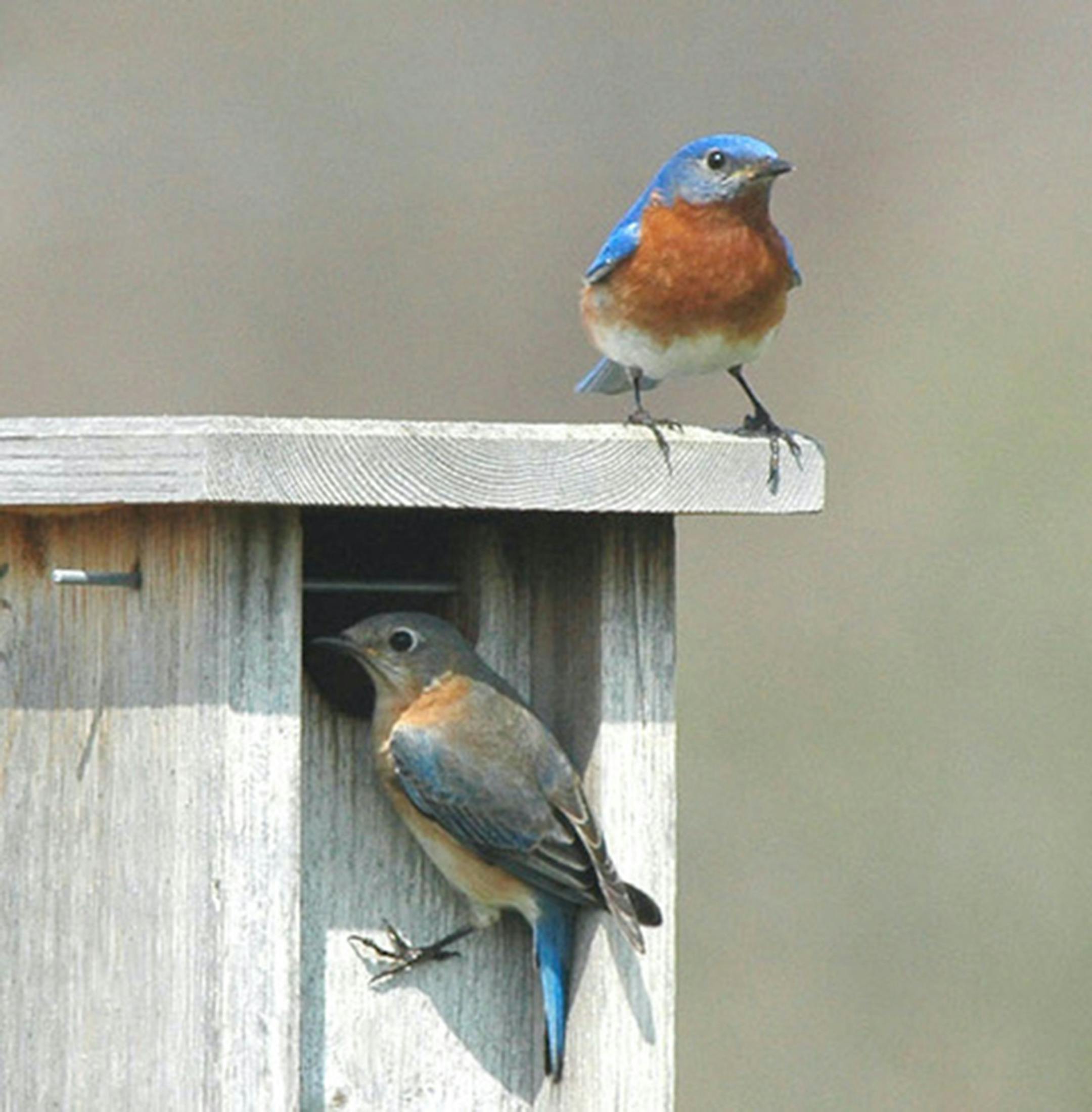
Q: I'm confused because today [late October] two bluebirds were hanging around my nest box and taking what looked like nesting material inside. Why are they doing this now; they can't be getting ready to lay eggs, could they?
A: A number of readers have noted bluebirds checking out nest boxes just before leaving on migration, seemingly to make note of where they might like to raise their young next spring. Your sharp eyes noticed something I hadn't heard of before, bluebirds bringing in the kind of material they use in spring to build their nest. I'd guess that this pair of bluebirds wanted to cement its claim for your nest box by tucking in some grass in the fall. Still, whichever pair of birds returns the soonest to that box next year will claim it. For cavity nesting birds like bluebirds, cavities are always in short supply and the competition for inside spaces can become fierce.
Bluebirds in the snow
Q: Bluebirds were still hanging around my deck even in that late-October snowstorm. I've never seen them here this late.
A: It is startling to see bluebirds in the snow, since they're a migratory species that we associate so strongly with summer. By the time of that snowstorm, many if not most bluebirds had left the state for winter homes south of here. But a few spend the entire winter in our area every year, subsisting on berries and other fruits and drinking wherever they find open water.
Turkeys everywhere
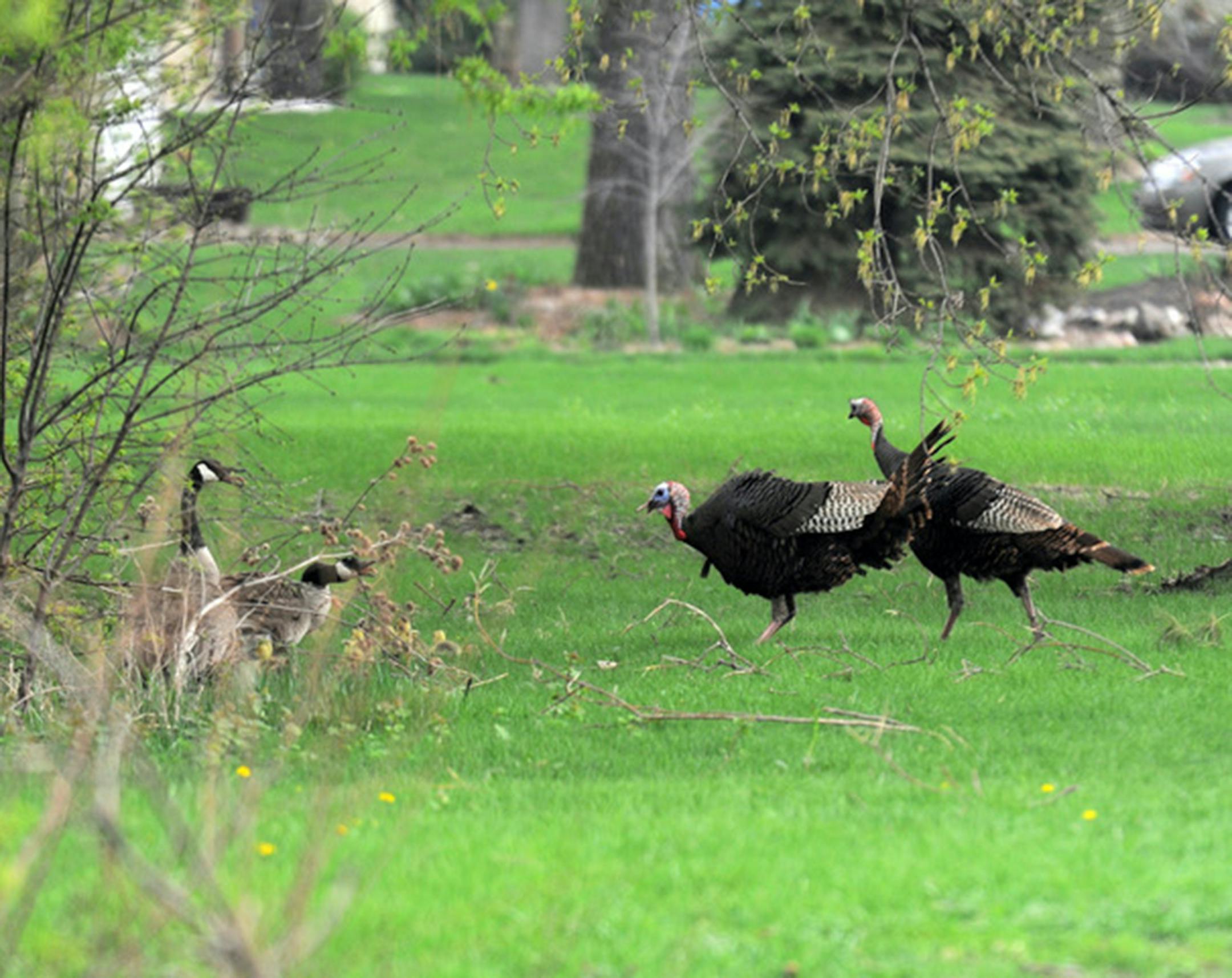
Q: My wife asked if I'd ever hunted wild turkey, but I stopped hunting in 1965 and there were no turkeys around at that time. Now they're everywhere and I'm curious about what happened.
A: You're exactly right, back when you quit hunting there were no longer any wild turkeys in Minnesota, due to deforestation and unregulated hunting. Beginning in the early 1970s, the Department of Natural Resources began releasing wild turkeys from Missouri in southeastern Minnesota. Since then the population has steadily grown to more than 70,000 birds across most of the state, a success rate the DNR calls "phenomenal."