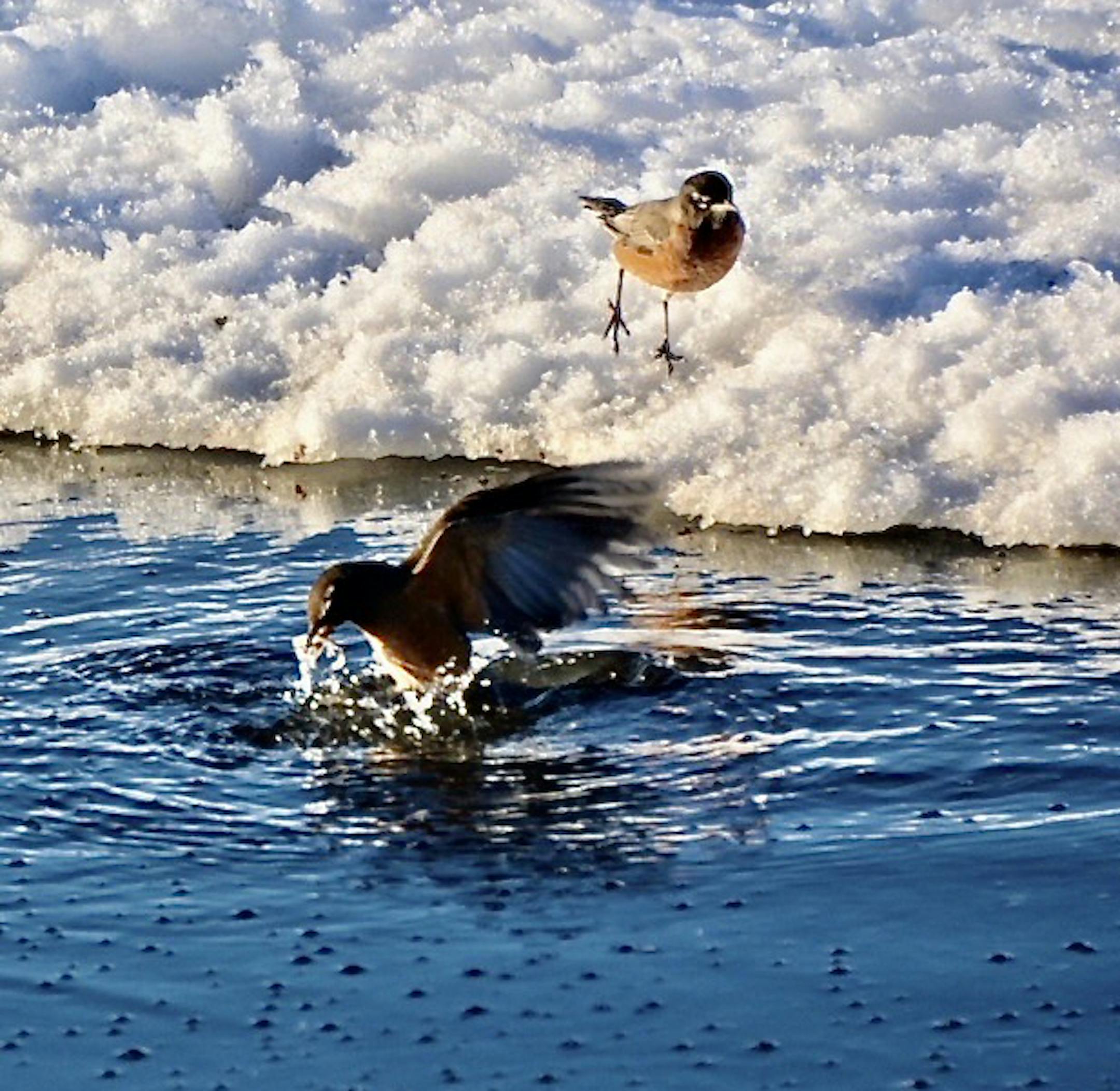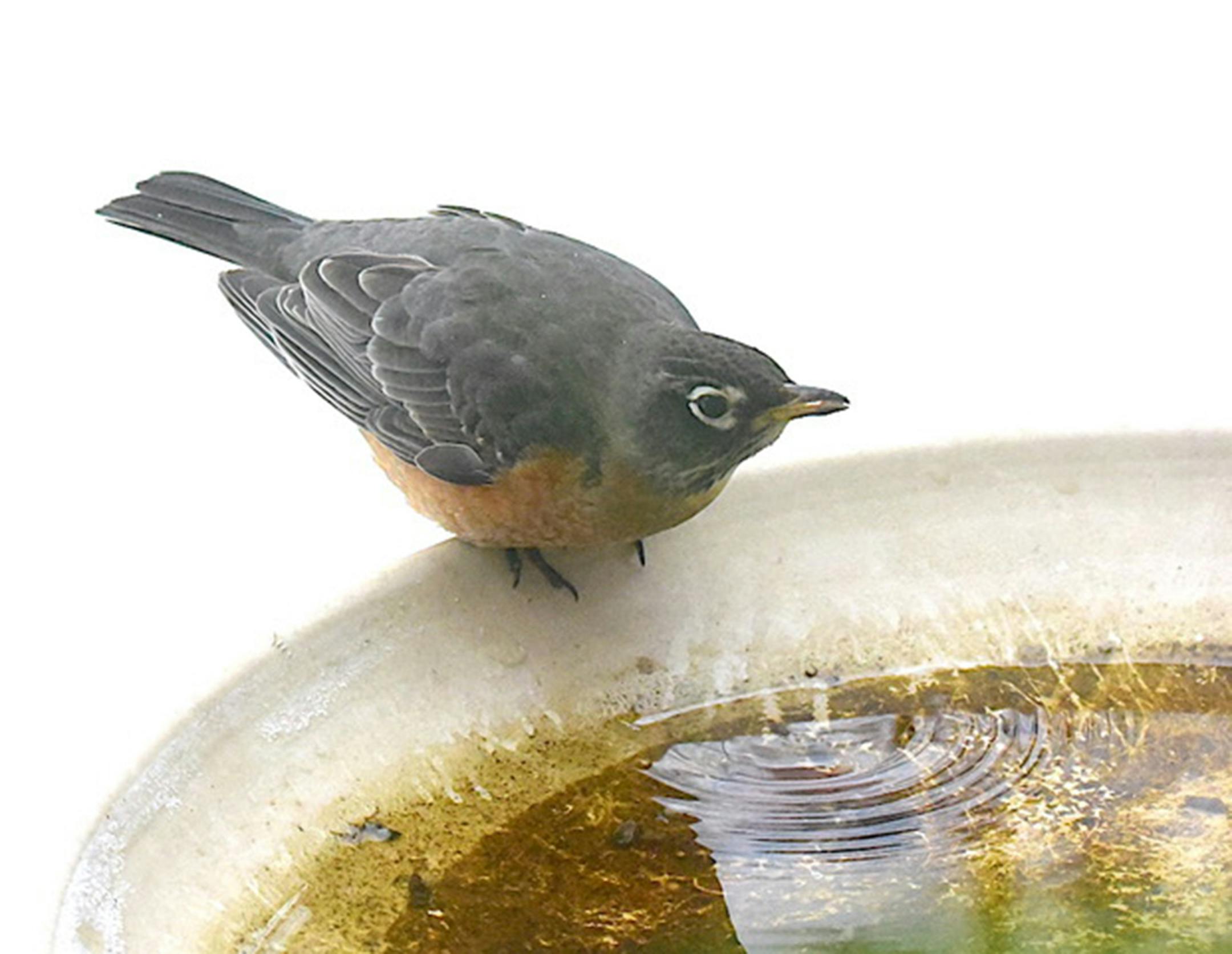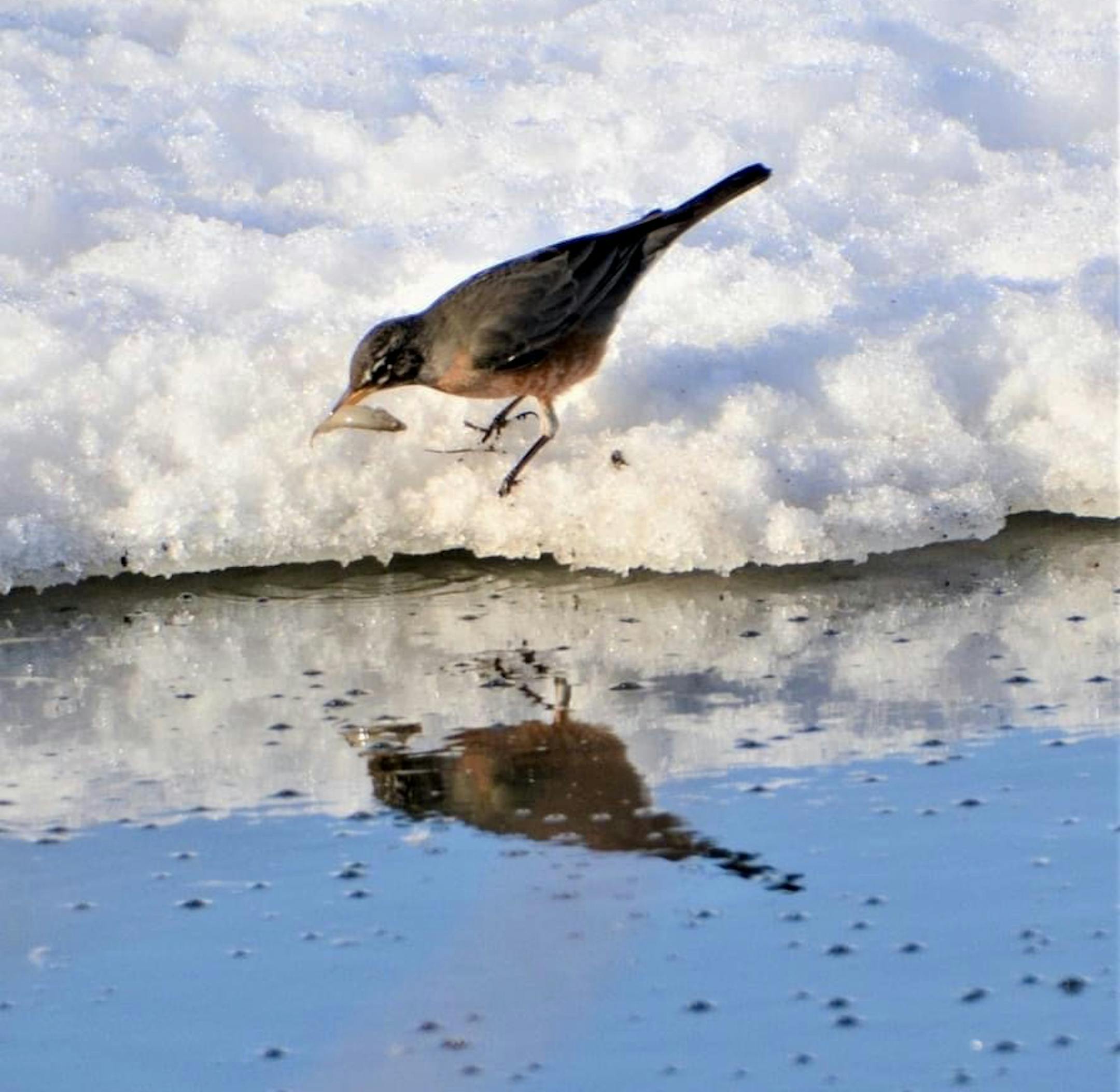
Q: I was visiting a local nature center to take photos when I came across an awesome event: A flock of 30 or more robins was fishing for minnows from the lakeshore. Some stood on the ice on shore and grabbed little fish while others flew over the open water and grabbed minnows on the wing. I didn't even know that they ate minnows; is this unusual?
A: I'd only ever heard of robins eating dead minnows discarded by bait shops, but the photos you sent clearly show robins snatching up fish from the water, so I turned to Duluth's Laura Erickson, who's studied robins for many years. "Yes, robins eat little fish and frogs along shorelines," she replied. "They spend a lot of time near water, and they notice movement on the shore and in the water. It's not that often that a school of minnows chances to congregate close to shore right when a group of robins is around, but if one robin noticed the fish, the others would certainly join in. Winter robins are extremely sociable [gathering in flocks] for an important reason — a flock can capitalize on what one of them notices, such as a tree filled with delectable fruit or a group of wiggly fish."
At this time of year food is becoming scarce in the natural world, making birds work harder to find enough food. Robins that have taught themselves to fish have found an excellent source of a high-protein snack.
Finches and grit
Q: I came across a group of goldfinches feeding on the ground in my local park. I thought they ate seeds so am wondering what they were eating along the path.
A: You're right, goldfinches do live on many kinds of seeds, from those produced by weeds to the bounty they find at our feeders. Because seeds often have a hard outer shell, seed-eaters need some help — they search out grit on the sides of paths and roads to help their gizzards grind down the shells.
Messy robins
Q: A flock of robins descended on my heated birdbath recently, and left quite a lot of poop behind. It's unusual in its shape and the orange color, not the usual that I'm used to, and I'm wondering whether the robins are sick.
A: Let's face it, robins can create a big mess. I see the same thing around my heated birdbath after robins have visited, but I don't think it's a cause for concern. Robin poop looks different in winter because their diet is different: They switch from worms to fruit, since this is what's available around here in the cold months, surviving on crabapples, hackberry berries, mountain ash berries, juniper berries, even buckthorn fruits. Their poop change goes along with the dietary change.
Winter doves
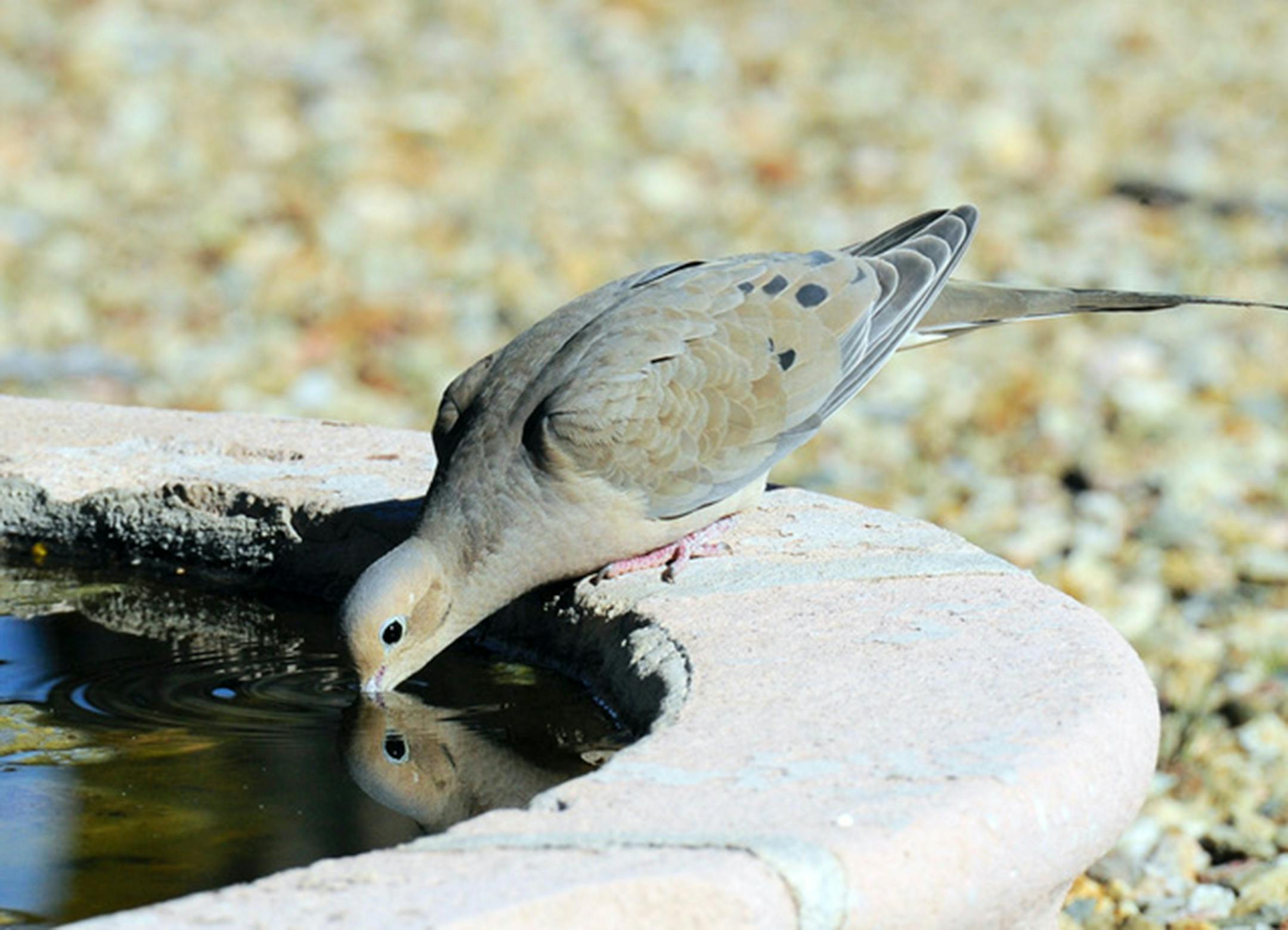
Q: I always look forward to the return of mourning doves in the spring because their soft calls remind me that summer is right around the corner. But this year we've had a pair of doves scrounging around under the feeders all winter. Have mourning doves stopped migrating?