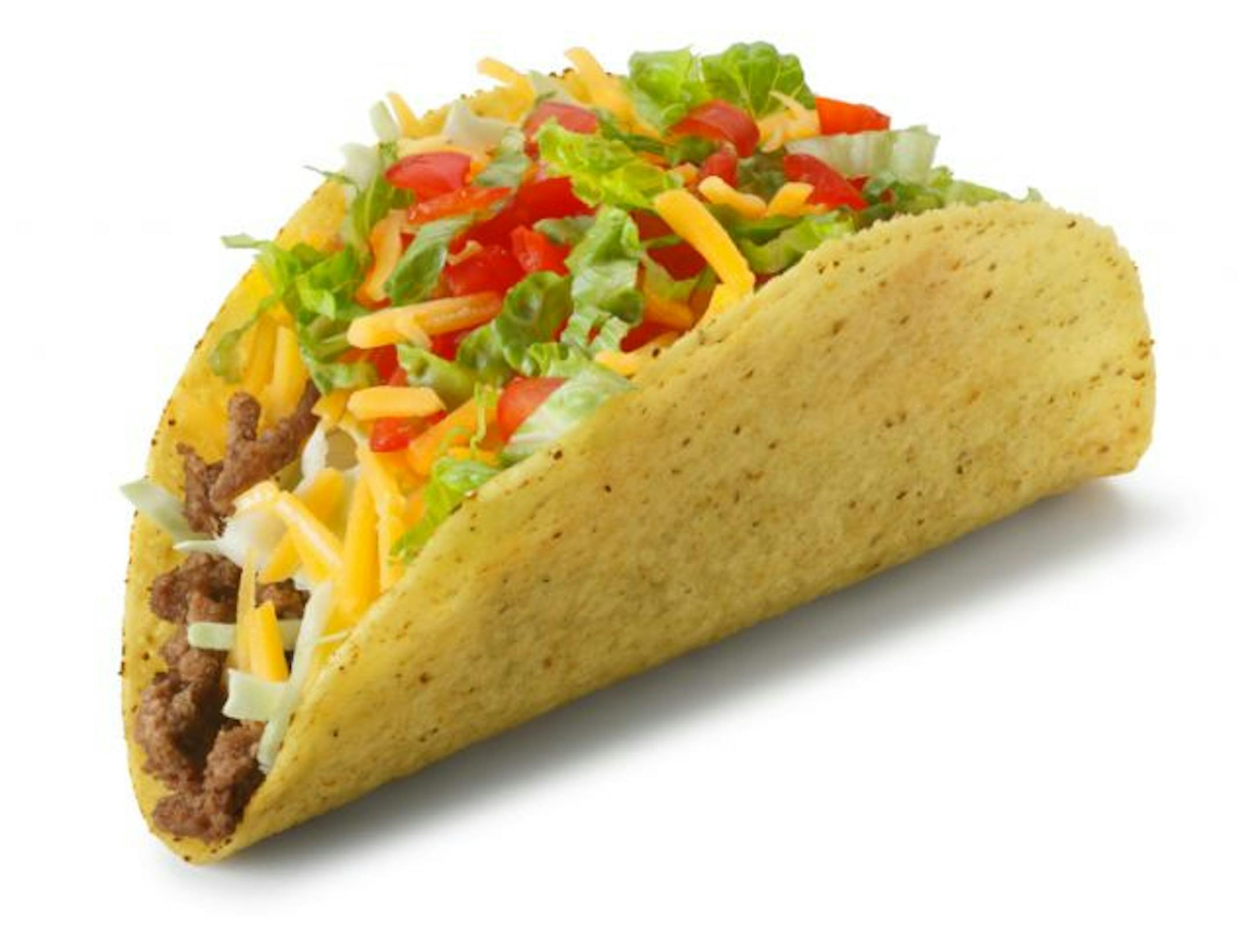
You can find tacos in outer Mongolia, Amsterdam, Addis Ababa and Australia -- even in outer space (the latter thanks to NASA). They have, in fact, become as ever present as the hamburger.
And that's the rub. They no longer seem Mexican, but American, says Jeffrey Pilcher, a University of Minnesota history professor who will give a talk about "Planet Taco" on Tuesday.
Indeed, the taco revolution spread globally -- and extraterrestrially -- via entrepreneurial Americans and U.S. companies, not Mexicans. That might explain why, in part, the rest of the world looks at that overstuffed hard-shell taco spilling over with lettuce, tomato and Cheddar cheese and thinks "American."
(Not so incidentally, Mexicans migrate almost entirely to the United States, Pilcher noted. If Americans hadn't traveled with their tacos, he says he would be offering a very different history lesson.)
Fifty years ago, Mexican food could be found only in Mexico, California or the Southwest, including small roadside stands where tacos were sold. Los Angeles phone books from 1950 reflect the abundance of these taco spots. These were the very early days of food franchises. (Ray Kroc started the McDonald's chain in 1954.) Glen Bell, the founder of Taco Bell and a fellow Californian, had an idea. Today we think of tacos as the lowest common denominator of Mexican food -- well, maybe that would, or should, be nachos -- but he was cutting-edge at a time when the rest of America was dining on tuna casserole, mac-and-cheese and cream of tomato soup.
Today foodies may sniff their noses and think "Taco Bell ruined Mexican food," but, Pilcher says, the chain simply franchised it. As for all those arched eyebrows and comments that Tex-Mex isn't real Mexican, well, the taco shell came out of the Mexican community -- the original taco machine was patented by a Mexican -- and it was adapted to local foods in the United States, as so often happens when immigrants meet the hard realities of the American supermarket.
That meant iceberg lettuce and Cheddar cheese because they were readily available.
At this point the story diverges. California surfers and counterculture figures spread the taste of tacos throughout the world as they traveled, often in need of work. And they did what immigrants often do when they land in another country: open a restaurant.