

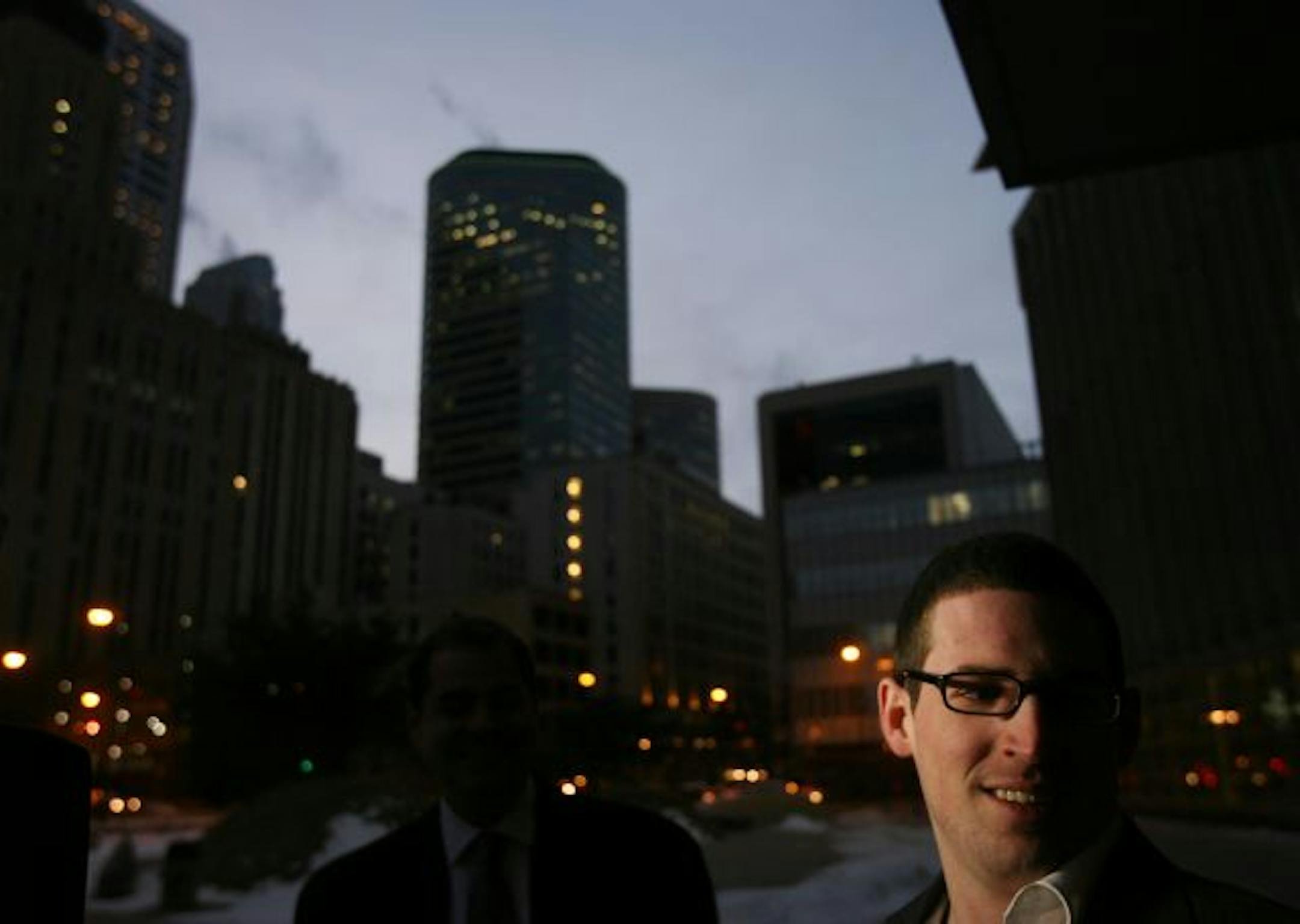
The Texas man accused of making Molotov cocktails during last summer's Republican National Convention stepped out of the federal courthouse in Minneapolis on Monday a free man -- for a while, at least. A jury of eight women and three men told the judge that they had no hope of reaching a verdict, prompting a mistrial.
U.S. Chief Judge Michael Davis set March 16 as a new trial date for David Guy McKay, 22, of Austin. McKay, who has been in jail since his arrest Sept. 3, said the jury's action -- and his subsequent release on a $25,000 bond -- felt "surreal."
"I'm just glad to go home with my dad," McKay said as he walked into the courthouse lobby. "I still have to go home and prepare to defend myself again. That's what's on my mind right now."
That, and a good dinner. McKay said he was anxious for a meal and to feel the outside air -- even if that meant stepping into a frigid Minnesota February evening. McKay can return to Texas with his father under conditions of his release.
McKay and another Austin man, 23-year-old Bradley Crowder, were arrested after police, working on a tip from someone inside their inner circle, searched an apartment building where they were staying and found eight Molotov cocktails. Crowder pleaded guilty Jan. 8 to manufacturing and possessing the explosives. Investigators said the men planned to use them to set parked police cars on fire. The bombs were never used. McKay faces up to 10 years in prison if he is convicted.
But McKay, who admitted to making the explosives in an interview with the FBI and in a letter to the judge, insisted at trial that it was the FBI's informant, Brandon Darby, who coaxed him into the deed. McKay and his attorney, Jeff DeGree, said an overzealous Darby entrapped McKay. In fact, McKay said, it was Darby who first brought up the idea the night before the convention started.
Almost from the start of deliberations, it appears that at least one juror gave entrapment a lot of thought.
The trial went to the jury late Thursday afternoon last week. By Friday morning, the jury was sending questions to Davis, asking for the definitions of "induce" and "persuade" and asking if it was possible if merely mentioning Molotov cocktails to someone was the same as inducing someone. The judge declined to give definitions to the jury.


