

There's hardly an American city that's not in the midst of recovering its industrial waterfront. San Francisco and Seattle have gone so far as to demolish freeways to open their historic harbors to downtown.
Cities without waterfronts are manufacturing them. Dallas intends to remake the Trinity River, now barely a trickle, into a series of lakes and lush parks.
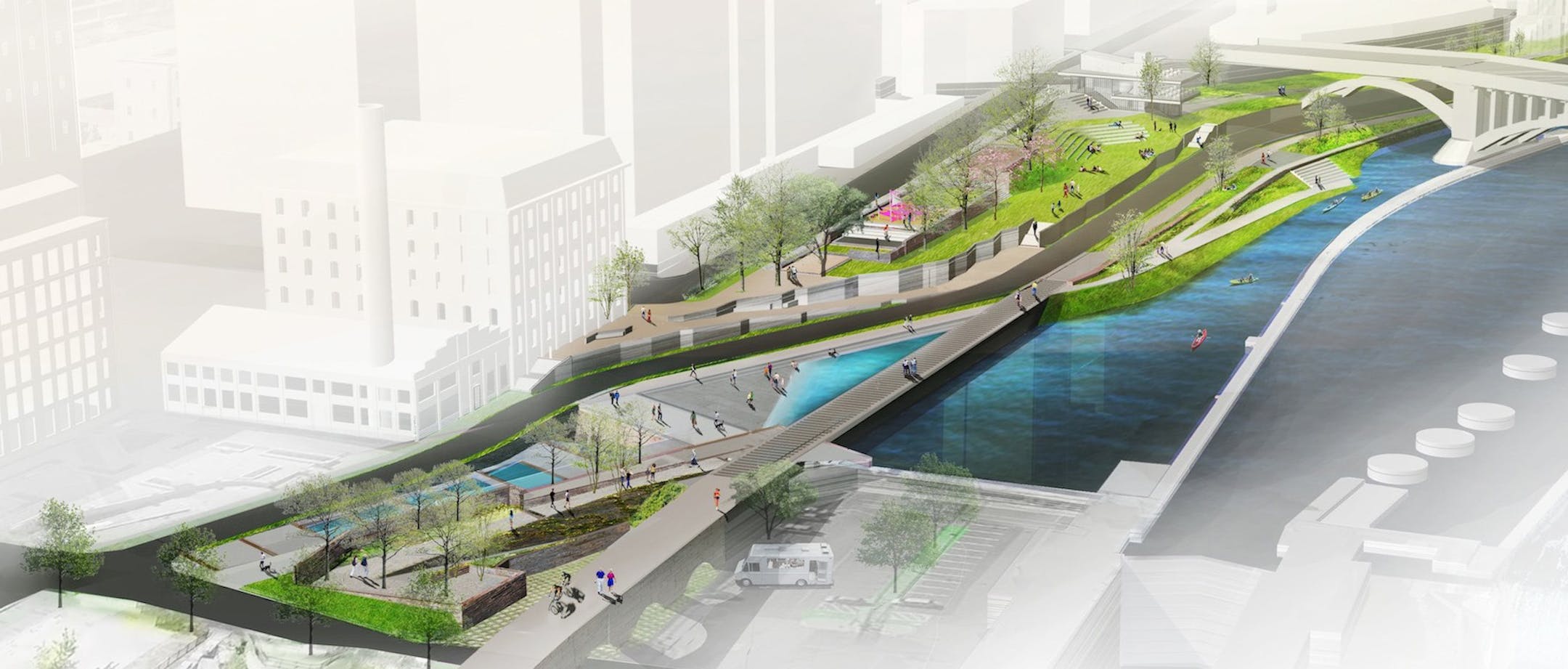
For 40 years, Minneapolis and St. Paul have been gradually pivoting to face the Mississippi River. The latest piece of the Minneapolis riverfront revival, Water Works Park, is up for citizen and Park Board review, starting Nov. 19. It's among the last undeveloped links in a 4-mile loop of parklands that encircles historic St. Anthony Falls between the Stone Arch and Plymouth Avenue bridges to form a kind of downtown lakeshore.
Water Works is a small gap, running just three blocks along the river's west side from Portland Avenue to 3rd Avenue S. The soon-to-be-demolished Fuji Ya restaurant building, the ruins of the old Columbia mill and a grove of tall cottonwood trees now mark the site. But in the 19th century, this was the city's first intake sluice that drew water from the river for drinking, extinguishing fires and powering dozens of adjacent flour mills.
Aside from celebrating that history, the park aims to restore the riverbank's natural ecosystem, untangle its many converging pathways for pedestrians, bikes and autos, and become an active, festive attraction for visitors.
The $24 million project would go up in two phases. Plans call for a pavilion with a cafe and a terrace overlooking the river, plus an elevator to carry visitors down a steep embankment to the river's edge. Other park features include activity "rooms" amid the ruins, an interactive "skim pool" fountain similar in concept to the popular Crown Fountain in Chicago's Millennium Park and an extension of the Stone Arch Bridge that would alleviate transport confusion at the foot of Portland.
An amphitheater, picnic grounds, tot lot, playing field and boat dock are also part of the plan. In addition, a new trail for pedestrians and bikes would connect the park to the booming district near the Guthrie Theater and the new Vikings stadium.
The privately led Minneapolis Parks Foundation and its partners have done a stellar job guiding the design process and demonstrating the importance of public-private collaboration in meeting the huge demand for adding and refining green space in the city. It's a task that the Park Board cannot accomplish alone. It needs partners and private fundraising, especially to landscape downtown streets and to complete ambitious plans on the upper river.


