

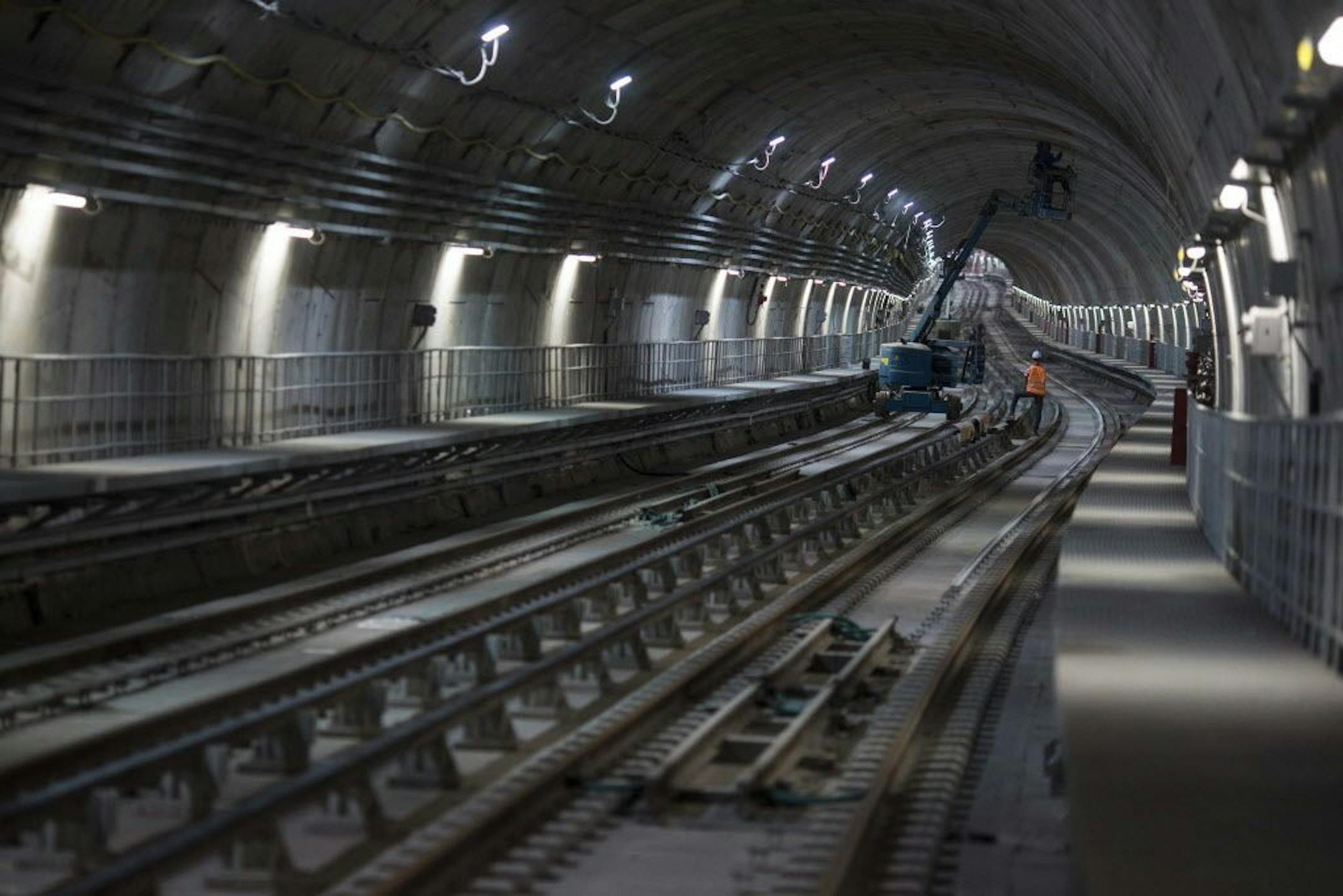
RIO DE JANEIRO — Two construction workers chatted while applying white grout to the walls of a new subway tunnel one recent day, their voices and the smells of the building materials stark reminders of what was missing: passengers and trains.
Seven weeks before the Summer Olympic Games commence, a subway expansion that was supposed to transport hundreds of thousands of athletes and fans is not done. While Brazilian officials insist it can still be finished in time, frequent delays, skyrocketing costs, a financing snag and potential legal wrangling have created doubts.
Even if Rio de Janeiro completes the key part of the expansion in time, transportation experts worry it may be too late to adequately test the system before the Aug. 5 Olympics opening ceremony. The launch date has been repeatedly pushed back, with officials now saying they'll cut the ribbon four days before competition begins.
"They are leaving so little time to try this massive system," said Jose Manoel Ferreira Goncalves, president of FerroFrente, an organization of railway experts. "What guarantee do we have that such a sensitive and complicated project is in order?"
"Every hour counts," Rodrigo Vieira, Rio de Janeiro's transportation head, told The Associated Press, insisting the job would be finished. "We are working around the clock, 24/7 with 1,000 workers in each station."
Line 4 of the subway system was to be Rio's most important Olympic infrastructure project. It was designed to transport passengers from world-famous Ipanema beach to the modern suburb of Barra da Tijuca, home of the Olympic Park and Village, in less than 15 minutes, as well as to most venues where athletes will compete.
In contrast, the drive along the highway through lush mountains and shantytowns takes more than an hour on a good day, raising the specter of a logistics nightmare if the line isn't built and hundreds of thousands of visitors have to take buses or cars on already-clogged roads.
When Brazil won its bid back in 2009 to hold the Olympics in Rio de Janeiro, its economic fortunes were far different. The discoveries of rich, offshore oil fields in 2007 made major infrastructure projects like Line 4 seem possible back then.


