

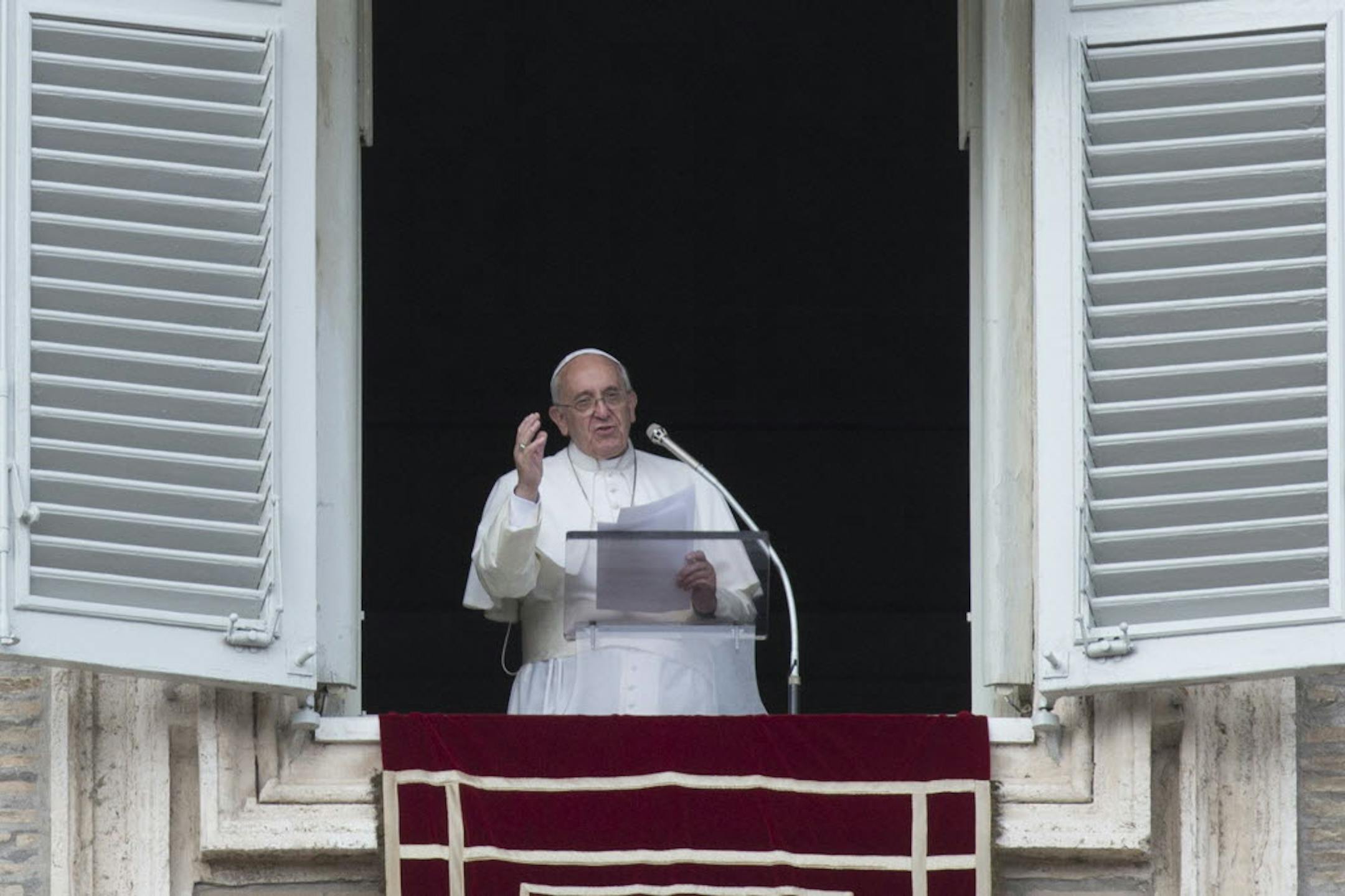
SMYRNA, Ga. – When Pope Francis was elected in March, Bridget Kurt received a small prayer card with his picture at her church and put it up on her refrigerator at home, next to pictures of her friends and her favorite saints.
She is a regular attender of mass, a longtime stalwart in her church's anti-abortion movement and a believer that all the Catholic Church's doctrines are true and beautiful. She loved the past two popes, and keeps a scrapbook with memorabilia from her road trip to Denver in 1993 to see Pope John Paul II at World Youth Day.
But Kurt recently took the Pope Francis prayer card down and threw it away.
"It seems he's focusing on bringing back the left that's fallen away, but what about the conservatives?" said Kurt, a hospice community educator. "Even when it was discouraging working in pro-life, you always felt like Mother Teresa was on your side and the popes were encouraging you. Now I feel kind of thrown under the bus."
In the eight months since he became pope, Francis has won affection for his humble mien and common touch. His approval numbers are skyrocketing. Even atheists are applauding.
But not everyone is so enchanted. Some in the church's conservative wing in the United States say that Francis has left them feeling abandoned and deeply unsettled. On the Internet and in conversations among themselves, they despair that after 35 years in which the previous popes, John Paul II and Benedict XVI, drew clear boundaries between right and wrong, Francis is muddying Catholic doctrine in order to appeal to the broadest possible audience.
They were particularly alarmed when he told a prominent Italian atheist in an interview published in October that "everyone has his own idea of good and evil" and so everyone should "follow the good and fight evil as he conceives them" — a remark that many conservatives interpreted as appearing to condone relativism. He called proselytizing "solemn nonsense."
They were stunned when they saw that Francis said in that interview, "the most serious of the evils" today are "youth unemployment and the loneliness of the old." It compounded the chagrin when he said in an earlier interview that he had intentionally "not spoken much" about abortion, gay marriage and contraception because the church cannot be "obsessed with the transmission of a disjointed multitude of doctrines."


