If the Anoka-Hennepin school board thought that its proposal to scrap the district's embattled ban on staff members expressing opinions about sexual orientation might ease controversy related to GLBT students, it learned otherwise Monday night.
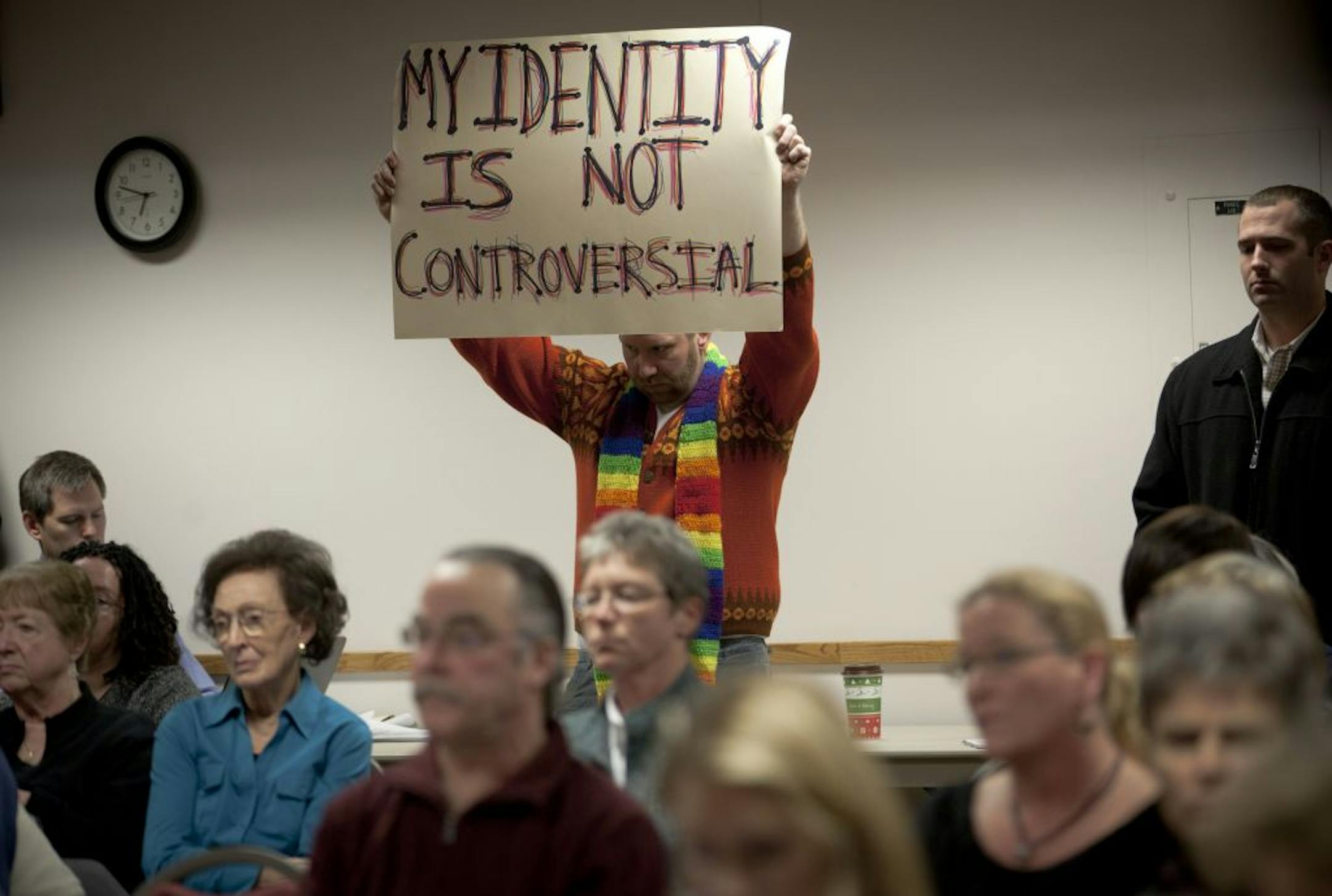
About 60 people attended the first of two listening sessions before the board votes on the new policy. Blaine High School English teacher Kendrick Davies stood in the back of the crowded Coon Rapids hearing room wearing a rainbow scarf and holding a sign that read, "My identity is not controversial."
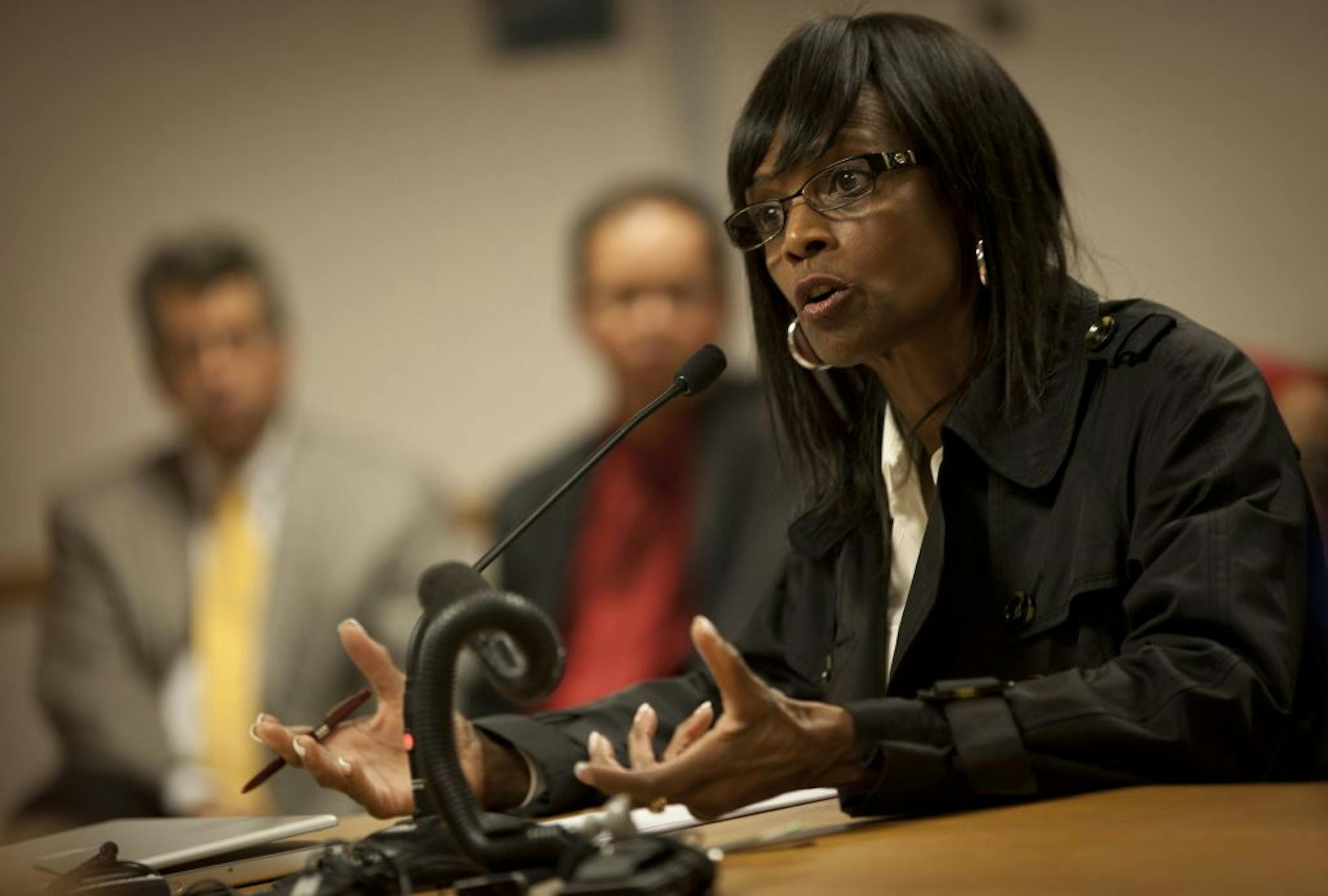
Some speakers warned against the proposed policy, which would allow broader discussion of "controversial issues." Community member Barb Anderson predicted that the new plan would result in "more homosexual propaganda flooding the classroom."
And some teachers said changing the "neutrality policy" still won't clear up the confusion they face about what is and isn't OK to talk with students about.
After months of debate over the policy, which some say has contributed to a climate of fear and bullying for gay, lesbian, bisexual and transgender (GLBT) students, the district announced last week that it was considering replacing it. It wants to trade that policy -- formally known as the Sexual Orientation Curriculum Policy -- along with another one dealing with religious expression for a broader one it calls the Controversial Topics Curriculum Policy.
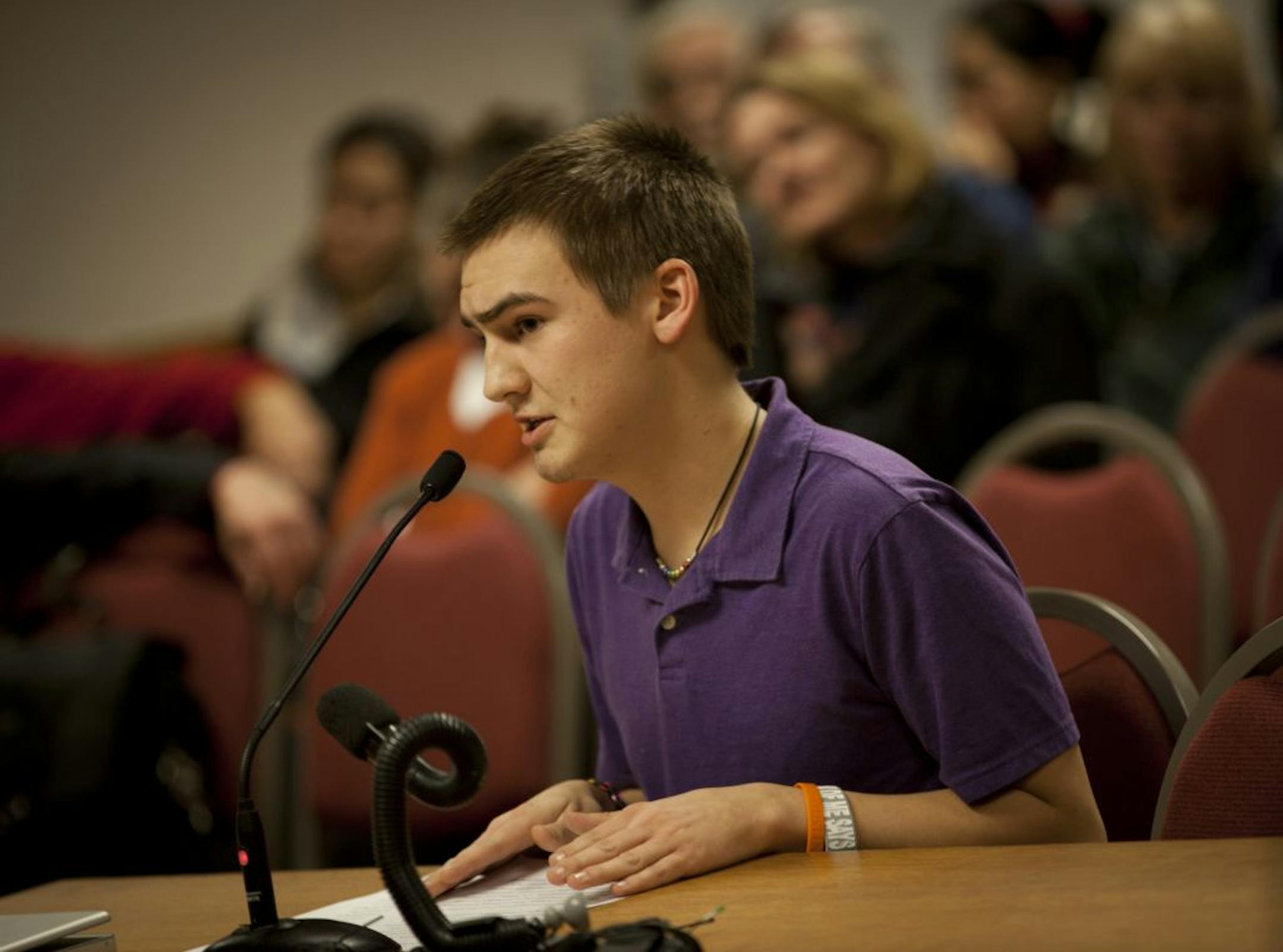
At the end of the hearing, at which 17 people spoke, Board Member Scott Wenzel took note of the depth of the criticism directed at the board.
"We've heard from both sides tonight," he said. "There's unhappiness on both sides. Maybe we're closer to compromise now. ... We're moving toward something that can ... clear up some confusion and create a safer school district for our students."
The new policy would declare that the study of controversial topics is something that helps students develop but require that such discussions take place "in an atmosphere free of bias and prejudice" and ask teachers and staffers not to "advocate personal beliefs of opinions regarding controversial topics in the course of their professional duties." The board crafted it over the past few months in executive sessions with attorney Paul Cady.