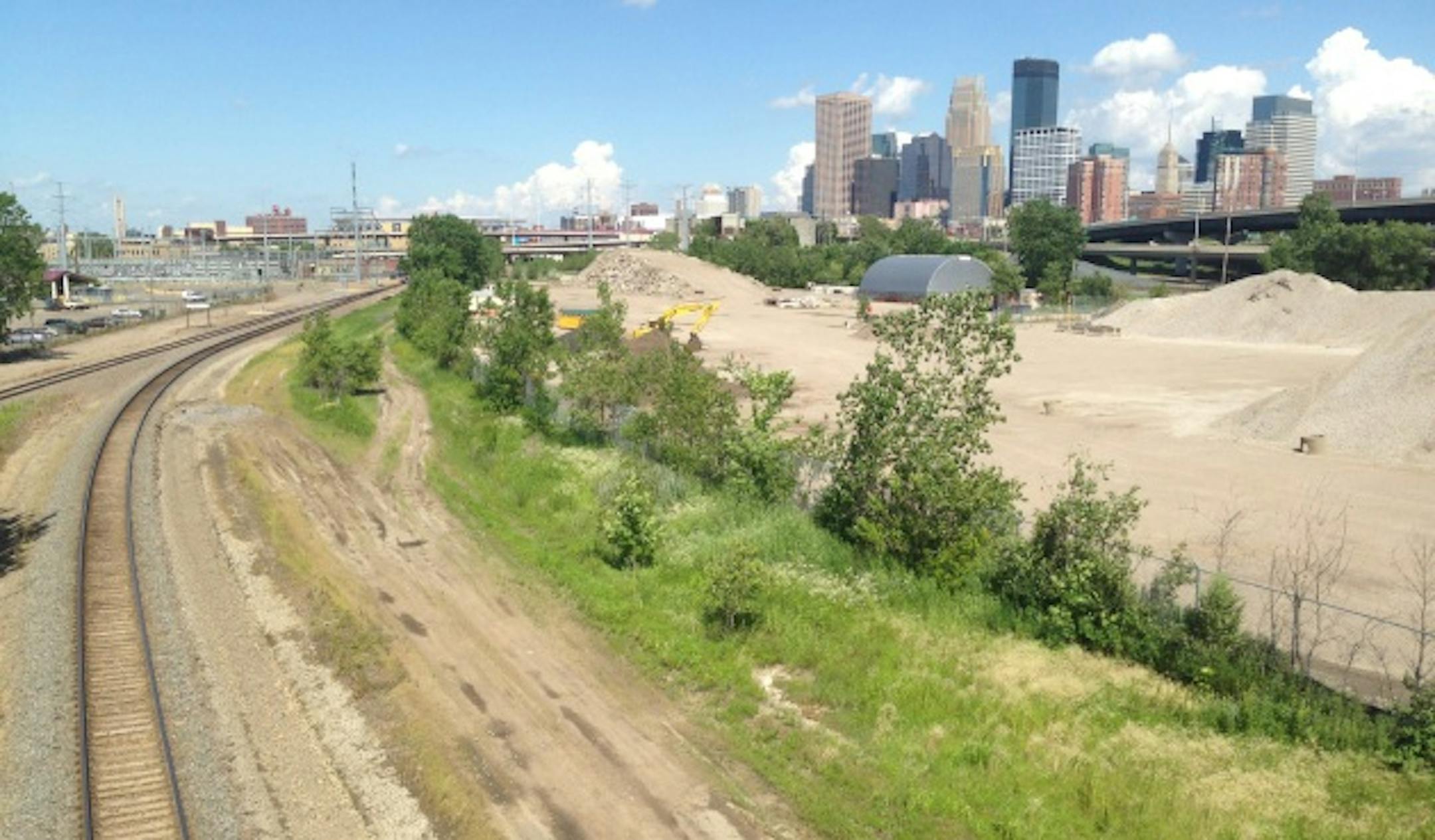
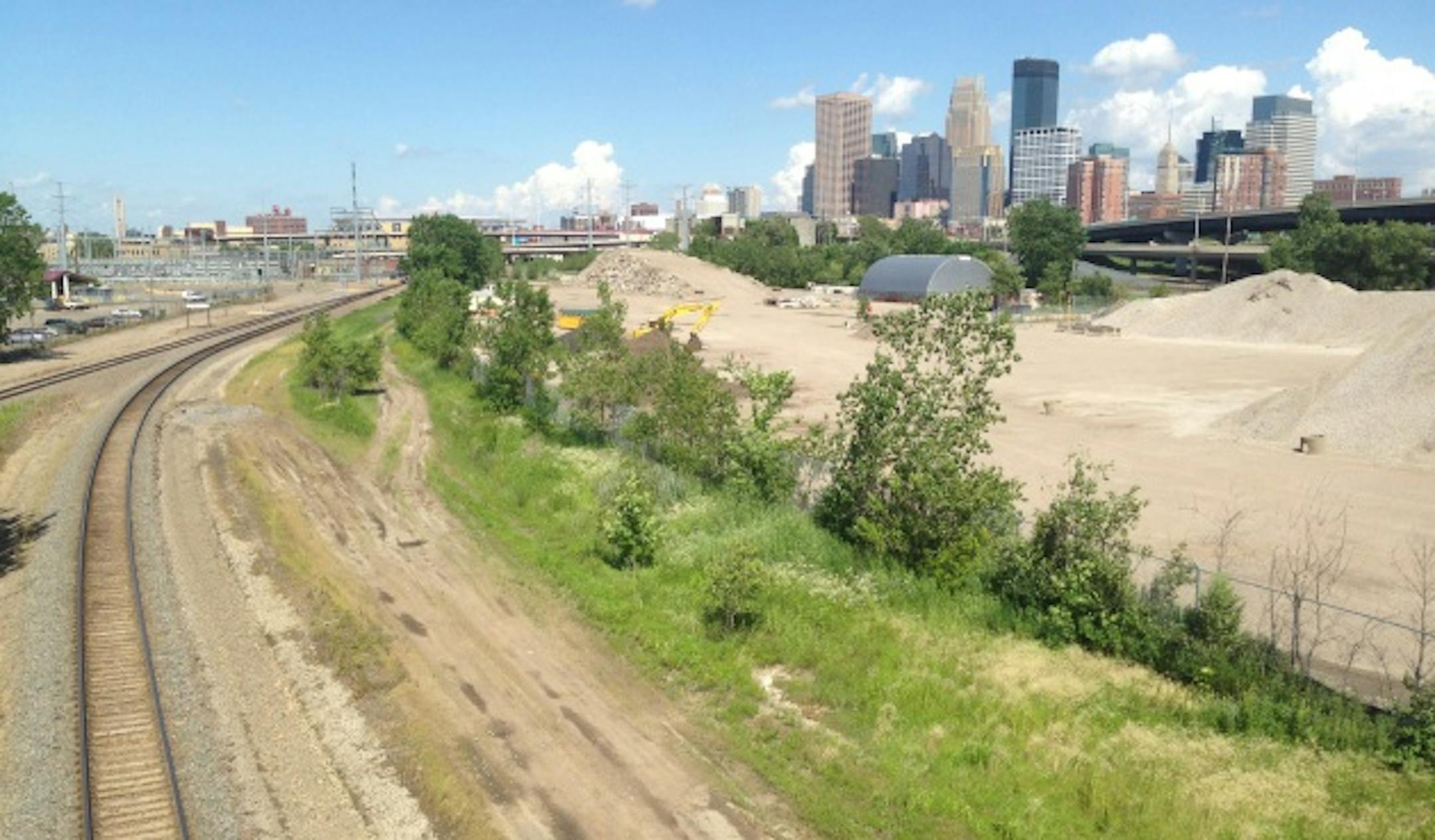
Above: The view of Linden Yards East, a public works storage facility, and downtown from the Van White stop.
How many people will board the five proposed Southwest light rail stops outside of downtown in Minneapolis? Depends on how optimistic you are about transit-oriented development.
Take the two stops closest to downtown, Royalston and Van White, where the Metropolitan Council has said that 2030 average weekday ridership will be just 273 and 310, respectively.
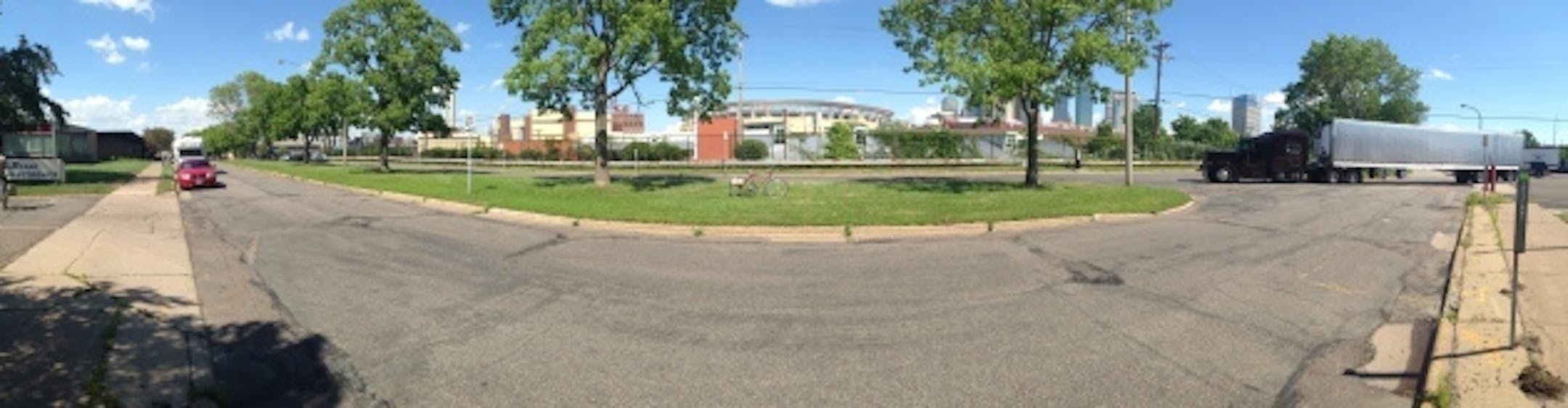
Those are very low numbers, reflecting the fact that those stops are currently hard to access and surrounded by little more than industrial land. Despite that, developers have expressed interest in transforming the areas with new housing and offices.
"Other than the 21st Street station, we expect some level of development at each of the Minneapolis stations," city spokesman Casper Hill said a statement, cautioning it will be less than what's anticipated along Central Corridor.
But under guidance from the Federal Transit Administration, forecasters focus on the current population and employment data rather than development goals, said Mark Filipi, who oversees forecasting for the Met Council. That's because the FTA has been burned in the past by overzealous development projections in the 1960s and 1970s.
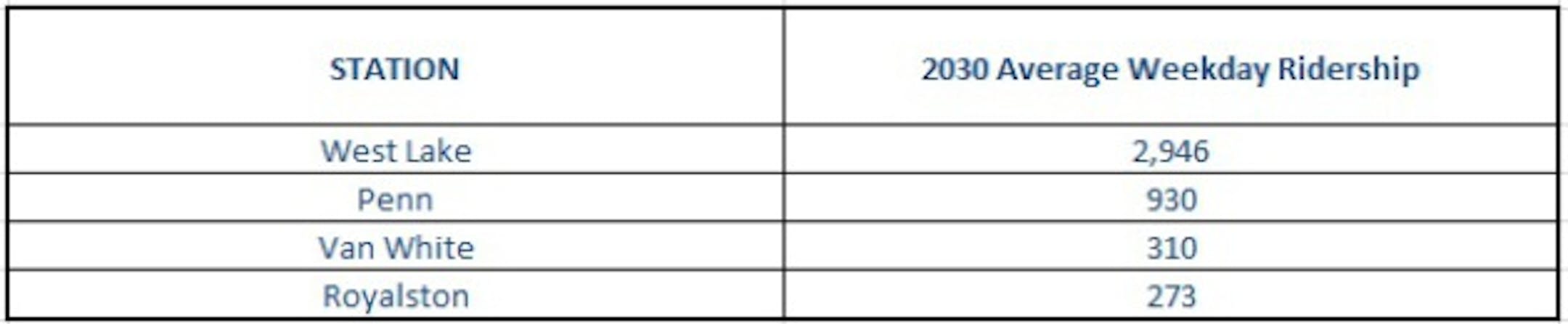
Above: The Metropolitan Council's ridership forecasts, excluding the 21st Street station.
"They're saying you have to be able to justify the use of the line, the ridership, based on just the normal growth you would anticipate before we'll fund it," Filipi said. "And then if you can prove that, and you get more development and more population, households or employment in the corridor, then it's a win-win for both sides."