

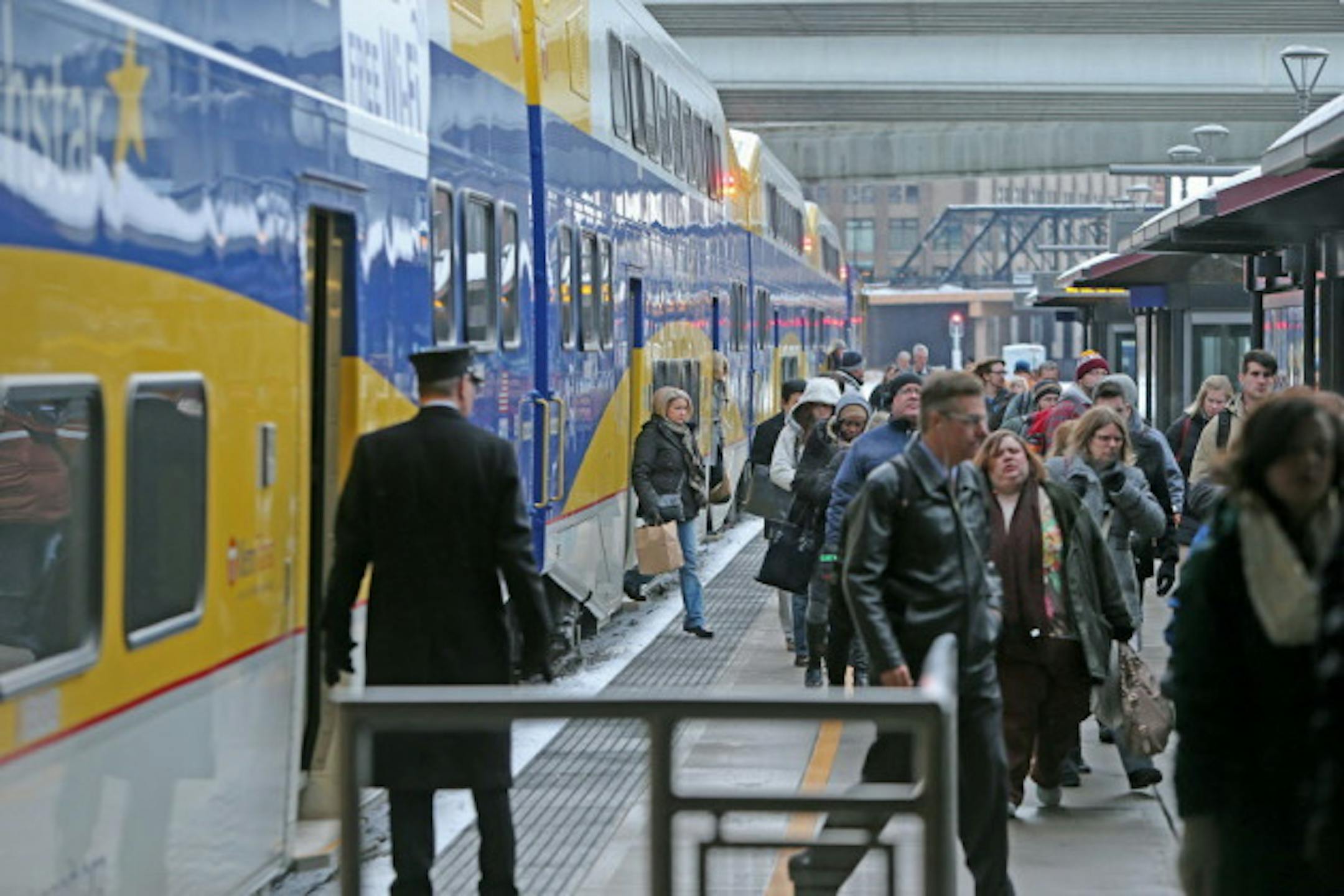
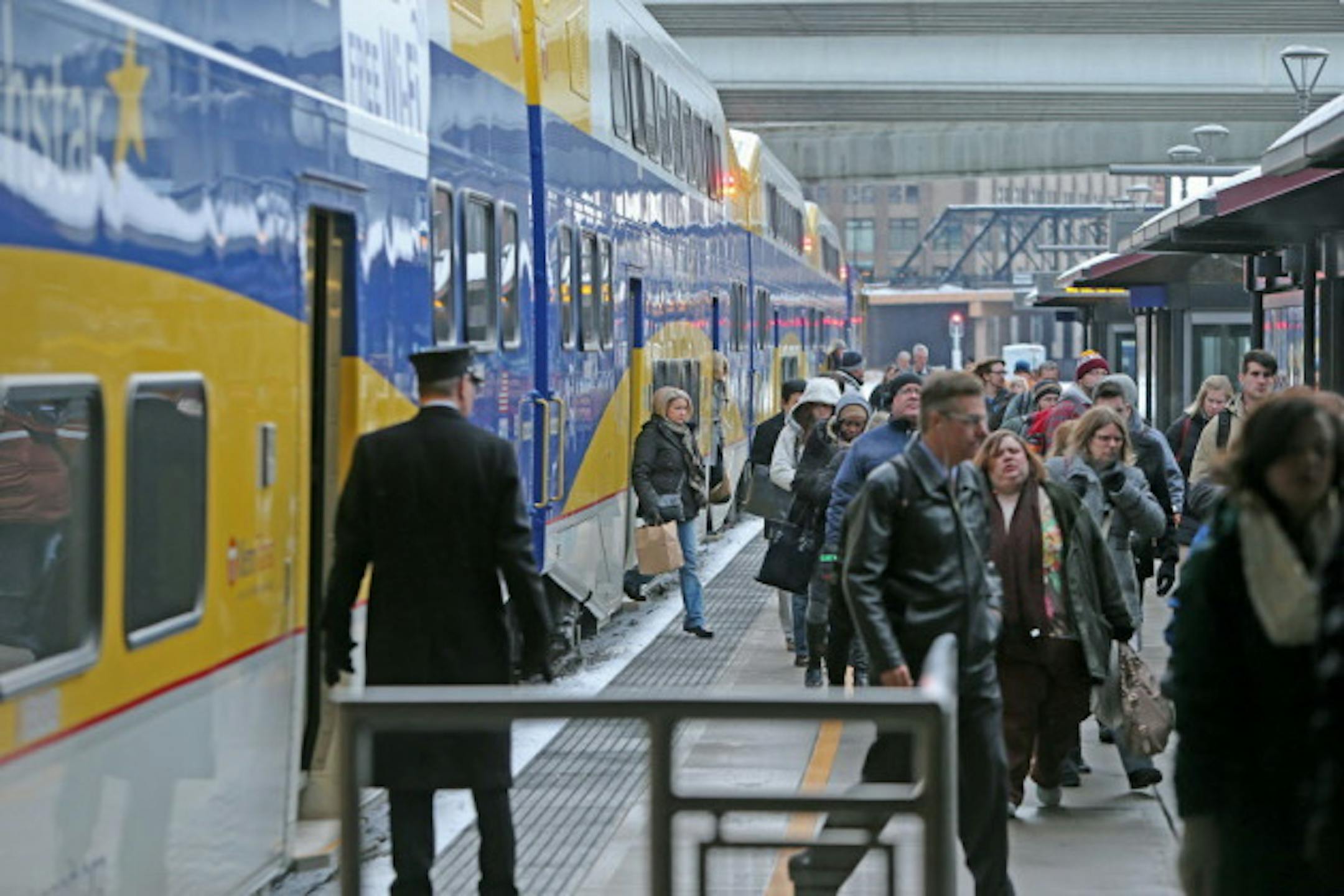
It's been a tough run for Metro Transit's Northstar commuter train over the past month, and the bad luck continued Tuesday when two separate freight locomotives experienced mechanical issues and blocked the tracks between Big Lake and Elk River.
That forced Metro Transit to scurry to get buses to the stations and give commuters a ride to work. But that didn't occur until after the first two inbound runs were scrubbed. In all, the first four runs didn't operate Tuesday. The fifth and final trip did operate, running about 20 minutes late.
Some passengers in Big Lake who boarded the 5:01 a.m. train said they waited almost two hours to get on a bus. Ross Priest, who commutes from Big Lake to his job in downtown St. Paul, swiped his Metropass card at 6:07 a.m. Just before 7 a.m., he got off the train, got in his car and began driving to his job. But then he turned around when he learned traffic was bad, and went back to the station. He got on bus just after 7 a.m.. He wondered why it took so long to get buses to the station.
"Do we need a train bill of rights?," asked Priest, alluding to laws that limit length of time airlines can hold passengers on the tarmac when flights are delayed. "These people were stuck. My biggest question is do they have a contingency plan? I hope they come up with a back-up plan."
Metro Transit does have plans in place to deal with delays and unforeseen problems on the tracks, said spokesman John Siqveland.
On Tuesday, Metro Transit told customers at 5 a.m. via Twitter, Facebook and its webpage that the first inbound train would be delayed 30 minutes, based on information Metro Transit got from BNSF, the railway which owns the tracks. As the delay grew to an hour and the second departure was scrubbed, Metro Transit arranged for buses to pick up passengers in Anoka, Coon Rapids and Fridley. It called Northstar Link buses from St. Cloud to pick up passengers in Big Lake, Elk River, Ramsey.
By then, it was after 7 a.m.
Many customers were upset with the delays and a lack of information from Metro Transit. Riders like Heather Beyer thought they'd be getting text messages after Metro Transit said it would improve communication in apology letters given to riders last week.


