

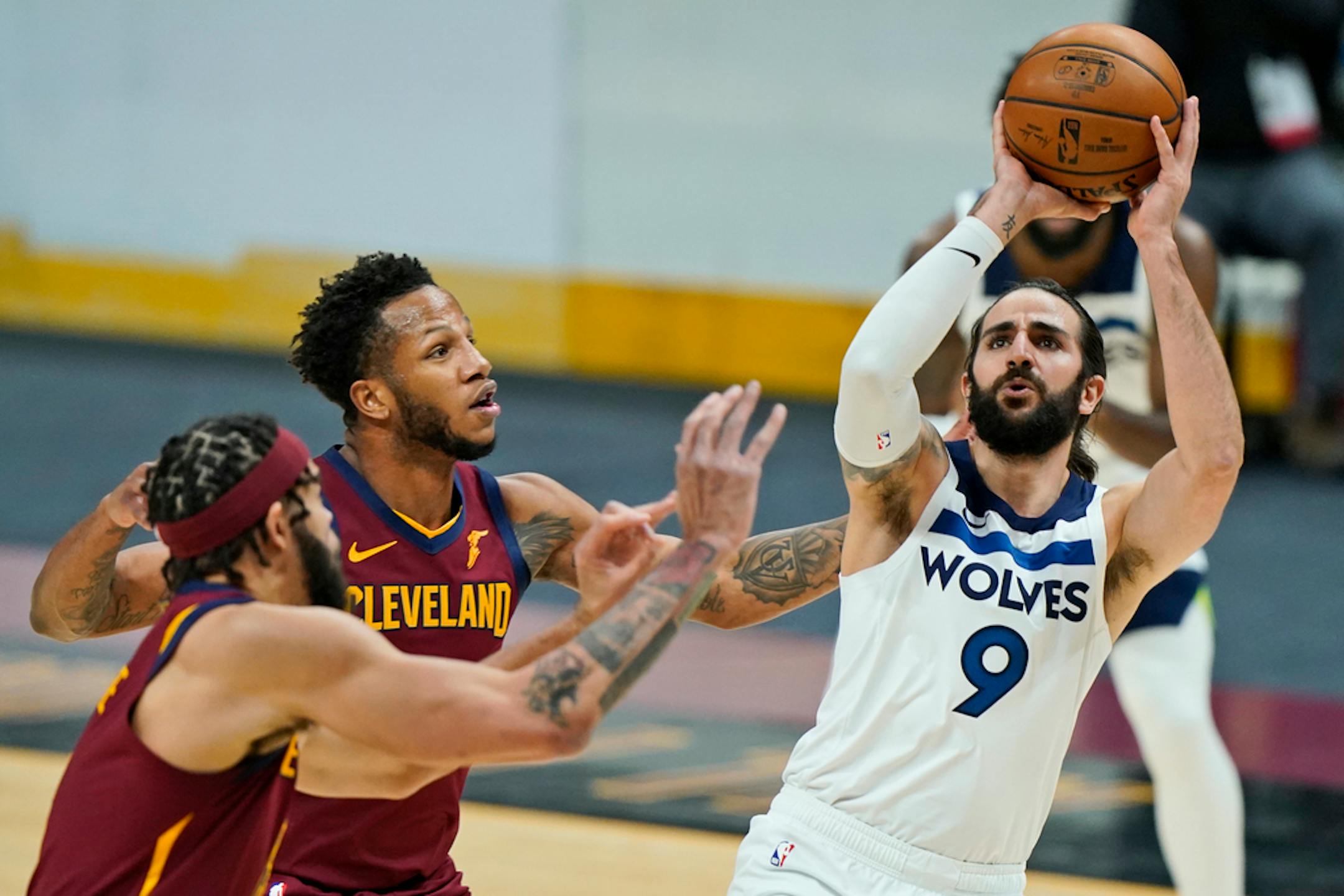
Not long after he was trade back to Minnesota — barely more than two months ago, which is strange in and of itself — but before this COVID-condensed NBA season began, Ricky Rubio said two things that have turned out to be bits of unpleasant foreshadowing during a 5-15 start to this Wolves season.
Rubio, coming from two years with the Jazz in which Utah made the playoffs and a year in Phoenix that saw the Suns rising behind a young core, seemed enthusiastic about the present and future of the Wolves team he was rejoining.
"I don't feel like we're in a rebuilding process," Rubio said shortly after the trade. "We're a couple steps ahead. We're already making things happen. With [D'Angelo Russell] and [Karl-Anthony Towns] hitting their five years in the league, they still have a lot of room to improve, but I feel like they learned a lot. It's not like a young corps where they don't know how this league goes."
Regarding his role and the possibility of coming off the bench, Rubio didn't seem thrilled about it but mentioned Derrick Favors, a quality player in Utah who served in that role for the good of the team.
"He didn't say a word," Rubio said. "He kept working and ... at the end of the day we won. That's what you care about. You have to sacrifice something for the best, for the team. If it's coming off the bench, would I like it? No. I wouldn't like it, I will be honest. But I will be willing to do it for the best of the team."
Twenty largely disappointing games into this 72-game season, two things are true: What Rubio envisioned of the Wolves has yet to materialize, and vice-versa — something I discussed on Tuesday's Daily Delivery podcast in addition to several other things.
While Rubio has provided some of the leadership the Wolves craved when they acquired the now-veteran 30-year-old point guard, and he has lent his voice to pointed critiques of the team's play when necessary, he has too infrequently provided that same steady hand on the court.
Rubio is averaging a career-low 23.2 minutes while shooting a career-worst 34.3% from the field and 17.9% from three-point range. He was never a great or even good shooter, but he had become closer to a passable shooter, at least — making more than 35% of this threes in two of his three seasons away from Minnesota.


