PROVIDENCE, R.I. - Rhode Island has become the nation's 10th state to allow gay and lesbian couples to wed, after a 16-year effort to extend marriage rights in this heavily Roman Catholic state.
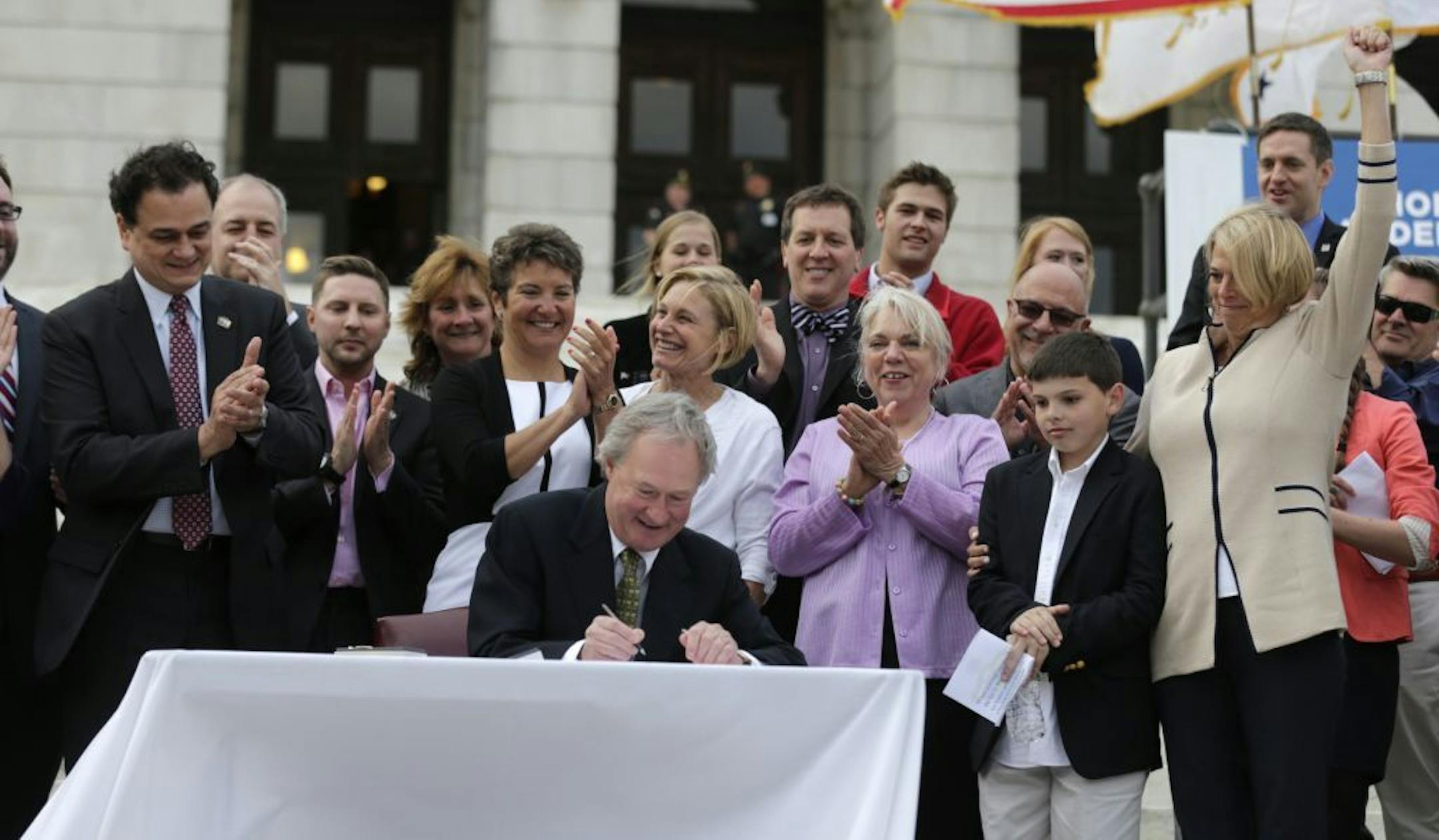
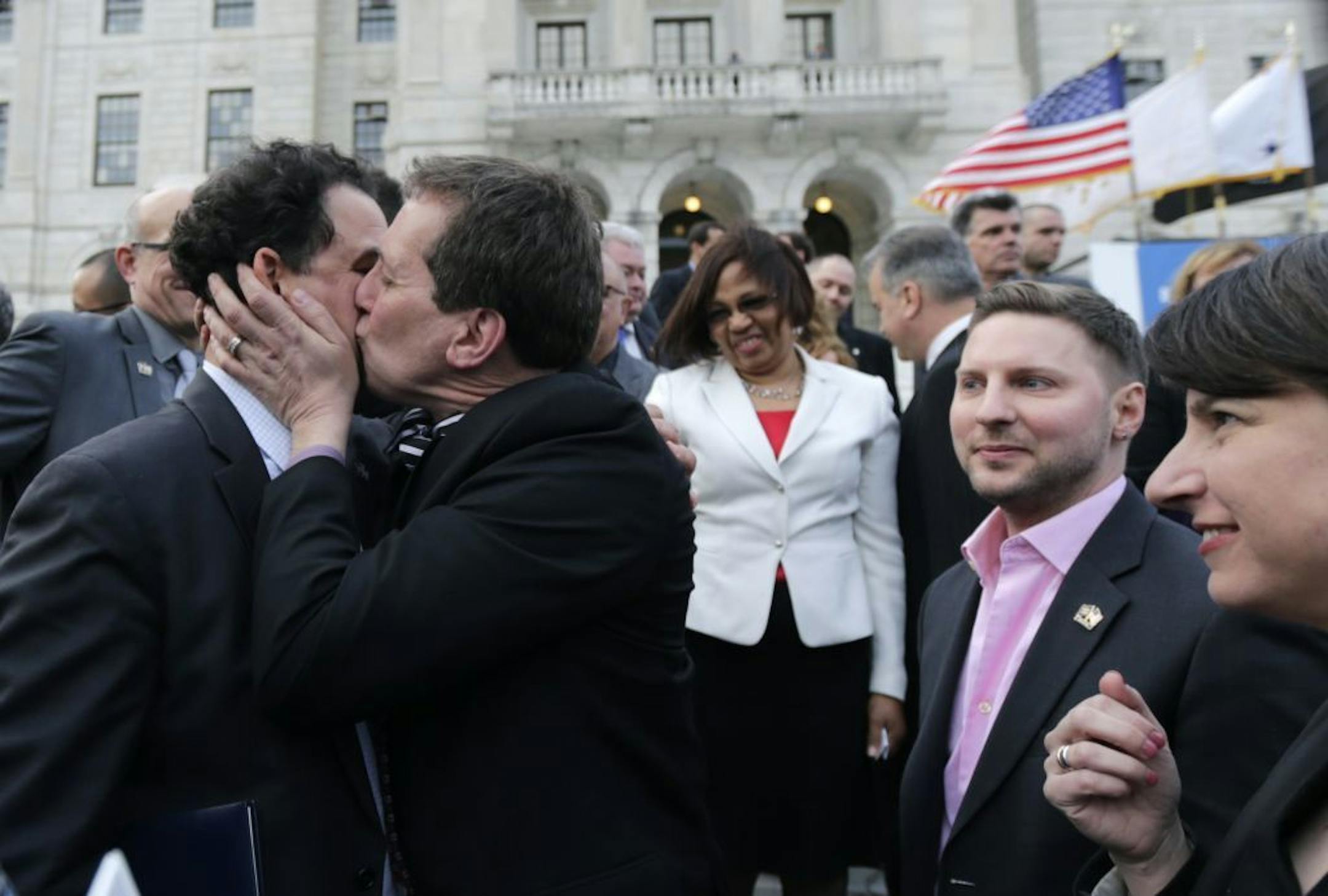
Gays, lesbians, their friends and families erupted into cheers Thursday following a final 56-15 vote in the Rhode Island House, and then again an hour later when Gov. Lincoln Chafee signed the bill into law on the Statehouse steps.
"Democracy feels good, doesn't it?" said House Speaker Gordon Fox, D-Providence, who is gay. Fox struggled to keep his composure as he addressed the crowd at the Statehouse, looking over at his longtime partner, Marcus LaFond. "This tells me our relationship does matter. It means that we mean something."
The first marriages will take place Aug. 1, when the new law takes effect.
The day was bittersweet for Deborah Tevyaw, whose wife, state corrections officer Pat Baker, succumbed to lung cancer two years ago. Months before she died, Baker, relying on an oxygen tank, angrily told lawmakers that it was unfair that Tevyaw wasn't considered her wife in Rhode Island despite their marriage in Massachusetts.
"I'm ecstatic, but sad she's not here to see this," Tevyaw said. "I'm sure she's watching, but she's not here next to me. Before she died, she told me, `I started this, and now I'm leaving it in your hands.' We worked hard for this. There were petitions, door knocking, phone calls. I think people decided, `just let people be happy.'"
Once consigned to the political fringe, gay marriage advocates succeeded this year thanks to a sprawling lobbying effort that included support from organized labor leaders, religious clergy, leaders including Chafee and Providence Mayor Angel Taveras and hundreds of volunteers. Their efforts overcame the opposition of the Roman Catholic Church and lawmakers including Senate President Teresa Paiva Weed, who voted no but allowed the issue to come to a vote anyway.
Supporters framed the issue as one of civil rights, arguing in daylong legislative hearings that gay and lesbian couples deserve the same rights and protections given to opposite-sex married couples. The Catholic Church was the most significant opponent, with Bishop Thomas Tobin urging lawmakers to defeat what he called an "immoral and unnecessary" change to traditional marriage law.