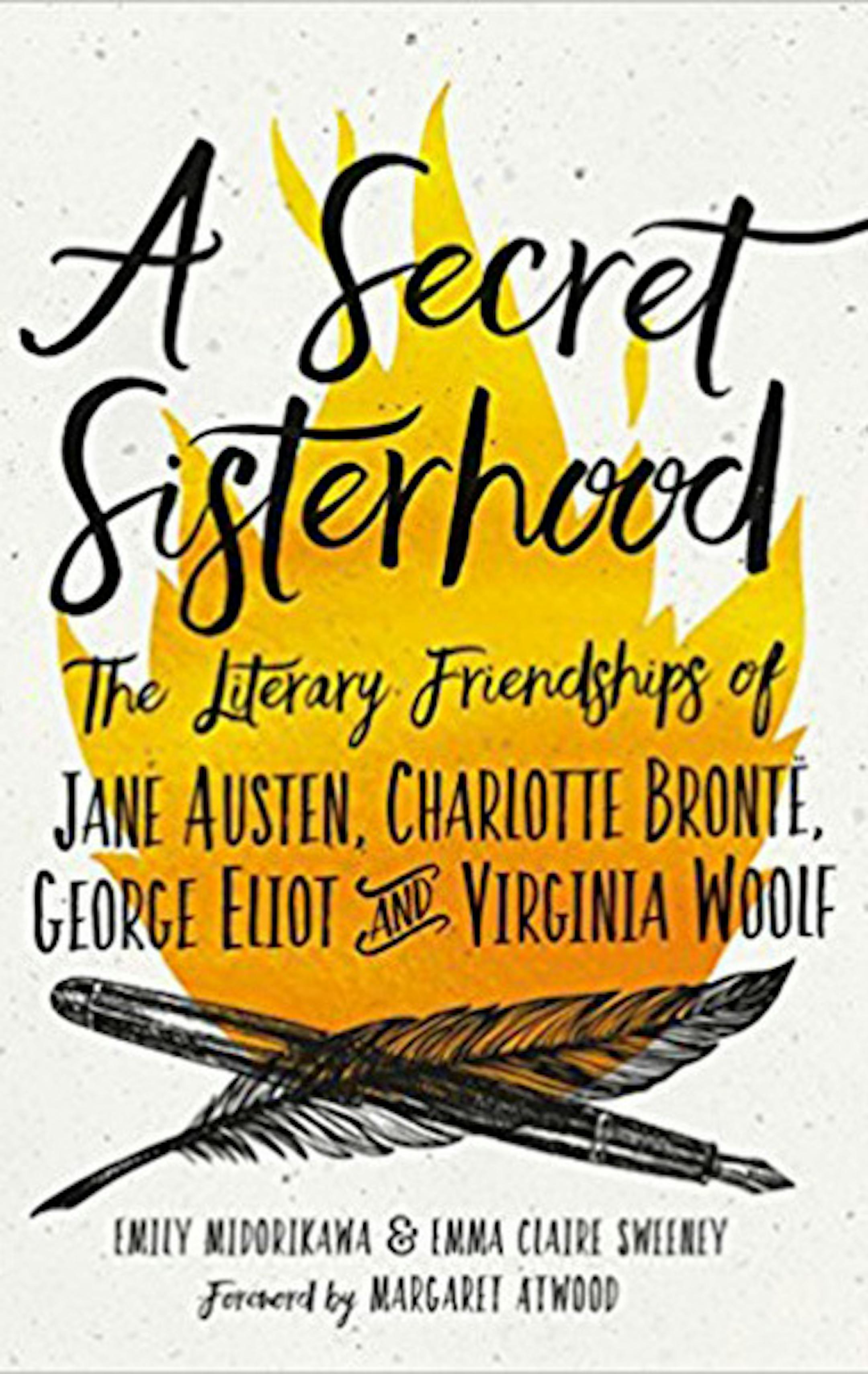
A Secret Sisterhood: The Literary Friendships of Jane Austen, Charlotte Brontë, George Eliot and Virginia Woolf
By Emily Midorikawa and Emma Claire Sweeney. (Houghton Mifflin Harcourt, 336 pages, $27.)
We picture them writing alone in their sitting rooms, but those famous female authors were not as isolated as their biographies made them seem.
A pair of emerging authors fleshes out the friendships that helped propel Jane Austen, Charlotte Brontë, George Eliot, Harriet Beecher Stowe and Virginia Woolf.
For Austen there was a playwriting governess, Anne Sharp. For Charlotte Brontë, there was a feisty friend, Mary Taylor. George Eliot and Harriet Beecher Stowe, the most famous female authors of their day, compared notes across the ocean. For Virginia Woolf, there was Katherine Mansfield, a full-service friend/foe/muse.
These relationships weren't all sweetness. They were fraught with the frustrations facing women of their days, with a little competition — and perhaps jealousy — thrown in.
For Austen and Brontë, the authors combed the scant surviving records for evidence, and some imagination was required to fill gaps. For Eliot and Woolf, they pored over letters from them and articles about them — and interpretations that they want to set straight. The typical Woolf/Mansfield narrative dwells too much on their moments of friction, they argue.
The result is a window into the role that literary colleagues played in the work of these women, and an intriguing study of the interplay between inspiration and envy.
MAUREEN MCCARTHY