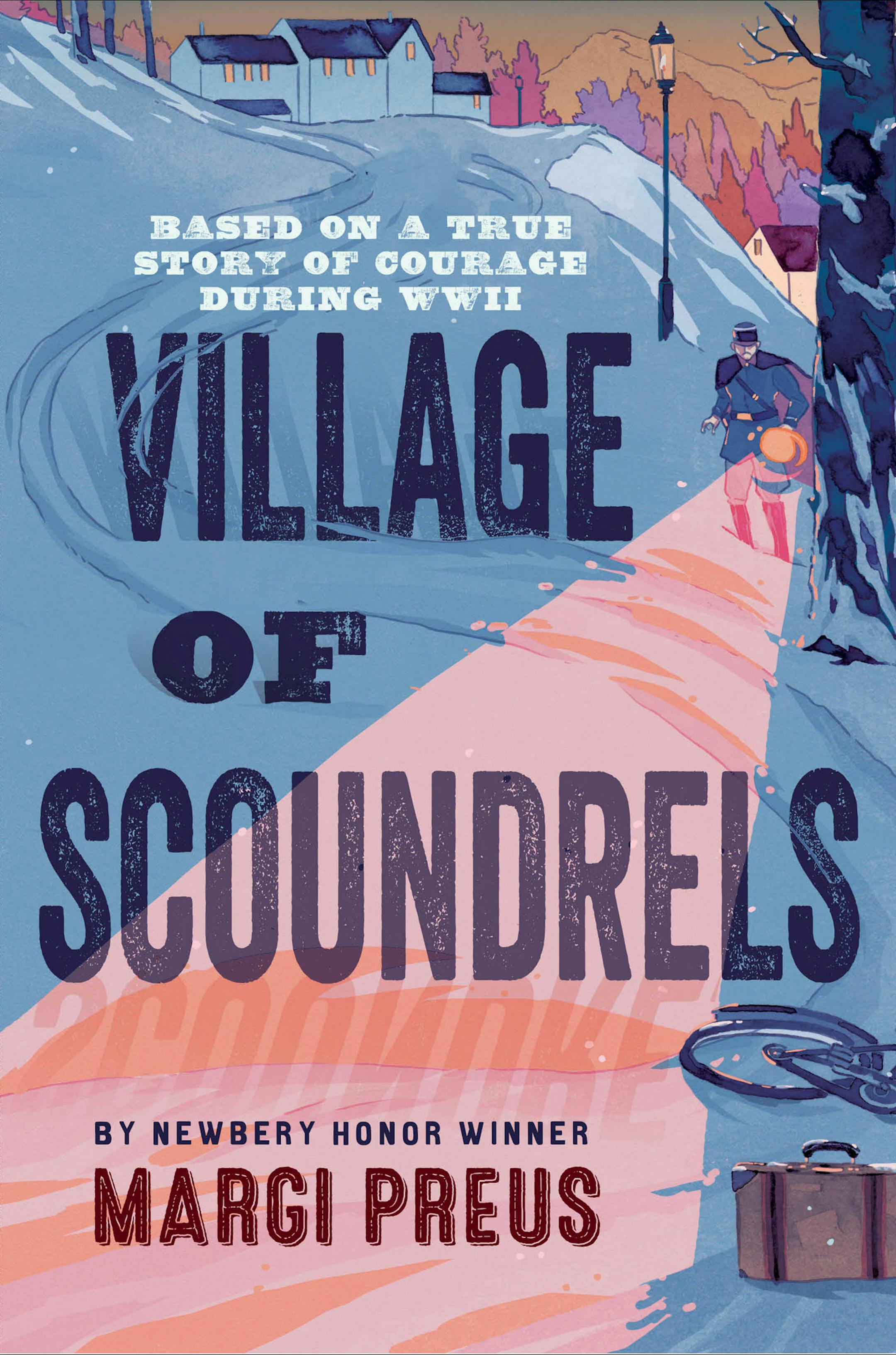
In a remote mountain village in southern France, the shadow of World War II is creeping closer.
Local guesthouses are full of young Jews who have fled Nazi roundups from German territory and occupied northern France. In the village, they blend in with other young people, drawn by the area's progressive school and its fresh mountain air.
When a French police officer, Perdant, arrives in the middle of winter, all seems quiet — on the surface.
But his appearance sets off a series of alarms: from German refugee Henni and her housemates, who are about to celebrate Hanukkah; from Jean-Paul, a Jewish medical student who is blocked from school and now forges identity cards; and from Philippe, a people smuggler who fled to join the resistance after the Germans occupied his hometown in Normandy.
Perdant suspects the villagers are harboring Jews. But when he attempts to investigate, he is thwarted at every turn by locals who sing loud songs to distract him, shower his targets with gifts, or claim they "don't know what a Jew looks like."
At the heart of "Village of Scoundrels" is a question: How can individuals act with integrity in a time of evil?
Two of the novel's characters explore that question: French teenager Celeste, who realizes halfway through the novel that her Jewish classmates and friends "were having a very different experience than her own" as she overcomes her fear to help the resistance.
And 10-year-old Jules, who draws Perdant's unwelcome attention, but diverts, distracts and directly challenges him to rethink his role in a corrupt system.