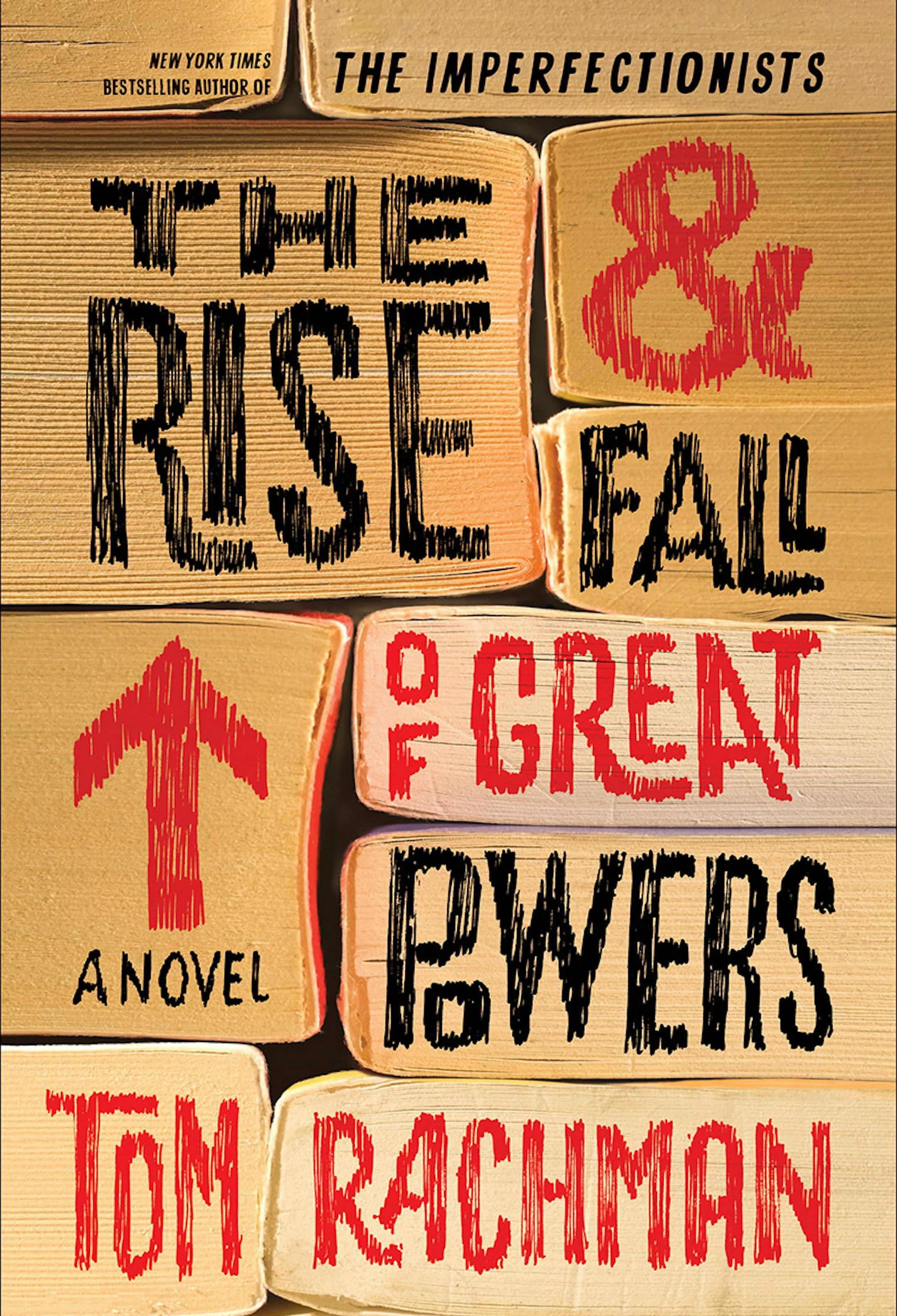
When Tooly Zylberberg receives an urgent call about the failing health of a man presumed to be her father, she pries herself from the foggy perch of her failing Welsh bookshop, World's End, and dives into the mystery of her own idiosyncratic background. Over the zigzag course of Tom Rachman's second novel, "The Rise and Fall of Great Powers," we follow Tooly's exertions to reconcile her past as bits of back story get slyly inserted in alternating sections about her childhood in Thailand and her youthful conniving among the student set in New York.
Rachman cleverly juggles the complications of competing time periods and even offers a rationale in the voice of the Russian émigré who provides what passes as parental oversight in Tooly's oddball upbringing. "Trivial beings think there is only present — that past is gone and future is coming. But past is like overseas: it still exists, even when you are not there anymore."
Rachman's comedic powers drive the story, with grace and wit lavished on plentiful asides about the value of books. Tooly's shop supplements conventional shelving classifications with commercially dubious innovations: "Artists Who Were Unpleasant to Their Spouses; History, the Dull Bits; and Books You Pretend to Have Read but Haven't."
As the ultimate autodidact, forced to wrench meaning from the story of her own life as she pieces together the tale and appends the footnotes, Tooly serves as a running brief for literacy — right down to her coat pocket's "squashed peanut-butter sandwich, wrapped in a newspaper page whose ink had imprinted the white bread, thereby offering the possibility of reading one's lunch."
We also see a life in books assume dark hues — a scant compensation for Tooly's "secret" that "she had nowhere to run, no place to hasten toward, not in this city or in the world. … Citizens had locations and they had motives, families, meetings. Tooly had none."
As first evident in his superb debut novel, "The Imperfectionists," Rachman can compose sentences, paragraphs and whole pages with near perfect pitch and rhythm. For the first two-thirds of "The Rise and Fall of Great Powers," he also manages to sustain narrative tension, deftly arranging shards of Tooly's personal history into a composite of plausible urgency. In the book's final third, the answers that coalesce around Tooly's past prove less interesting (and alas, less credible) than the questions themselves.
Still, Tooly the undaunted outsider emerges as a humane, engaging character — a breed apart from the array of neglectful family members and friends whom, as we finally learn, she had every right and reason to resent and forget.
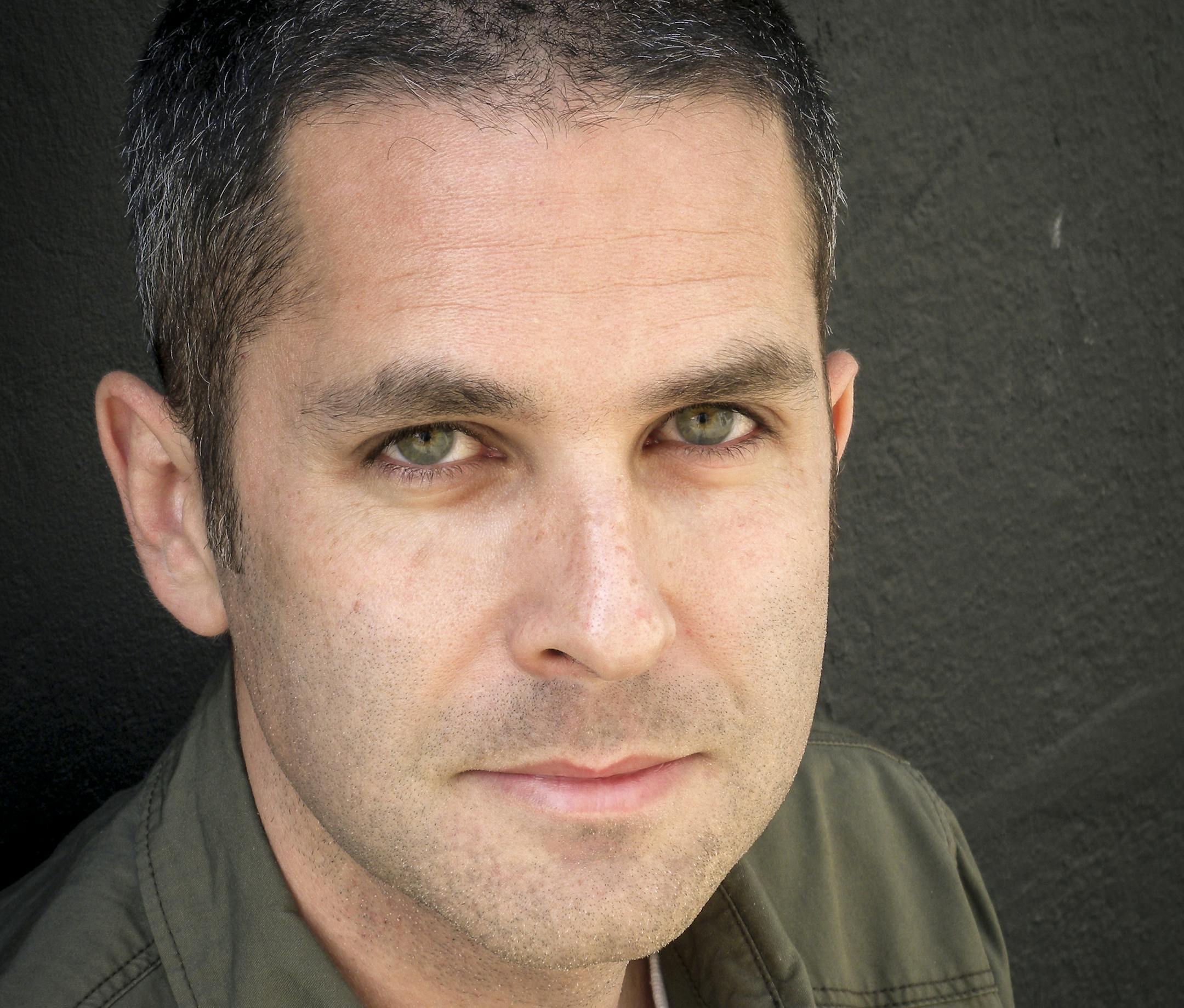
Fred Setterberg is the author of "Lunch Bucket Paradise: A True-Life Novel."