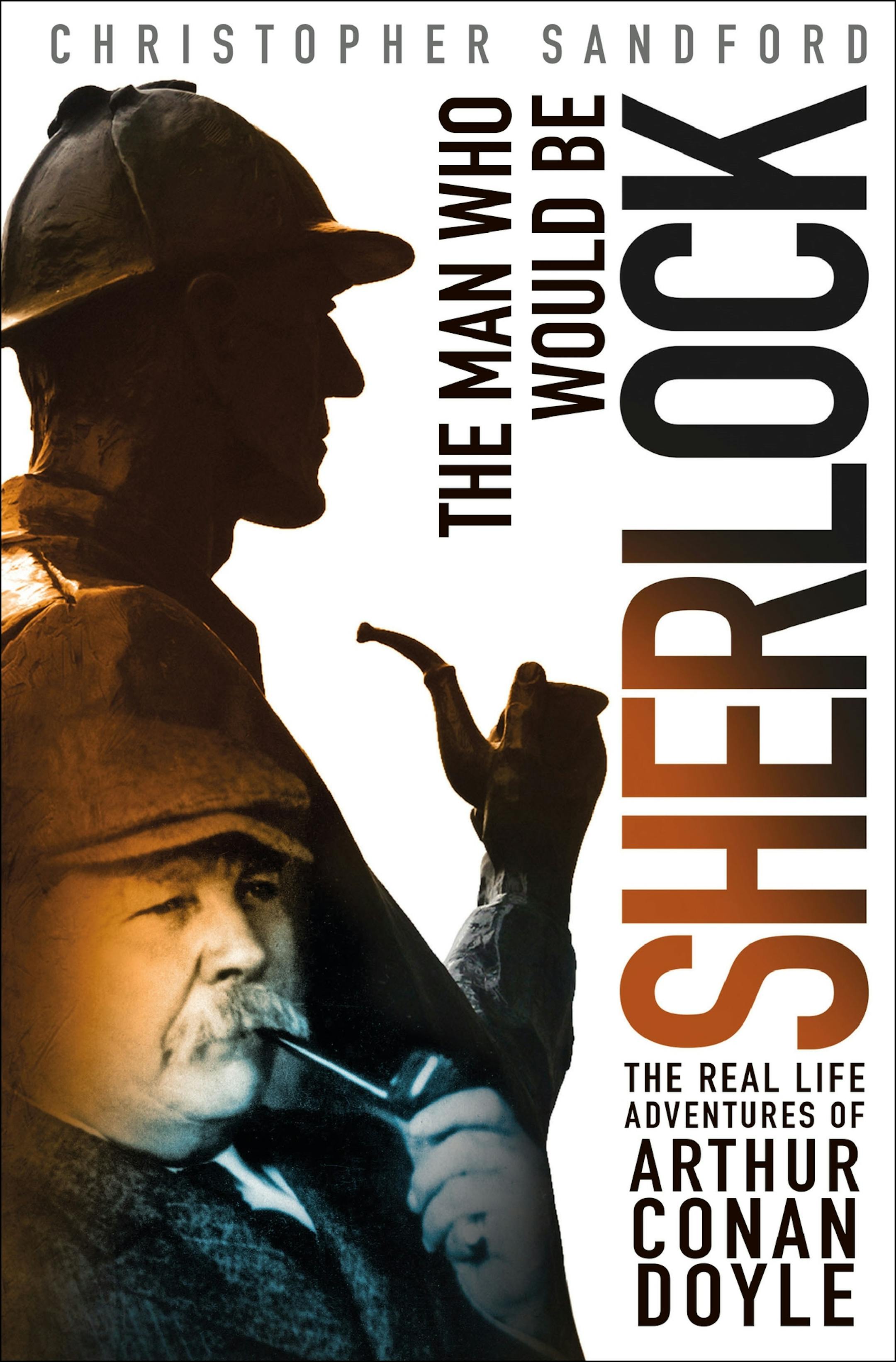
The tall figure scouring the English countryside with a magnifying glass could be mistaken for Sherlock Holmes. But this was the real deal, none other than the ace detective's creator himself, Arthur Conan Doyle.
Just how closely Doyle resembled his fictional hero becomes eerily clear in Christopher Sandford's entertaining biography "The Man Who Would Be Sherlock." Readers also will gain an appreciation for a righteous man who doggedly defended his many causes — from police reform to human rights to spiritualism — no matter how much scorn he endured.
Sandford, known mostly known for his biographies of rock stars, also has written about Doyle's friendship with Harry Houdini. This time he traces the writer's public life in a spiraling narrative that can be frustrating as it winds back and forth in time. Yet the rich details reward readers with stranger-than-fiction facts.
Doyle's success with Holmes filled his mailbox with pleas for help with real cases of stolen jewels and missing spouses. He obliged, probing some crime scenes personally and reviewing others from his office.
In one case straight out of the Holmes casebook, Doyle solved a woman's disappearance by observing the name of her estate, Moat Farm. ("That is the curious fact," he said.) The next day, police pulled the missing woman's body from the moat.
For all the influence Holmes brought him, Doyle famously chafed at the acclaim for his mysteries. He considered other works more worthy — historical fiction, science fiction and fantasy, poems, plays and polemics.
"For him, writing was like scratching an endless itch," Sandford writes. One summer he wrote articles on "everything from the true meaning of life to the correct way to bowl a cricket donkey drop."
Few things set off Doyle's "crusading instincts" more than racial discrimination and police misconduct. He decried the mistreatment of black people in the United States and South Africa. In England he campaigned for years to win the release of an Anglo-Indian man sentenced to life in prison.