

Shakespeare is getting quite the rap sheet on the Twin Cities stages.
He was implicated in murder for the offing of literary rival Christopher "Kit" Marlowe in Liz Duffy Adams' "Born With Teeth," at the Guthrie Theater. Now Morgan Lloyd Malcolm's "Emilia" shows the Bard as a cowardly thief.
Specifically, he stole the art and the heart of poet Emilia Bassano, the "dark lady" who inspired his sonnets. "My mistress' eyes are nothing like the sun," Shakespeare wrote in one of the many things cleverly integrated in Malcolm's script. "Coral is far more red than her lips red: /If snow be white, why then her breasts are dun;/ If hairs be wires, black wires grow on her head."
The play, up in Marcela Lorca's bawdy and bodacious production for Ten Thousand Things Theater, is delightful. It's done in Ten Thousand's signature style, which means Sarah Brandner's set pieces and props are highly suggestive but minimalist (a tiny desk, an arch).
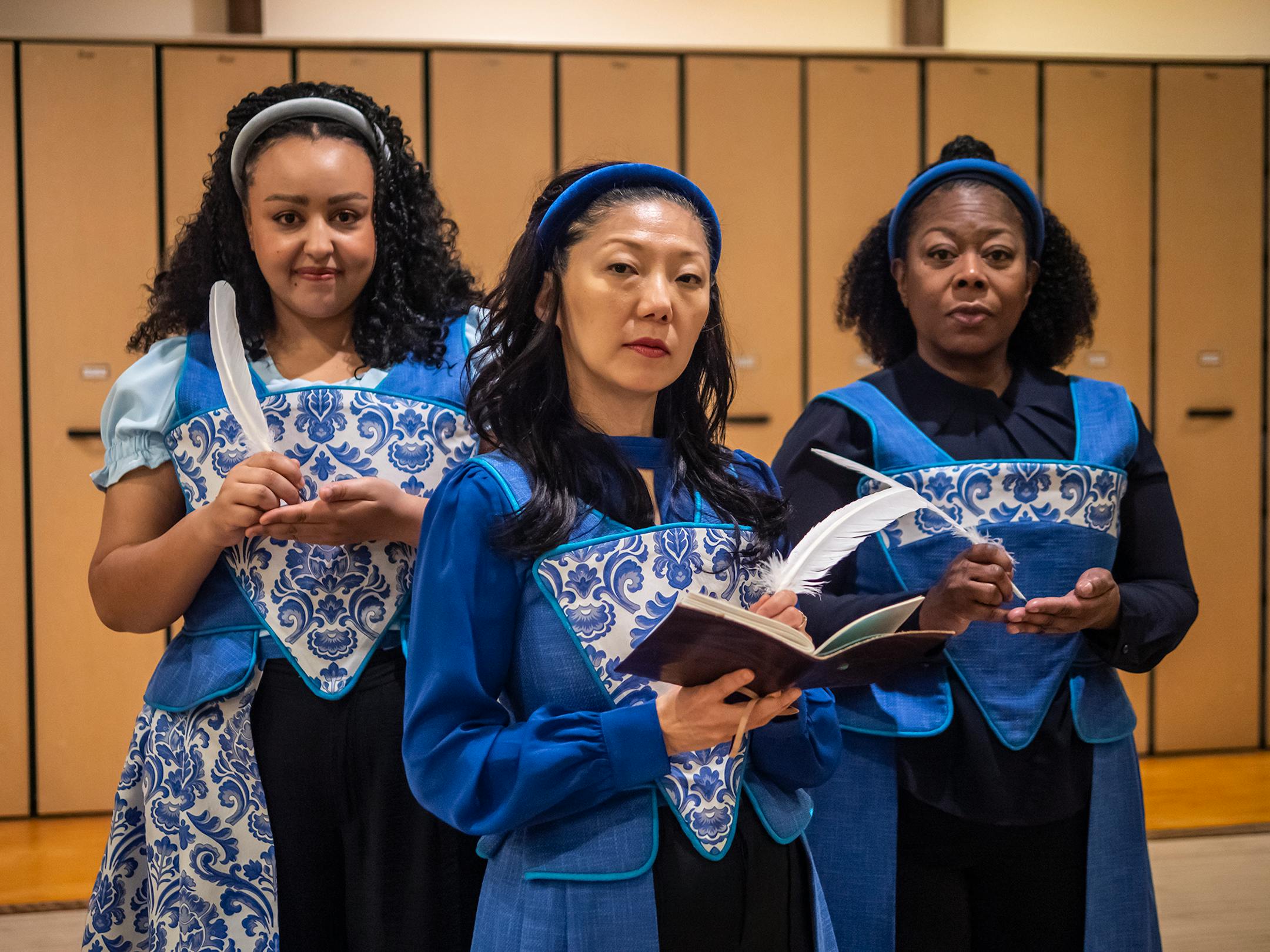
Sarah Bahr's period costumes, on the other hand, are comparatively lavish and fully realized, if nodding to the costumes in "Six," while resident music director Peter Vitale's compositions give the action a felicitous amplitude.
"Emilia" uses Shakespeare and others from the Elizabethan court to resurrect a figure who has been erased from the canon. The first woman to publish a book of poetry in English, Bassano (1569-1645) was the daughter of a court musician of North African ancestry. Malcolm uses biographical touchstones to sketch a full character pushing up against patriarchal and sexist strictures, one with eerie contemporary resonances.
Lorca's muscular staging teems with wit and the occasionally naughty aside. For instance, Maggie Chestovich has poetry flowing from her bosoms and butt. She's part of an all-female cast that is always in the moment.
Bassano buried much of her liberation ideas in the religious text she wrote to get past the censors. Malcolm's play nods to that by having the author played by a trinity of actors: bright Marisa Tejeda depicts the young Emilia; solid, fearless Sun Mee Chomet plays middle period Emilia; and self-assured Greta Oglesby comes in as the older, wiser Emilia.


