

It may be surprising to hear that Ridley Scott's new historical epic "Napoleon" is funny — intentionally so.
Utilizing the unique performance qualities of his star Joaquin Phoenix, and a screenplay by David Scarpa, Scott's biopic of the French emperor and military commander is a political farce in the vein of Scottish satirist Armando Iannucci, the genius behind "In the Loop," "Veep" and "The Death of Stalin."
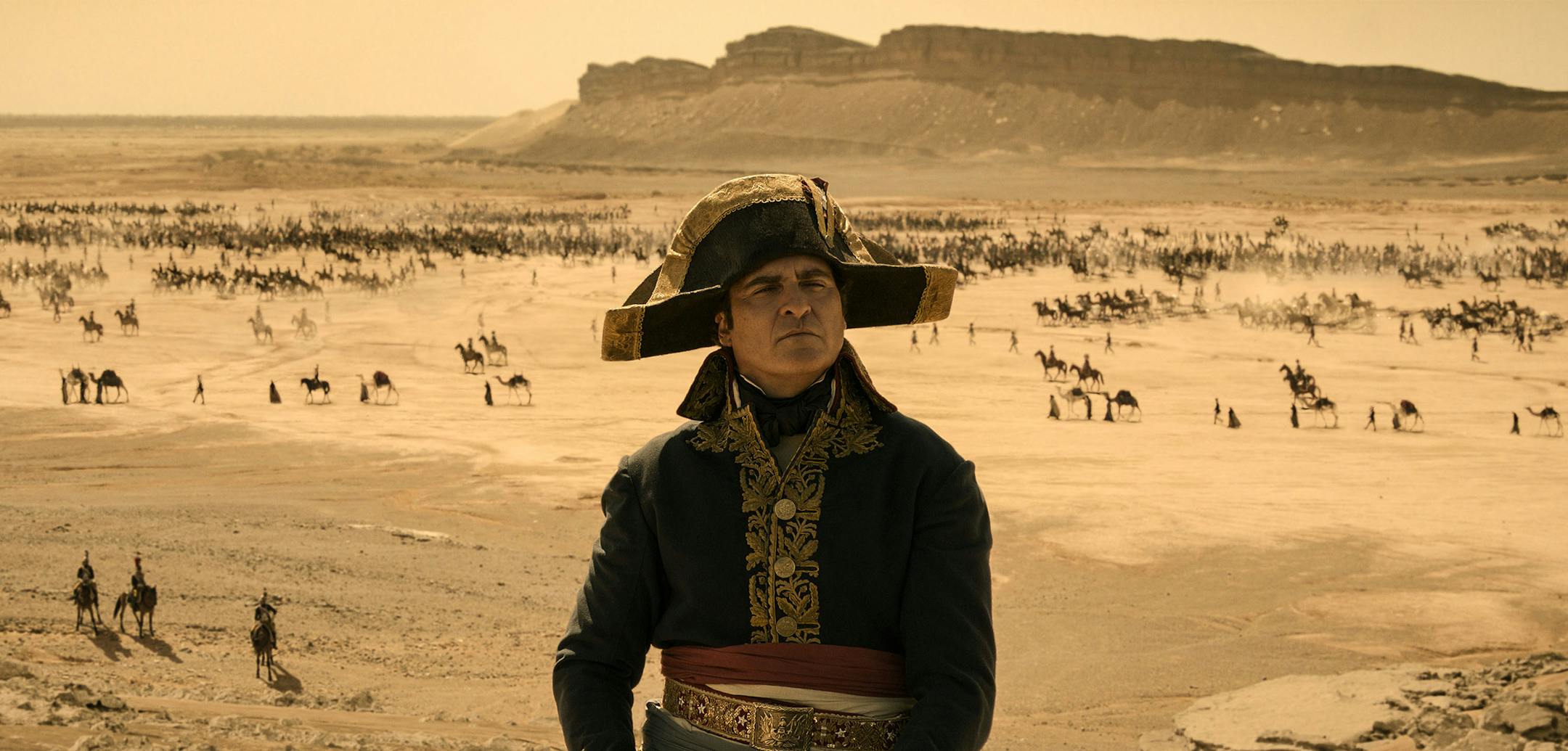
That impish humor provides a tonal contrast to the look and feel of this sprawling film, in which Scott has put every cent of his substantial budget (courtesy of Apple Studios) on screen, especially in the form of spectacular hats that seem to get bigger and bigger and more plentiful as the film progresses.
What the film looks like — a heavy, sprawling war movie rendered in a desaturated color palette — belies how it actually plays, which is hilarious and often quite goofy. The film rides this juxtaposition of tones until Scott pulls the rug out from under to remind us that laughing at powerful buffoons can be quite dangerous and deadly.
Phoenix plays the Corsican commoner turned general with a perpetual scowl and his own American accent (all the actors use their native accents). His manner of speech sets him apart from his aristocratic advisers, effectively otherizing him among their ranks, though they bow to his might, built on bullying and brute force.
Napoleon prefers to work through his political issues on the battlefield, pummeling his opponents with cannons, drawing them into traps, catching them by surprise. His approach to the tactics of warfare is coldly calculating and efficacious even if his own men are killed, and Scott doesn't hold back on displaying the cruel carnage of these famous battles, and the innocents crushed under Napoleon's bloody wheel of war. The battlefield is the only place he can feel powerful, as he's otherwise lost among the clubby diplomacy of his political peers, and rarely takes the upper hand in his marriage to Josephine (Vanessa Kirby).
Napoleon becomes fervently obsessed with the alluring aristocrat Josephine in the wake of the French Revolution, and there's a fetishistic dominant/submissive quality to their relationship, a dynamic to which Napoleon seems addicted. In the power play between them, Josephine never lets him get one up on her, making Napoleon a public cuckold though she cannot bear him an heir.
Even as their tumultuous marriage is dissolved, they remain connected, and Scarpa and Scott present the love story of Josephine and Napoleon as a bond forged out of mutual understanding and friendship. In the letters they write back and forth, which provide the film's narration, they communicate like old friends who understand the ugly nature of survival. Kirby is absolutely ravishing as the scrappy aristocrat who keeps herself alive by aligning with power at all costs.

