

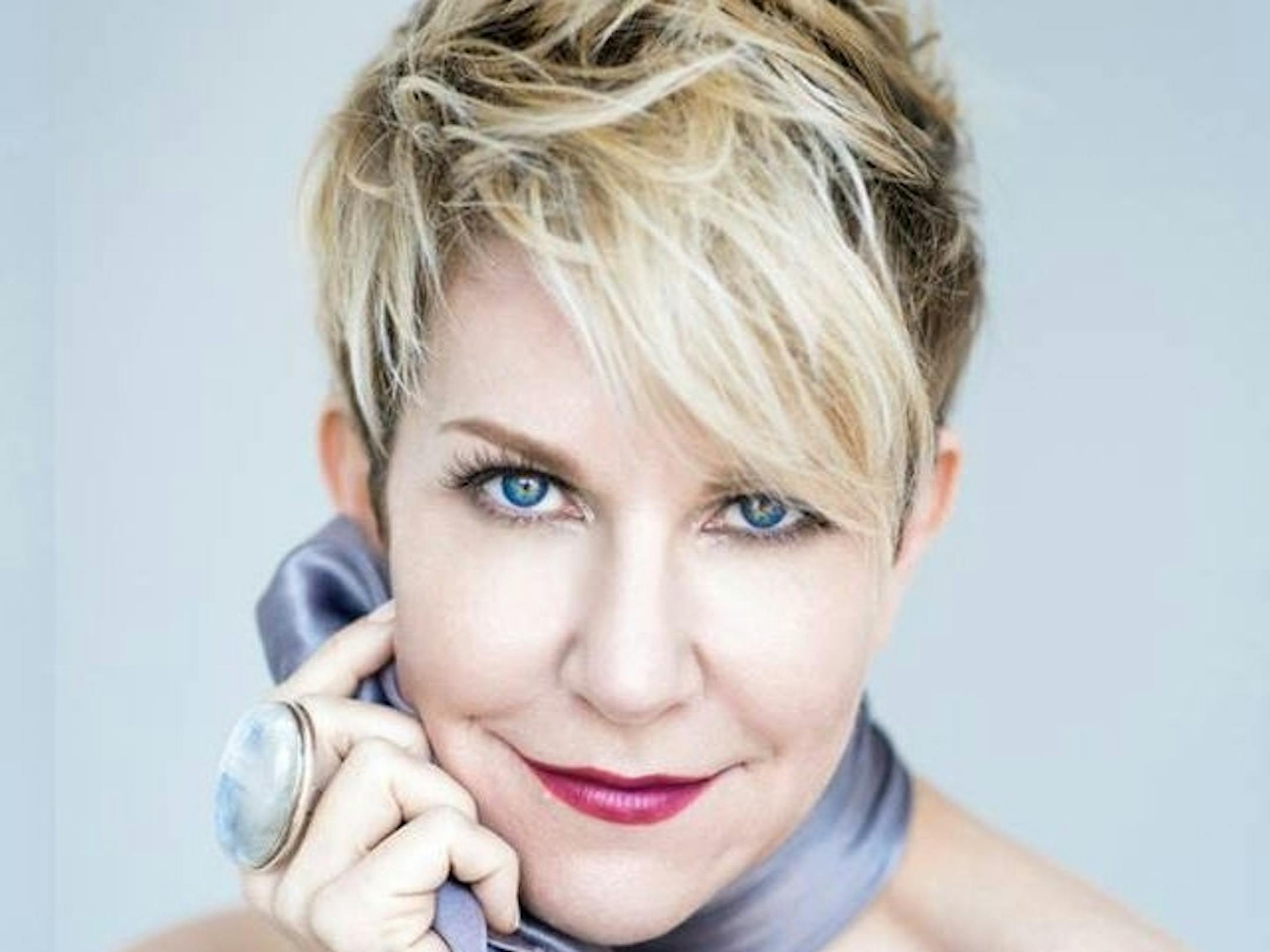
Seeing as the Minnesota Orchestra’s music director, Thomas Søndergård, established much of his European conducting reputation in the opera house, it’s appropriate that he should open the orchestra’s 123rd season with a program rooted in the places where singers and orchestras meet.
The season’s spirited curtain raiser is the Overture to Leonard Bernstein’s operetta, “Candide.” And completing the concerts is a suite from Richard Strauss’ lushly romantic opera, “Der Rosenkavalier.” But the best reason to be at Orchestra Hall is for a work that isn’t linked to opera, but a singer who most definitely is.
That would be mezzo-soprano Joyce DiDonato, who is singing Hector Berlioz’s song cycle, “Les nuits d’été (Summer Nights).” She’s one of the biggest stars in the opera world, and no one among the almost capacity crowd at Orchestra Hall for Thursday’s midday concert is likely to have been left wondering why. Her expressively compelling performance brought listeners into intimate contact with the layered emotions coursing through Berlioz’s songs, her richly textured voice one of subtlety and nuance.
And Søndergård and the orchestra were admirably simpatico with her captivatingly quiet approach to the songs, inviting the audience to lean in for each lovely line, both the strings and winds providing soft beds of sound beneath DiDonato’s wistful evocations of grief and exhilarating carpe diems.
That piece alone was worth the price of admission, but the entire program is a celebration of the strengths of this orchestra. Bernstein’s “Candide” reintroduced the audience to the thick textures of its strings and the sonorous chorales that its horns and woodwinds bring forth. A 2017 piece by French composer Guillaume Connesson may have been the only work without a connection to vocal music, but it sounded epic enough to fit an opera.
And a suite from “Der Rosenkavalier” was yet another triumphant meeting between Søndergård and Strauss, a partnership that’s proved inspiring ever since he auditioned for the music director job with what several of the orchestra’s musicians described as the best version of “Ein Heldenleben” they’d ever experienced.
All that said, the meeting between musician and composer that made this concert most memorable was between DiDonato and Berlioz. Or add poet Théophile Gautier to the mix, for the mezzo made his words reach into the recesses of listeners’ hearts with touching tenderness.
At the center of “Les nuits d’été” are four songs about love and impermanence. DiDonato proved deeply affecting on a song told from the perspective of a rose — especially in her lovely lower register — before making the lyric, “My soul cries,” eminently believable on the ensuing “Sur les Lagunes.” It was an interpretation saturated with sadness, complemented by a delicate dance between soloist and orchestra on “Au Cimetière” that convinced me that Søndergård is shaping this ensemble into an exceptional orchestra for vocal collaborations.


![Brandi Carlile performed "You And Me On The Rock" in concert Saturday, July 30, 2022 at Xcel Energy Center in St. Paul, Minn. ]](https://arc.stimg.co/startribunemedia/P4TW2YOFYDOM6HK7YPPI7CCG2U.jpg?&w=436&ar=3:2&fit=crop)

