

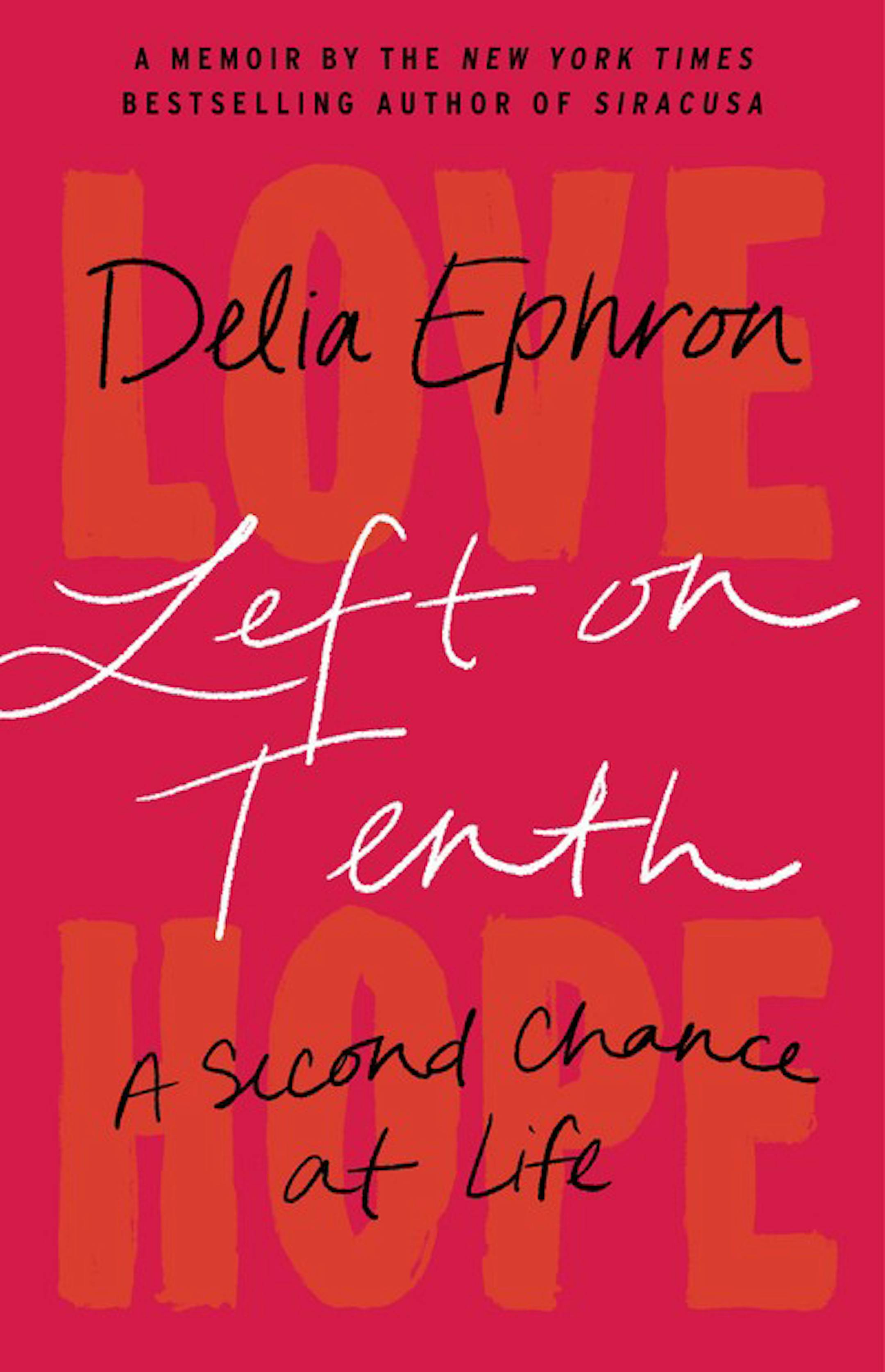
The name of Delia Ephron's new memoir, "Left on Tenth," not only gives driving directions to Ephron's apartment in New York, it also delivers a poignant play on words. Ephron's husband of 35 years, Jerry, died of cancer in that apartment in 2015. Ephron was left a widow on 10th Street. As titles go, it's an impressive combination of witty, sad and memorable — just like the book itself.
Jerry's death is where the story begins, with an extended, chaotic scene featuring a late-night fall, a do-not-resuscitate order and an argument with a crew of EMTs, followed by a few hours of uneasy calm. Ultimately, Jerry slips away before dawn, quietly losing consciousness while no one is watching.
We know from the start, then, that although this may be the same woman who co-wrote such classic rom-com fare as "You've Got Mail," we can trust her not to romanticize life's big moments. Monumental though they may be, they are often messy, confusing and oddly timed — and Ephron is going to be straight with us about it.
Ephron lost Jerry just three years after the death of her older sister and creative collaborator, filmmaker and writer Nora Ephron. Delia memorialized Nora in her 2013 essay collection, "Sister Mother Husband Dog (etc.)." "Left on Tenth" represents not only her next chapter in grief, but a tougher reckoning with mortality. A year after Jerry's death, Ephron developed acute myeloid leukemia (AML), the same disease that killed her sister.
In a plot twist worthy of a movie, Ephron's illness overlaps with a new love. She had just started dating a psychiatrist named Peter, who reached out to her by e-mail after reading a touching and hilarious op-ed about her attempts to cancel Jerry's Verizon service. In another coincidence, it turns out Peter and Delia already knew each other, although she'd forgotten. They had gone on a few dates in college, set up by none other than Nora.
After a whirlwind romance and several long talks about "what it meant to start something intense and meaningful at this age ... when death is right there in front of us," they decide to marry in the hospital as she begins treatment for her leukemia.
But Ephron is not sugarcoating this story, remember? Things get dark.
At her lowest point, depressed and exhausted after a stem cell transplant, Ephron feels "deep in my bones a despair, an isolation from everyone, a wish to be dead." Sometimes people refer to dying as being called home, but for her, that phrasing doesn't work. She doesn't believe in life after death; staying alive here in the physical realm, then, is the only way she can still be.


