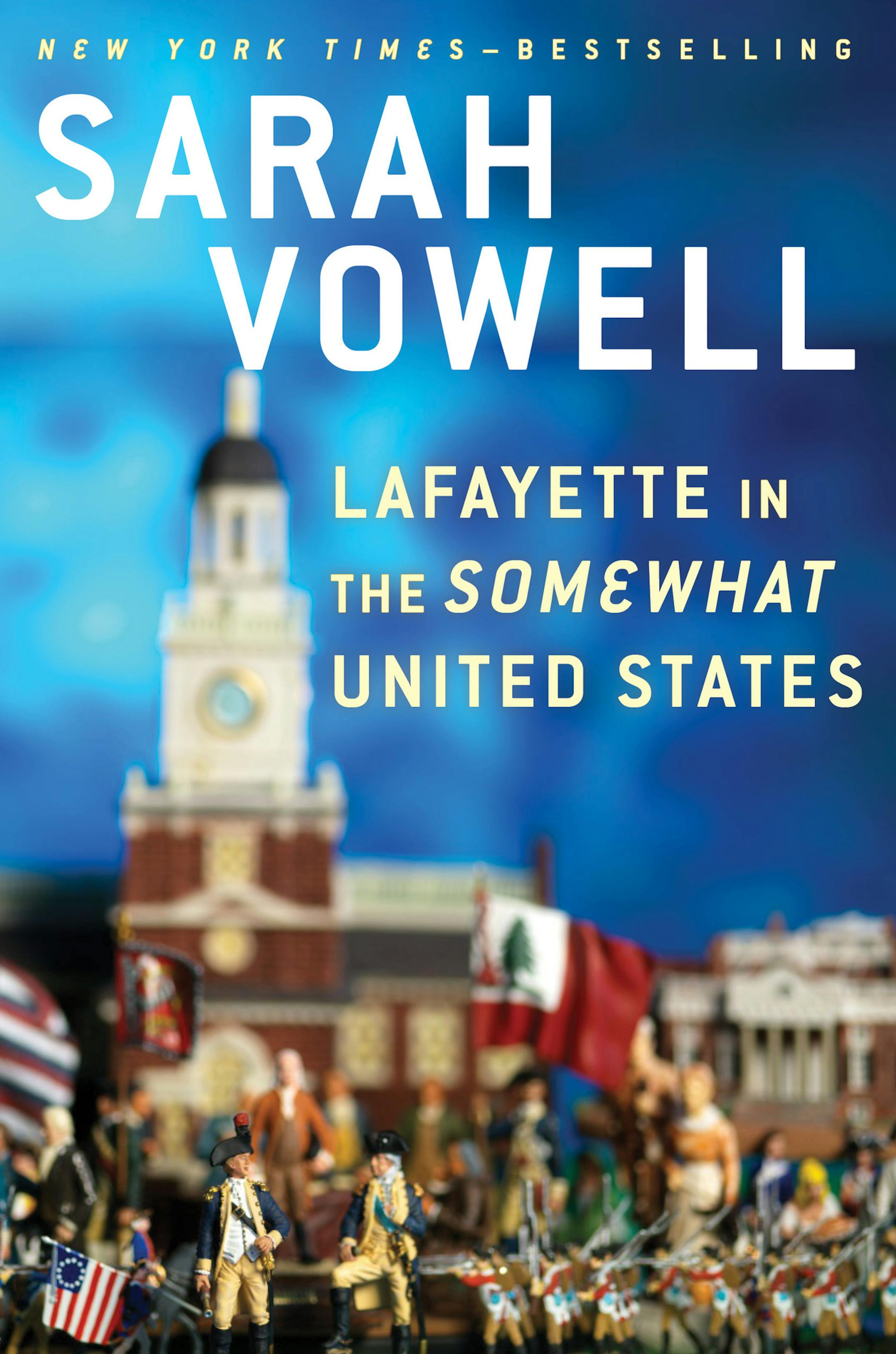
An unflattering congressional episode in 2003 gave writer Sarah Vowell the idea for a book on the Marquis de Lafayette.
Amid the hysteria over "freedom fries" after France refused to back a U.N. resolution for military action in Iraq, Florida Rep. Ginny Brown-Waite sponsored a bill to dig up the remains of U.S. war casualties buried in France and reinter them in the U.S.
"The remains of our brave servicemen should be buried in patriotic soil, not in a country that has turned its back on the United States," Brown-Waite said.
Vowell, a deadpan archivist of the quirkier corners of U.S. history, thought there was more to the story. She found it in the Marquis de Lafayette, the teenage French aristocrat who sneaked out of France against the wishes of his family to fight in the American War of Independence.
The travelogue-as-history-lesson has become Vowell's stock in trade. But "Lafayette in the Somewhat United States" finds her stumbling around like the hapless (and mostly shoeless) Continental Army, looking for a path forward.
While U.S. history books present the Revolutionary War as a series of heroic battles against superior British forces, Vowell gives us a counternarrative of the war as a string of early defeats and political infighting, with George Washington hamstrung by low funds, untrained volunteers and attempts to unseat him as commander in chief.
The story skips back and forth between U.S. battle sites and France, piling on a bewildering cast of minor characters as Benjamin Franklin and other diplomats attempt to win promises of gunpowder and funds from France.
While some of these characters are intriguing — such as the cross-dressing Chevalier d'Eon de Beaumont, a soldier, playwright and secret agent who stopped to direct "The Barber of Seville" while on a mission to ship guns to the colonists — they appear and disappear from the tale at a breathless pace.