

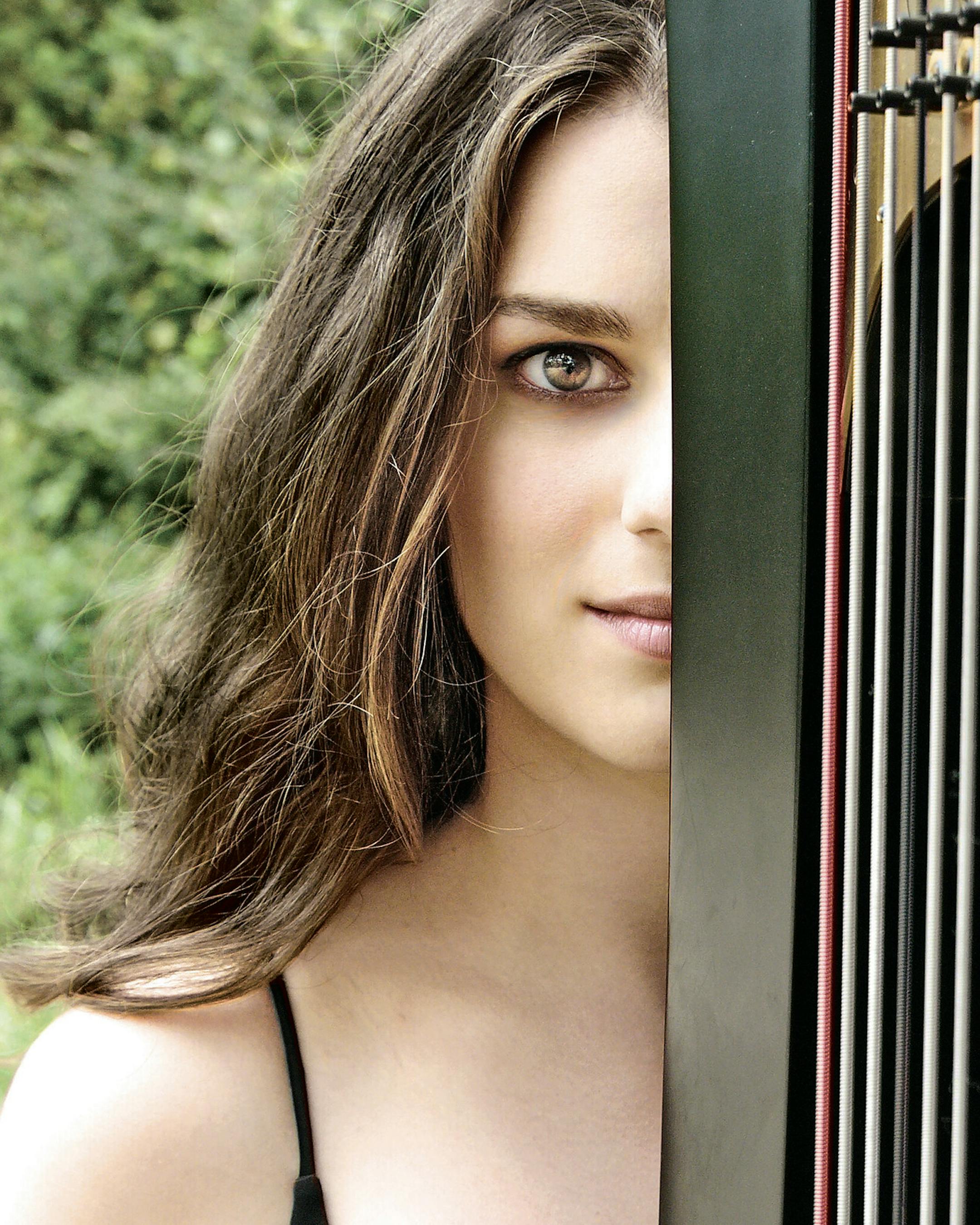
"Allow me to showcase what this baby can do."
Bridget Kibbey was speaking of her harp. One of the instrument's most celebrated virtuosos, the Ohio native is something of an evangelist for its versatility, liberating it from the confines of a symphony orchestra and an occasional cameo on a Christmas playlist.
On Thursday, Kibbey launched a season-long quest to open Twin Cities ears to a harp's possibilities. As a Schubert Club featured artist, she'll engage in some interesting collaborative concerts that dip into the sounds of various cultures, particularly in late February and early March. But it all started Thursday morning with an International Artist Series recital at St. Paul's Ordway Concert Hall.
Kibbey and an outstanding young violinist, Alexi Kenney, made for fascinating musical conversationalists, each allowing the expressive nature of their instrument to shine forth. Anyone who entered the hall wondering if this combination would be capable of keeping their interest for two hours likely left satisfied, judging from the standing ovation at the concert's conclusion.
Thursday's concert was at its best when it offered pieces specifically designed for a harp and violin duo. For the rest of the recital, Kibbey was entrusted with translating to the language of the harp works originally written for organ, harpsichord, piano, lute and guitar. Meanwhile, Kenney's lines were mostly written for violin, save for when he took the vocal parts on a set of Spanish songs and the quintessential Renaissance-era post-breakup lament, "Flow My Tears."
From the opening notes of a Camille Saint-Saens Fantaisie, it was clear that the harp's rich resonance would be a fine fit for the Ordway Concert Hall's admirable acoustics. The room was full of sound as Kibbey and Kenney exchanged phrases in a delightful dialogue, most gripping when her increasingly intense ostinato figures provided a foundation for his romantic lines of longing.
That said, the two most familiar pieces on the program came off more as crowd-pleasing curiosities than anything insightful as to what a harp can do that an organ or piano can't. Yes, Kibbey set up quite the challenge for herself in transcribing J.S. Bach's oft-played organ master work, the Toccata and Fugue in D minor. While it succeeded in showing that Kibbey's a magnificent player, 43 strings and seven foot pedals could only do so much with that emotional Everest of a work.
Similarly, Bela Bartok's "Six Romanian Folk Dances" weren't enhanced by the presence of a harp in the soundscape, save for the particularly glassy tone it brought to the slowest and most haunting of the dances.


