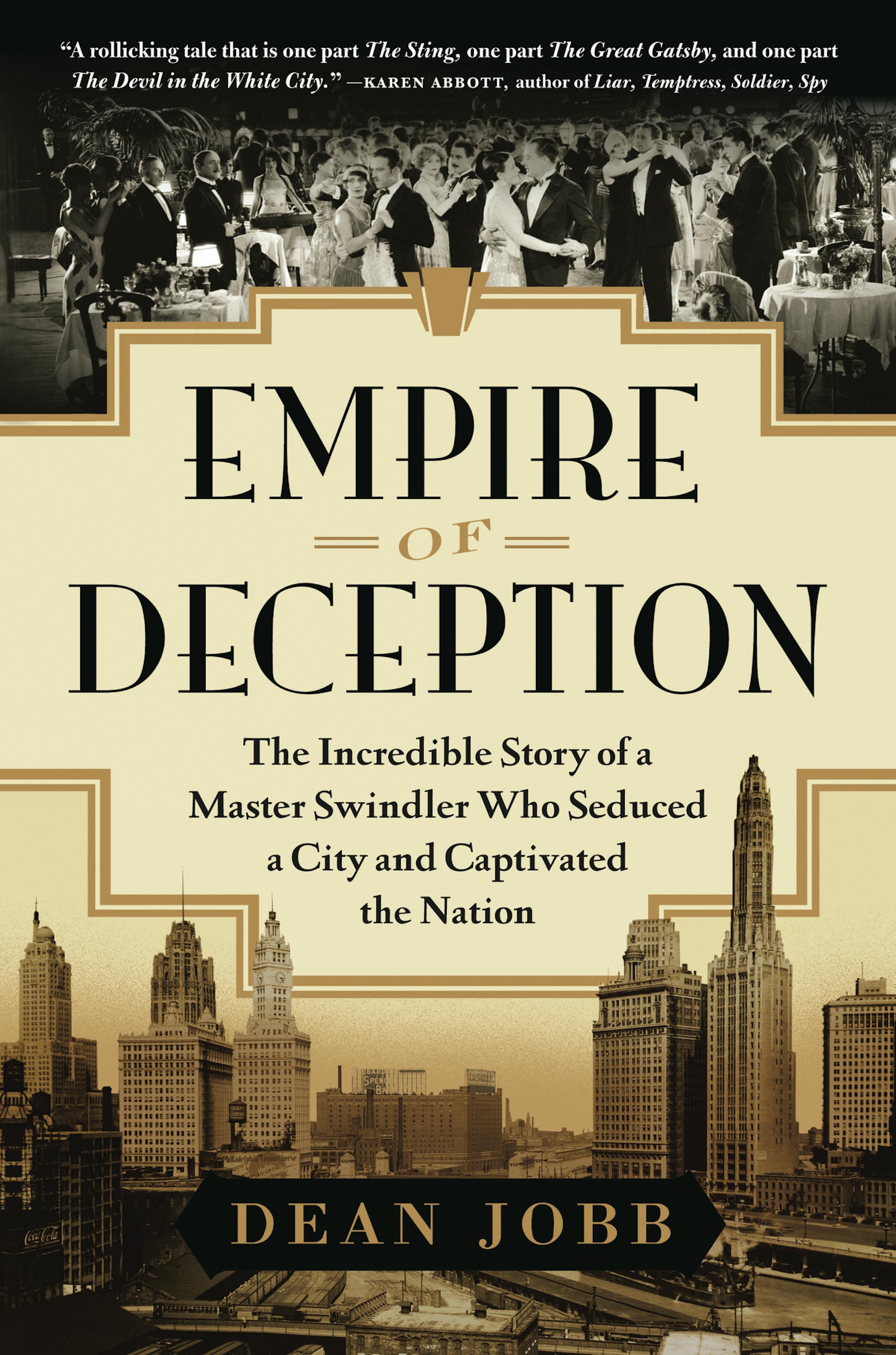
So often the abused becomes the abuser or, in the case of the master Chicago con man Leo Koretz (aka the Oil King), the swindled becomes the swindler. The slick-talking lawyer was the Bernie Madoff of the early 1900s, able to create an insatiable demand for stocks in nonexistent oil and timber reserves in Panama.
In "Empire of Deception," author Dean Jobb skillfully dusts off this century-old tale with a fast-paced narrative, a keen eye for detail and a cast of characters in which the free-for-all city of Chicago plays a prominent role.
The Ponzi scheme that led to the plundering of so many nest eggs commenced when Koretz himself fell prey to a Panama timber ruse. In 1907, urged by another con man, David Nieto, Koretz convinced nine of his friends to put up a thousand bucks each (about $25,000 today). When Koretz finally saw the land, it was worthless snake-infested quagmires and dismal mud holes.
What would have served as a cautionary lesson for most became an inspiration for Koretz, who then crafted a 150-page report of the untapped riches of Panama that was, Jobb writes, "part fact, part embellishment, part pure imagination." His goal was to make the report so thorough that no one would ever go down to Central America to take a look.
The worthless Bayano River Syndicate stocks sold briskly for the same reasons Madoff succeeded: There was a charismatic, charming figure who could exploit one of humankind's oldest weaknesses — greed.
As Jobb writes, "One prominent Chicago banker who had long tried to buy stock in the midst of the oil frenzy seized him by the lapels, 'Now, look here, Leo,' he begged. 'Why not have a heart.' " Koretz gladly relented and accepted the banker's check for $40,000.
Handsome dividends were paid out and many investors reinvested the money right back to Koretz.
His opulent lifestyle included a suite at the Drake Hotel with a million-dollar view, where he plied associates with vintage wine and expensive scotch, all illegal during Prohibition.