

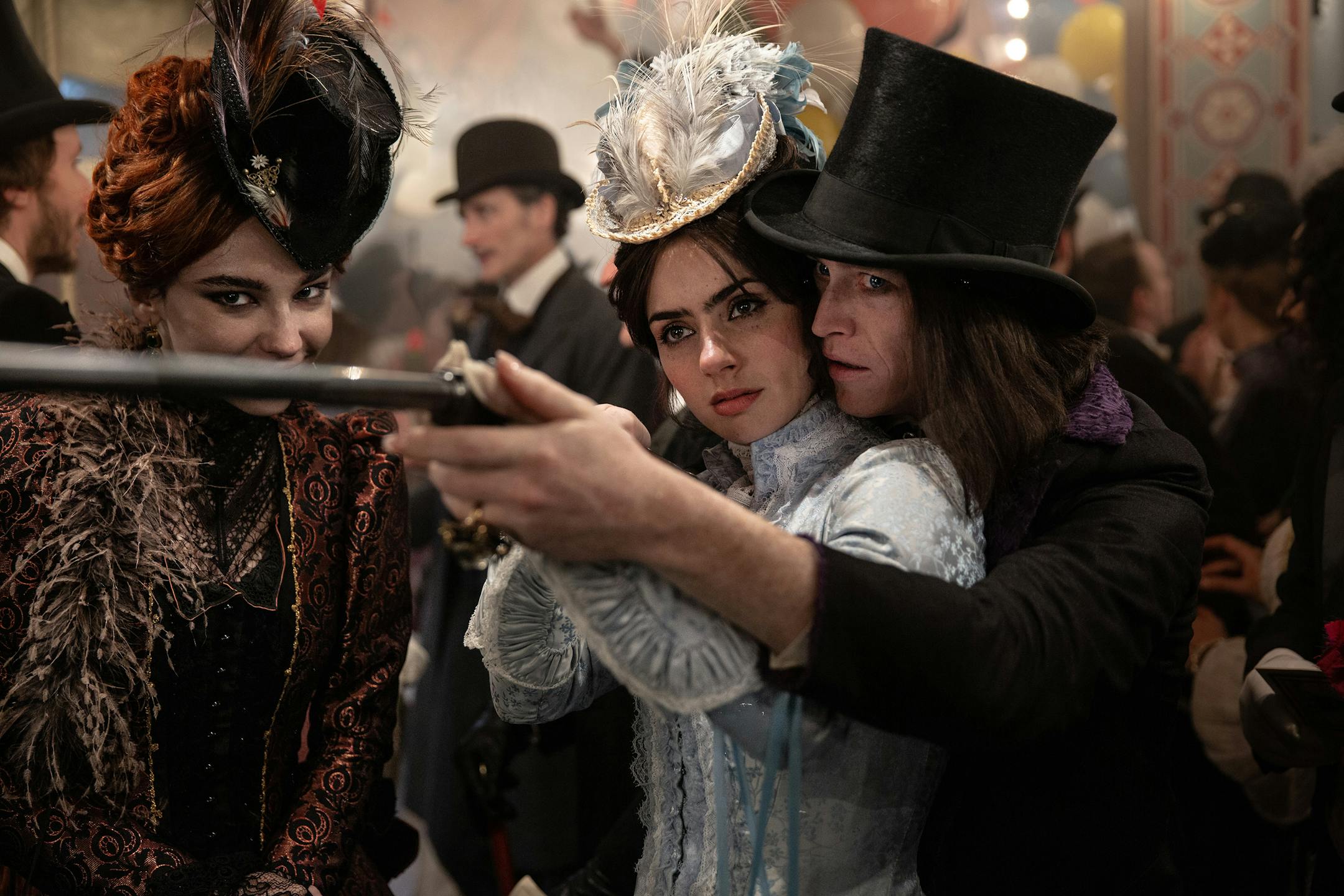
Perhaps every filmmaker feels like they have to make their version of “Dracula” at some point — and it certainly helps that Bram Stoker’s 1897 novel has been in the public domain for decades. Scandal-plagued French filmmaker Luc Besson has taken his stab now on the notorious bloodsucker, starring Caleb Landry Jones.
The result is what you might expect from the “cinema du look” pioneer, who is best known for “Léon: The Professional,” and his sci-fi space operas “The Fifth Element” and “Valerian and the City of a Thousand Planets.” Besson’s “Dracula” is over the top, highly stylized and speckled with outrageous creatures, visual effects and a plot that somehow connects Count Dracula to the centennial anniversary of the French Revolution. There is also, of course, sexual frenzy, but that element has always been baked into the Dracula tale.
Besson does take his personal liberties with Stoker’s novel, though the bones remain. Also titled “Dracula: A Love Story,” Besson positions Vlad II, Prince of Wallachia, Count Dracul (Jones) as a lovesick warrior, pursing his dearly departed wife Elisabeta (Zoë Bleu) across the centuries, from a remote castle in 1480 to the late 19th century in Paris.
He finds her doppelgänger in young socialite Mina Murray (also Bleu), who is a close friend of his vampiric consort Maria (Matilda De Angelis). Mina also happens to be engaged to Jonathan Harker (Ewens Abid) a solicitor who pays a visit to the Count at his Romanian palace for a real estate deal.
Meanwhile, a priest (Christoph Waltz) is hot on Dracul’s heels, hoping to destroy him and break the curse of vampirism he’s placed on every person he’s turned into a vampire.
Of course, we know this story — from the book, from Francis Ford Coppola’s “Bram Stoker’s Dracula,” most recently, from Robert Eggers’ Christmas 2024 sensation “Nosferatu” and many, many more adaptations. Besson innovates with a subplot about Dracul’s foray into the world of perfume, as he develops an intoxicating fragrance in Florence using French lavender, testing the potion on the pre-Revolution socialites in towering white-powdered wigs.
Besson’s version is pitched somewhere between Coppola’s opulently designed version and Eggers’ more restrained sexual spookfest. But Besson adds his own bizarre flair, including an army of CGI gargoyles that do Dracul’s bidding. Anytime the film veers into computer-generated territory, it takes on a sheen of cheesy artifice. When the film is set within the confines of beautifully production- and costume-designed interiors, it’s far more compelling.
Besson always manages to get his actors on the same page he is, and both Jones and Bleu match the campy operatic tone in their melodramatic performances. De Angelis and Waltz are also a hoot together, she as a heaving, hissing vampire bride who can’t stop licking her chops, he as a bone-dry vampire hunter dedicated to his investigation.


