

The true horror of puberty isn't the emergence of surprising hairs and baneful odors but the abrupt arrival of consequences. Physical ones, obviously, but also existential consequences. To enter puberty is to discover not only that the stakes have ratcheted up, but that such a thing as "stakes" exist.
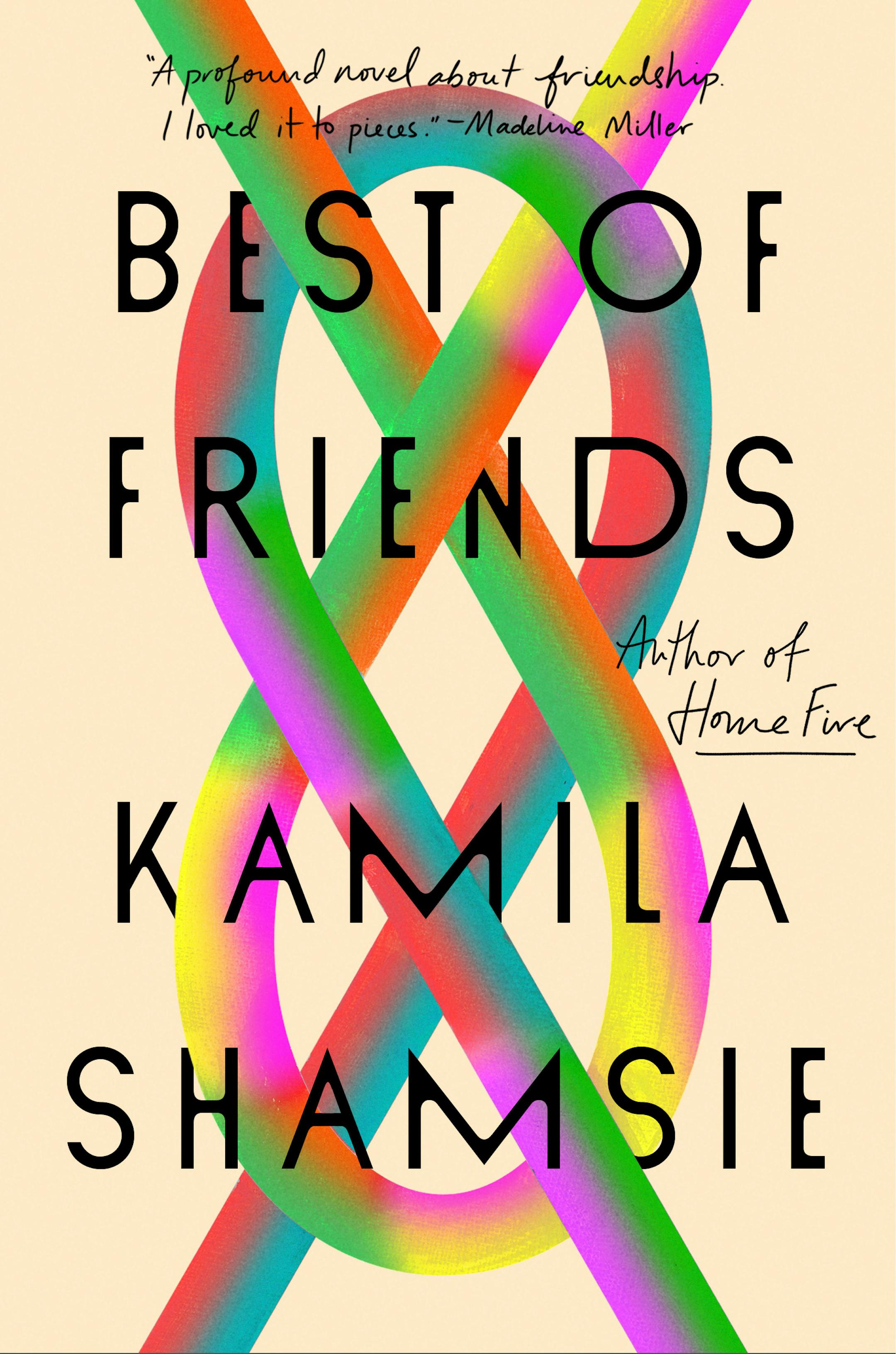
Kamila Shamsie's novel "Best of Friends" begins at this volatile time — and in a volatile location: Karachi, 1988. The best friends are Maryam Khan and Zahra Ali. Maryam is intuitive and romantic; Zahra cerebral and skeptical. Both are 14. Both are privileged but only Maryam is super-rich, with private security guarding the family manse and a promise that she will inherit her grandfather's luxury leather goods business.
Roads are about to fork. Puberty comes to Maryam first. Initially she thinks she has "lost the ability to judge her own dimensions" — like a person hopping into a rental car and immediately severing a side mirror — until she observes that when she accidentally bumps breast-first into strangers, the strangers are always, and suspiciously, men. Zahra experiences her own similar metamorphosis soon after.
Their new visibility is briefly enjoyable. Being a pretty young girl delivers all the rewards of fame without any of the striving normally required to achieve it: People are nice to Maryam and Zahra, boys are awed by them, strangers are glad to perform random favors. But the downside is significant. An ambient thrum of potential sexual violence culminates in an episode in which the two are abducted — though not physically assaulted — by a classmate's driver.
At the novel's midpoint we jump forward three decades to London in 2019. Here it becomes clear that "Best of Friends" is not quite a novel but more like two novellas, the first energetic and the second bland. Going from the Karachi half to the London half is like exiting an idiosyncratic local restaurant and entering a Starbucks. There's an anonymous sleekness — almost a CGI-enhanced quality — to the second section.
It begins with a pair of articles: a profile of Zahra in the Guardian and one of Maryam in Yahoo Finance. It is an awkward device for inserting 30 years' worth of exposition, but nonetheless, here is what we learn: Zahra received a scholarship to Cambridge, got married and divorced, leads Britain's oldest civil liberties organization and hangs out with George Clooney.
Maryam, also a London transplant, became a tech millionaire at age 26, lost everything when the dot-com bubble burst, and rebounded as a successful venture capitalist whose firm bears the realistically awful name of Venture Further.
Because the book is a saga of close female friendship, it's hard not to compare it unfavorably with Elena Ferrante's Neapolitan quartet. Ferrante wrote about the pain of knowing oneself to be inferior to the person one loves most. In those novels, Elena was merely intelligent where Lila was brilliant; attractive where Lila was irresistible. But in other ways the personalities of the girls were complementary and their mutual understanding complete enough to approach a profound and sacred redundancy. ("Sacred redundancy" is the closest I can come to a definition of best friendship.)

