

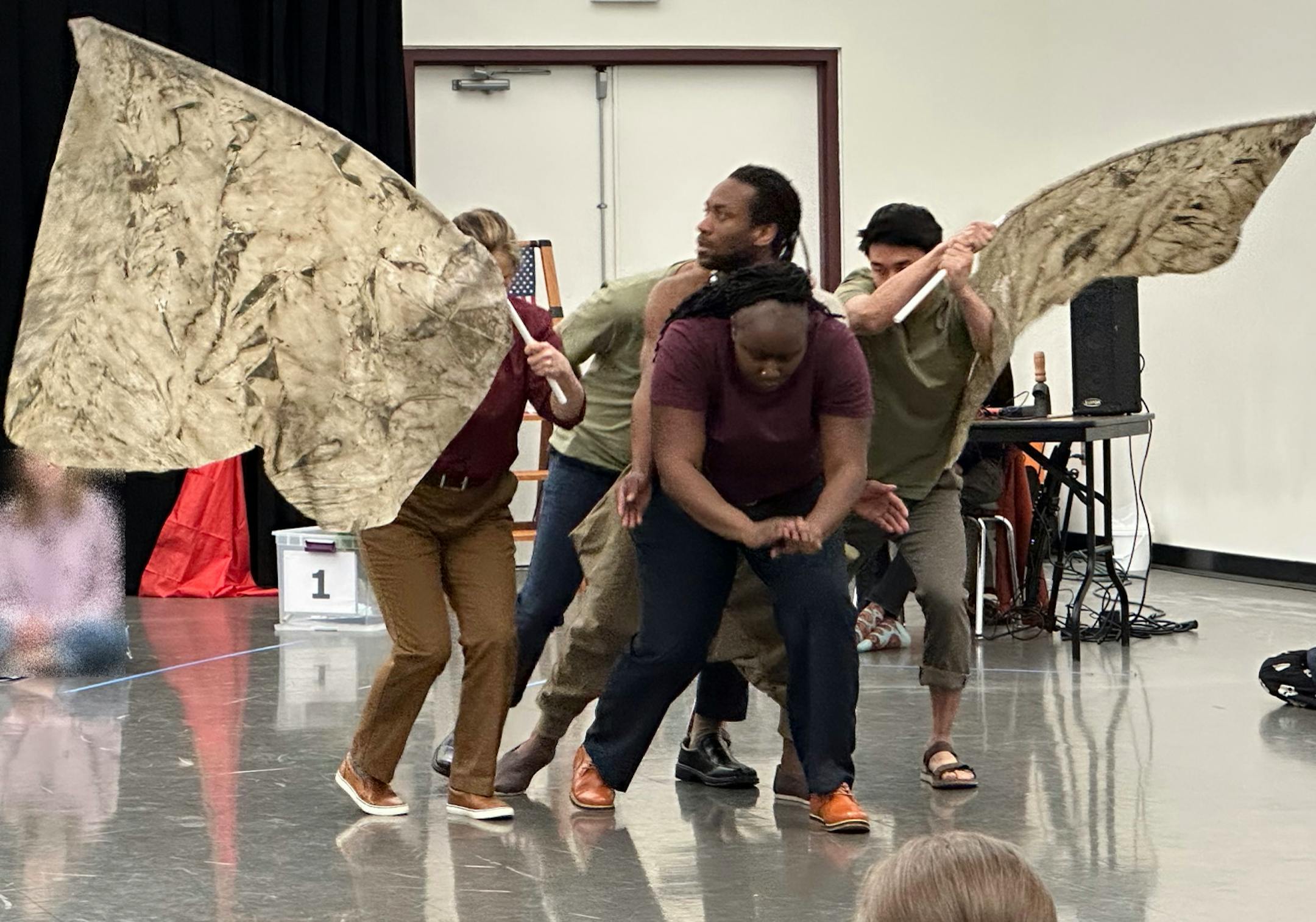
One does not ordinarily think of the global supply chain as a source of tense drama. But a sliver of international trade is brought to disturbing life in Ten Thousand Things Theater's production of "Mlima's Tale," which zeroes in on the sordid market in elephant ivory and the life-and-death consequences for African elephants.
In the Lynn Nottage play, a rare big tusker is targeted by poachers on the African savannah. There are buyers in Asia who covet the fine art that can be made from elephant ivory and would rather not hear about what it takes to sate their desires.
But as director Ansa Akyea's taut, palpable production makes clear, the costs are huge and implicate not only corrupt officials all along the journey — from raw material to finished product — but also governments and consumers.
"Mlima's" is similar to the "The Lion King," perhaps the most famous theater work set on the African savannah, in that both begin with an elephant marching in. But Nottage's 85-minute one-act play is a more intimate and less celebratory affair as the five actors use their bodies, voices and a few props to suggest a proud pachyderm on parade.
The production is done in Ten Thousand Things' signature bare-bones manner with minimal sets and props, lights up on the audience and performances with power-packed immediacy.
Director Akyea uses an array of tools to make the story vivid and palpable. For starters, the show has a few bits of interactivity, with performers moving before and behind the audience and occasionally engaging theatergoers with banter.
Akyea also draws practices that we now associate with film. When the poacher shoots his poisoned arrow, for example, it's done in cinematic slow motion. The various milieus, from the African bush to the embassy receptions, are evoked with music director Dameun Strange's sonic score.
But the performance ensemble is what really gives "Mlima's" its oomph.


