

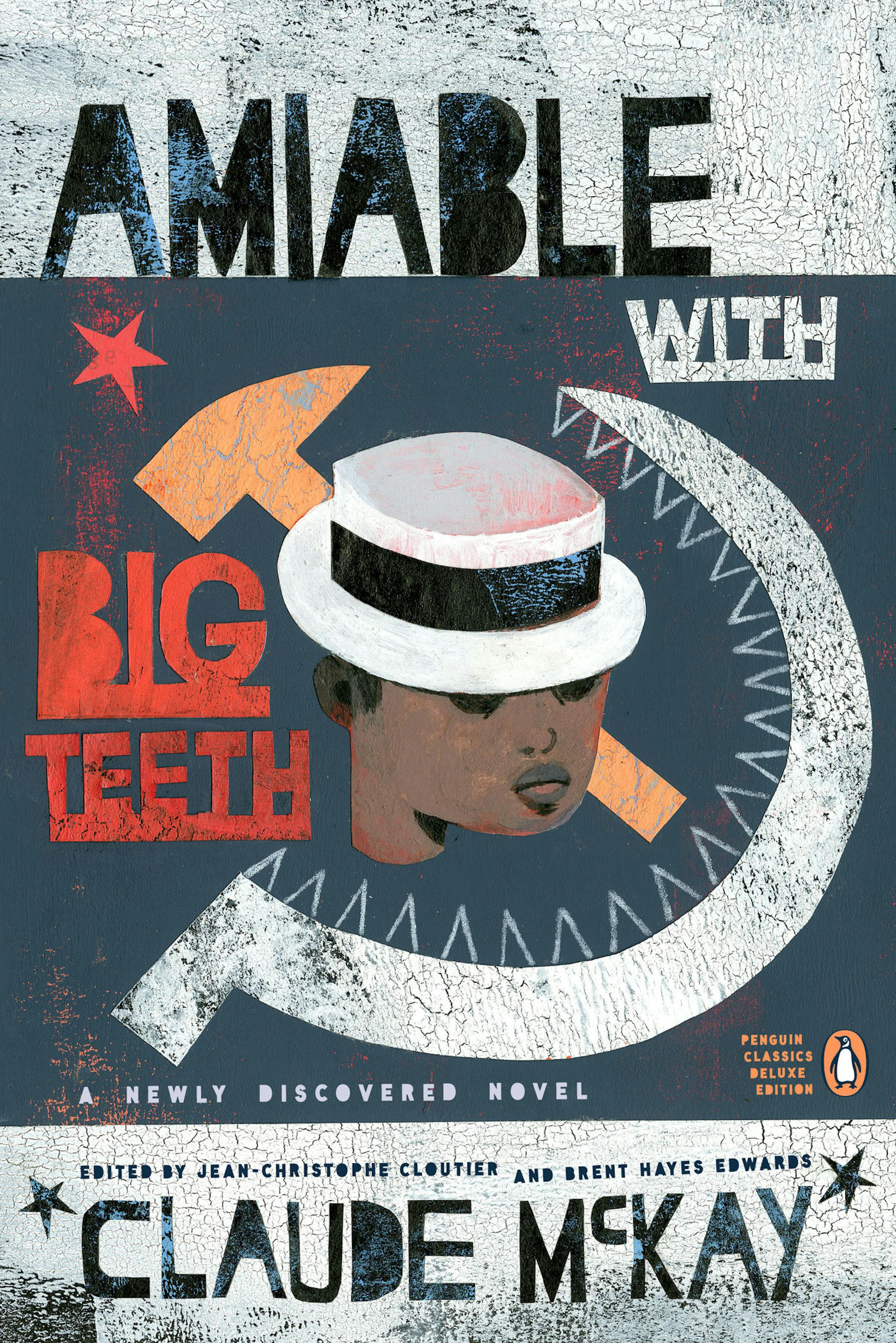
When a young Claude McKay spent eight months in Moscow during the early 1920s, he joined the many artists of his generation who fell hard for communism.
And why not? At a time when black men like McKay were being routinely lynched back home in the United States and the KKK was making significant inroads in the North, the Soviet Union promised a future of racial equality, in which all peoples would be brothers.
McKay had lost his youthful illusions by the time he wrote his last, just-discovered novel: "Amiable With Big Teeth." Completed in July 1941, it was rejected by McKay's publisher and then lost, until 2009, when it was discovered by graduate student Jean-Christophe Cloutier in a box of Columbia University papers.
In their informative introduction to McKay's novel, in which they trace the parallels between the novel's characters and actual historical figures, Cloutier and Columbia professor Brent Hayes Edwards describe its publication as "cause for celebration as well as a monumental literary event." Given McKay's status as a major Harlem Renaissance artist, they're absolutely right.
That doesn't mean "Amiable" is a good novel; it's not. Set in Harlem during the aftermath of Italy's 1935 invasion of Ethiopia, it's primarily interesting for sociological rather than aesthetic reasons.
McKay uses Harlem's response to Mussolini's invasion as his backdrop for various profiles of Harlem's elite, underscoring again what comes through in the first two of his three preceding novels, "Home to Harlem" (1928) and "Banjo" (1929): the black intelligentsia's disconnect from the everyday lives of people on whose behalf they claimed to speak.
One sees this tension from the first chapter, in which "animated crowds" attending a Harlem rally for Ethiopia go wild for a resplendently dressed Harlem native — decked out in an Ethiopian soldier's traditional uniform — while giving Ethiopia's conservatively dressed envoy a comparatively tepid welcome.
The elite organizing the rally condemn the self-styled Professor Koazhy's performance as "jungle burlesque" — never mind that his entertaining spectacle helps raise more money for the cause.

