

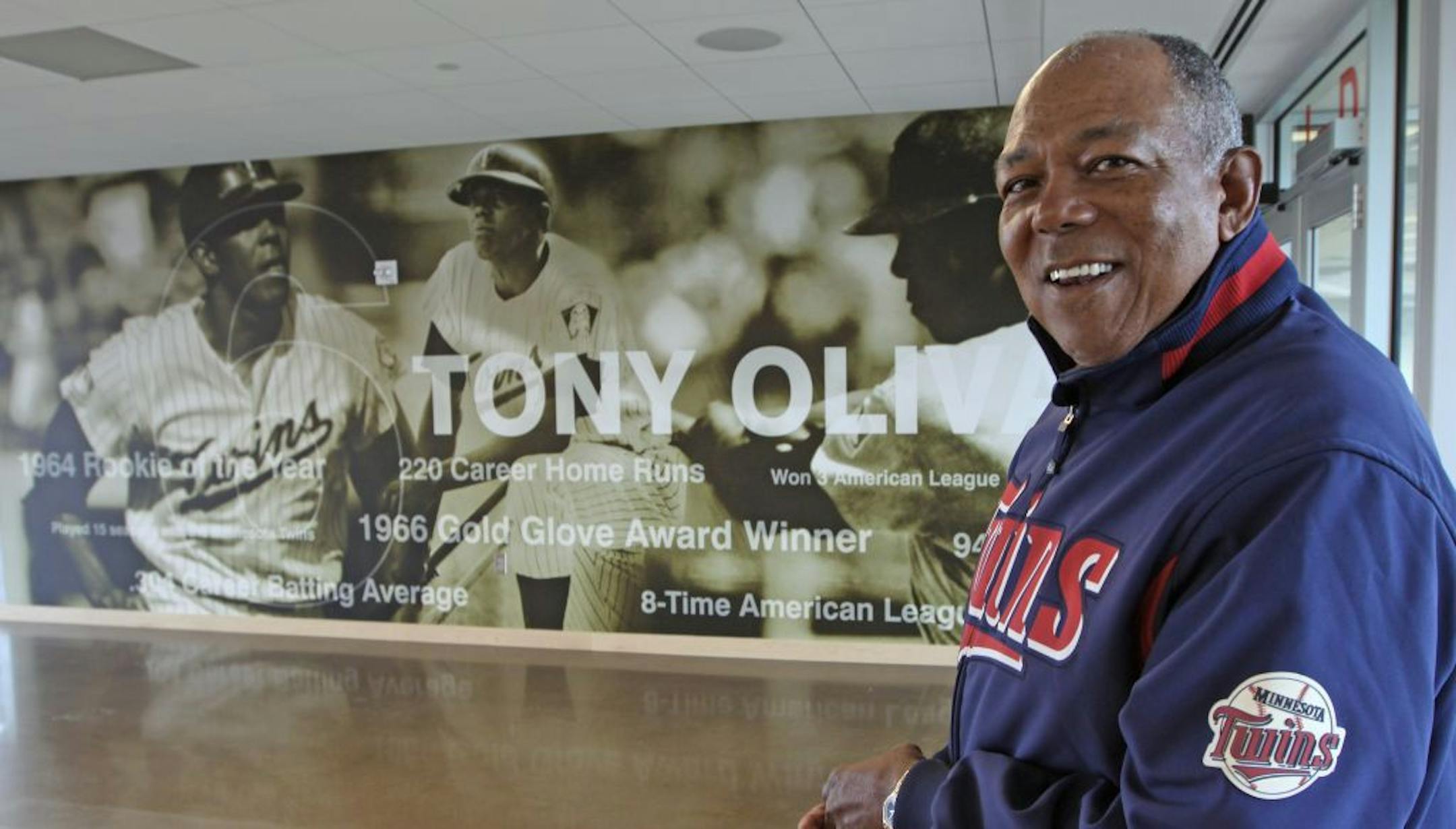
You find Entronque de Herradura on a map and even today it looks as if this is the middle of nowhere. The village is located in Pinar del Rio, the westernmost province of Cuba, an area of mountains and lush valleys.
Pedro and Anita Oliva had a farm of 150 acres, where they raised chickens and cows for food, and grew tobacco and other crops. Pedro earned a reputation in the area for having the finest touch for rolling Cuban cigars.
There were 10 children, six boys and four girls. There was much work on the farm, but on Sundays, there was baseball.
"We would play three games … play all day," Tony Oliva said. "After a while, I could hear the older men who were watching, talking in low voices to each other, saying, 'If that boy gets to Havana, he won't be back.'
"They were talking about me."
Havana was the home to the four teams of the Cuban League. This was the best of baseball's winter leagues, with major leaguers such as Camilo Pascual pitching 300 innings for the Washington Senators and then coming home to pitch more than 100 in the offseason.
Roberto Fernandez Tapanes was an outfielder who played for the Havana Cubans in the Florida International League in the early 1950s. The founder of that team was Joe Cambria, who would become known as "Papa Joe" to the many Cuban players that he signed for the Washington Senators' organization.
"Fernandez Tapanes discovered me," Oliva said. "He would bring teams to play in our area on Sundays, and he saw me play in Palacios. I was hitting third for our team … hitting good. He said to me, 'Would you want to play professional?'


