

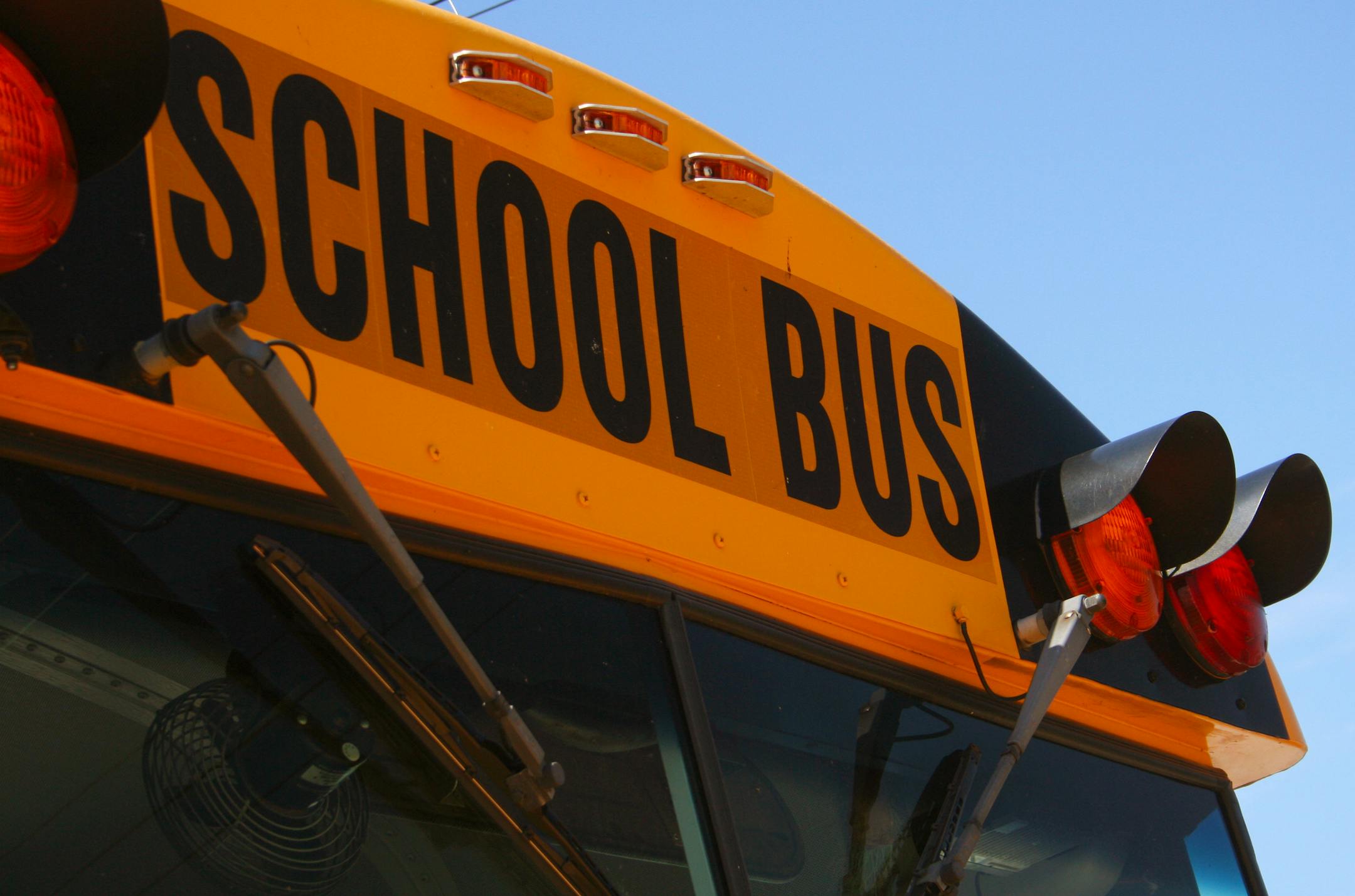
Mike Mason was one of the nation's highest-ranking FBI officials. Now he drives students to school in a yellow school bus each morning and afternoon. It wasn't the career turn he'd imagined for himself. He was once the executive assistant director of the bureau, responsible for overseeing all criminal investigations, among other duties. But in his retirement, he felt a pull to help when there was a shortage of school bus drivers.
"For context, probably half of the FBI's operational resources fell under me," Mason, 63, said from his home in Midlothian, Va. Since late April, Mason has been working for Chesterfield County Public Schools as a bus driver. While it differs drastically from his previous profession, "I feel the same sense of duty," he said.
Each morning at about 5:30 a.m., Mason carefully inspects his 24-foot-long busto ensure that it's safe for students to ride. "I get it ready to roll," he said. "This is not hyperbole: I'm smiling every day I start that bus up." He collects nine students ages 10 to 18 and drops them off at the Faison Center in Richmond, which offers educational programs for autistic children.
Mason understands the struggle that students, particularly those with disabilities, have faced throughout the coronavirus pandemic. It's what ultimately spurred him to spring out of his short-lived retirement to drive a school bus. The idea came to him in January this year, when he saw a local news story about the desperate need for school bus drivers.
Mason learned that the severe shortage has become a crisis in school districts across the country. Given that the average age of school bus drivers is considerably higher than the median age of U.S. workers, many drivers decided to retire when schools went to remote learning, while others didn't want to risk possible infection by continuing to work when in-person classes resumed. School districts have had little choice but to adopt creative solutions. Massachusetts has deployed the National Guard to fill the voidt.
To attract prospective drivers, school bus companies have started proposing free training and sign-on bonuses, while numerous districts, including Baltimore City Public Schools, are offering to pay parents to transport their own children to school. In parts of the country, the shortage is so dire that some students have been stranded without a ride to or from school. Mason — who retired from the FBI in 2007 and joined Verizon as chief security officer until he retired again in December 2020 — wanted to lend a hand.
He was done with executive work, he decided, but "I was ready to get back into doing something that would give my life a regular cadence." Plus, as a father of two adult sons, whom he called "the most precious things in the world to me," Mason said he "always wanted to do something with kids." Mason grew up on the South Side of Chicago and was raised by a single father who was a truck driver for the board of education. "That's part of what makes me smile every morning as I crank this bus up," he said. "It's the connection to my father."
Mason had fantasized about being in the FBI from the time he was in the seventh grade. "I wanted to be part of something that was bigger than me," he said. "The reality exceeded anything I ever dreamed of. I loved every day of my FBI experience." Mason recalls taping a wire to his body countless times and going undercover to bust local drug dealers in Hartford, Conn., where he was based for four years. "To gain somebody's trust and confidence and be working against them was exciting, exhilarating, and scary at times, too," he said.


