
Opinion | It’s time to pause the I-94 project

MnDOT plans to rebuild the interstate more or less as it is today. But highways don’t work in cities, and a new vision is needed. Speak up.

January 6, 2026 at 6:26PM
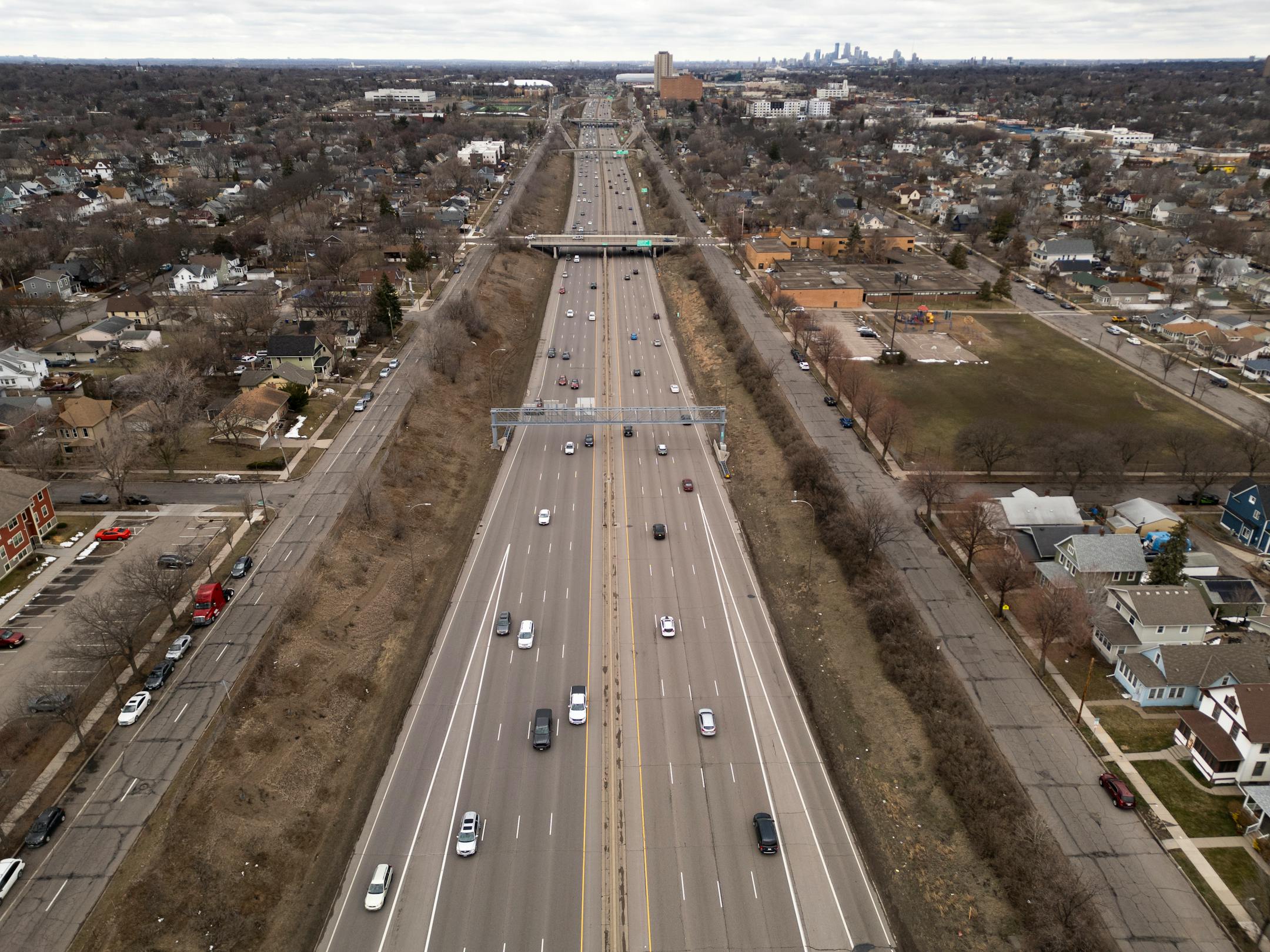
Afternoon traffic moves along the I-94 freeway as it cuts through the Rondo neighborhood on April 2, 2024, in St. Paul. (Aaron Lavinsky/The Minnesota Star Tribune)

Opinion editor’s note: Strib Voices publishes a mix of guest commentaries online and in print each day. To contribute, click here.

•••

In 2015, Charlie Zelle, then commissioner of the Minnesota Department of Transportation, stood on a frontage road overlooking Interstate 94 and promised, “We would never, we could never, build that kind of atrocity today.” St. Paul and Minneapolis communities were understandably confident that MnDOT would eventually remove or reform the aging highway in their centers.

How times have changed, because MnDOT now plans to rebuild the highway more or less as it is today. It might end up a little bigger, with bus and carpool lanes or a few more bridges across its 7.5-mile trench, but overall the I-94 project “atrocity” is on a fast track to inflict another 60 years of damage upon nearby communities.

An opportunity for the public to comment on MnDOT’s highway proposal began Jan. 6 and continues until March 9 (see tinyurl.com/mndot-i94 for information). Thousands of Minnesotans and dozens of organizations are lining up to ask for a redo. But none of that matters in MnDOT’s decisionmaking tree.

This is a problem because highways don’t work in cities. People in dense, highway-adjacent city neighborhoods experience I-94’s awful impacts every day as up to 160,000 vehicles pound its asphalt into breathable toxic dust. Sounds of roaring traffic echo off nearby homes and buildings day and night. Residents walking their dogs dodge drivers who recklessly enter and exit the highway on neighborhood streets. Families hold their breath as they learn how highway proximity leads directly to lung and heart diseases, cancer and dementia.

City children who live near I-94 — among them the most vulnerable in our state — attend schools where the highway is very likely giving them learning disabilities alongside their lessons.

I-94 was never supposed to be here. Interstates were originally envisioned as connectors that delivered cars to cities’ edges. MnDOT intentionally ravaged Minnesota’s thriving Black communities by forcing I-94 and I-35W into their hearts. To call that an appalling abuse of power is an understatement.

We need not repeat that mistake. Our governor must halt this monstrous public works juggernaut before it becomes reality. As state Rep. Katie Jones declared at MnDOT’s recent meeting for public officials, “It’s time to pause the project.”

Still, because I-94 is here, some people have come to rely upon and defend it. Indeed, since the highway trench destroyed thriving city business districts, severed neighborhood streets and hollowed out future residential development, what is our alternative but to use it?

MnDOT and its remora-like contractors have spent a decade on a planning and PR campaign they call “Rethinking I-94.” They asked people how they use the infrastructure (surprise: in their cars); they made out-of-scale drawings of what a new highway might look like and sought meaningful public feedback. They even invited area teenagers to learn about transportation careers, which was well and good until they called this unabashed greenwashing activity an important project input.

Millions of public dollars later, impacted residents have had no noteworthy influence on improving the project. In early December 2025, MnDOT showed plans to its “Policy Advisory Committee,” mostly local elected officials with no vote on project outcomes. If their comments were to be believed, our representatives were appalled by the proposal. MnDOT’s “Community Leaders” entity exists merely for show-and-tell. MnDOT is the sole project designer and final decisionmaker and nothing will improve unless the governor takes notice of this planning travesty and calls his cabinet to heel.

Four preliminary highway options are still on the table, none of them fully reparative. There’s no vision to replace the broad, sloping highway edges with tax-generating residential or business development. There’s no aim for speedy regional rail, no fully networked protected bicycle highway, no transformative at-grade boulevard. Perhaps most disappointing, there is no thought for a gracious, lower-speed trenched parkway with terraced townhouses, copious neighborhood reconnections, thriving walkable business districts, accessible parks and thousands of new trees — the kind of public and private-market vision that would create a stampede of new residents and entrepreneurs to the very center of our cities.

MnDOT says reductions in highway speed or vehicle carrying capacity will lead to neighborhood congestion, increased air pollution and more crashes as drivers jockey on local streets to get to and from their destinations. This vision is frankly terrifying to people who live near today’s trench. But engineers outside MnDOT point out the flaws in this doomsday prediction, encouraging us to consider proven alternatives and modern modeling well beyond the status quo. Nobody wants to prevent people from getting to work or a hockey game, or from making deliveries on time, but there are better ways of ensuring that access than an actively deadly, destructive highway. What’s the harm in taking a look?

MnDOT’s Rethinking I-94 project leaders are minimizing the Twin Cities’ critical social, economic and tax generating role in Minnesota’s future. They ignore the primacy of inviting more people and businesses into the city center, which is by far the most efficient way to deliver on our regional economic and quality-of-life aspirations.

Other places are moving forward with beautiful highway calming projects focused on community health and economic vibrancy. The I-81 project in Syracuse, N.Y., prioritizes exciting city development plans alongside residents’ health. Montreal is poised to pacify more of its Bonaventure Expressway by separating the roadway from the river, reducing its speed and planting acres of trees and greenery.

It is imperative that we do not forge ahead with MnDOT’s current plans and timeline. I’m with Rep. Jones: A pause on this multi-decade project is essential to getting it right.

Mary Morse Marti is the former executive director of the Minneapolis Transportation Management Organization and the St. Paul Neighborhood Energy Connection. She is the founding director of Hourcar carsharing and a longtime advocate of multimodal transportation.

about the writer

about the writer

Mary Morse Marti

More from Commentaries

See More

Opinion | What happens after our shock fades?

card image
Carlos Gonzalez/The Minnesota Star Tribune

This a challenge specifically to white Minnesotans. Operation Metro Surge is just the latest iteration of a familiar pattern. We must sustain our engagement.

card image
card image