

Opinion editor's note: Star Tribune Opinion publishes a mix of national and local commentaries online and in print each day. To contribute, click here.
•••
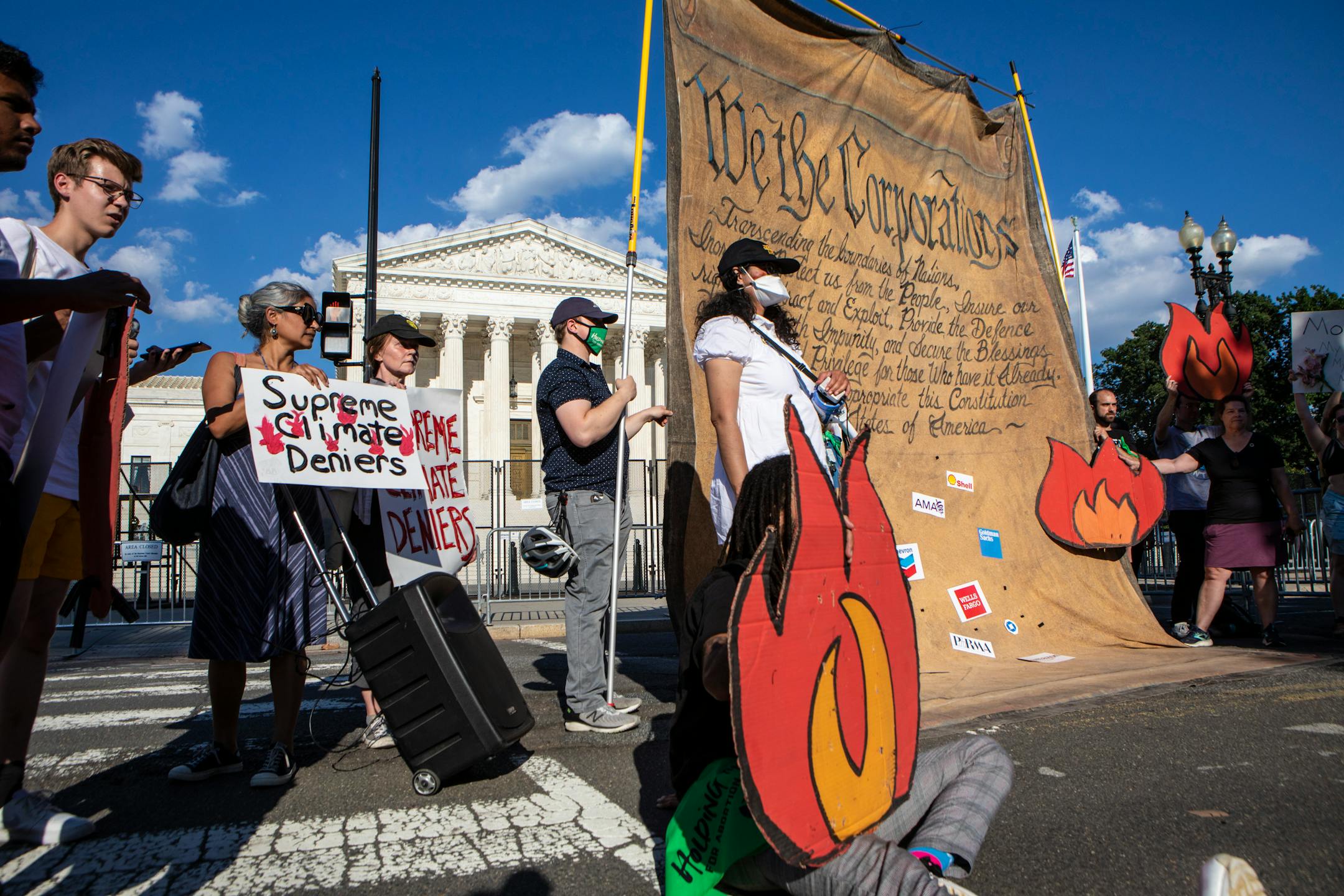
By a 6-3 vote, the Supreme Court has held that the Environmental Protection Agency lacks authority to order reduced emissions to fight climate change.
Yes, you read that right.
In an opinion by Chief Justice John Roberts, the conservative justices said that Congress had not authorized a 2015 rule adopted by the agency aimed at shifting energy use from coal to natural gas and from fossil fuels to renewables. Climate change now joins abortion, guns, and church and state in the list of high-profile, emotionally charged topics on which the justices have issued landmark conservative opinions this term.
In the process of issuing its opinion, the court sidestepped the famous Chevron doctrine. That doctrine says the courts must defer to agencies' reasonable interpretation of laws passed by Congress. Under Chevron rules, the court could have said that, since Congress's grant of statutory authority to the EPA was ambiguous, it would allow the Barack Obama-era EPA regulation applying that grant to stand.
Instead, the court articulated and embraced for the first time what is in effect a new doctrine of administrative law, which it called the "major questions" doctrine. Under that doctrine, the court held, when an agency finds what the court considers to be a new power in a "vague" grant of statutory authority from Congress, the court must "hesitate before concluding" that the grant of power in fact exists.
While hesitating, the court will check to see if Congress has made a clear statement with regard to the grant of power. If there is no clear statement, the court will conclude that the agency lacks authority under the law.


