

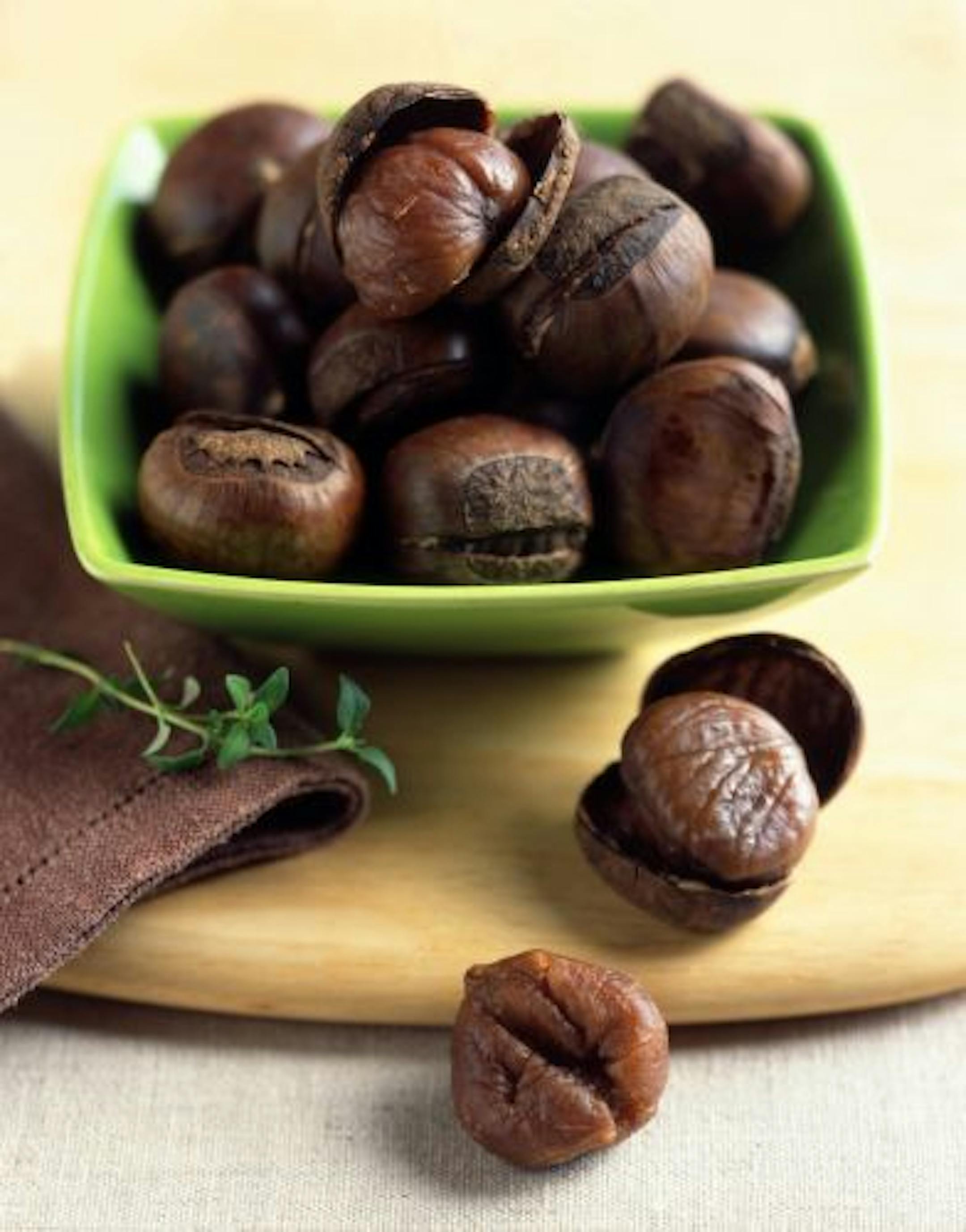
Badgersett Research Farms of Canton, Minn., is restoring the American chestnut to its former glory. In the southeast corner of the state, Phil Rutter, a biologist and ecologist, has been working on American hybrid chestnuts for the past 30 years.
Why does this matter?
Because we Minnesota cooks can now enjoy sweet, fresh chestnuts our grandmothers once enjoyed. Until a century ago, millions of majestic chestnut trees, growing taller and straighter than oaks, populated our forests from the heartland to the East Coast, and were thick along the Appalachian Trail. Come June, their white blossoms made hillsides appear as though covered with snow. With their shiny canopy of leaves and fine hard wood, they provided shelter and food for wildlife, American Indians and settlers.
Called "bread trees," their nuts were dried and ground into flour for bread, boiled and mashed as potatoes, roasted for snacks. Highly nutritious, a good source of carbohydrates and protein (equal to beans or maize), they were dried and stored for food through the winter. In Virginia, pigs on a diet of chestnuts became those famous hams.
Then a blight felled nearly all the trees in about 30 years, beginning in the early 1900s; loggers quickly took care of what was left.
Today at Badgersett Research Farms, the taste of this new "old" chestnut is a revelation. Compared with the nuts we find in the stores -- which tend to come from Italy and California -- the meat is denser, sweeter and creamier. The nuts are a bit smaller, like mahogany marbles; their soft, pliable shells are easy to score and the meat is free of that bitter dark skin. No more nicked, singed fingers -- these nuts are a snap to prepare (see directions that follow).
Working with his son Brandon and wife, Megan, Rutter -- who created the American Chestnut Foundation -- sees "woody agriculture" as a viable solution to many of the problems plaguing our farmland while providing a reliable, sustainable source of food, oil, shelter and fuel. These perennial plants, with their 30-foot root systems, withstand droughts and floods and yield enormous crops year after year. They stem erosion, capture carbon, return nutrients to the soil and filter water. They're beautiful to look at, too.
Chestnut trees grow quickly, far faster than oaks, absorbing sunlight through the bright green beneath their thin bark and, unlike walnuts, produce crops year after year.


