

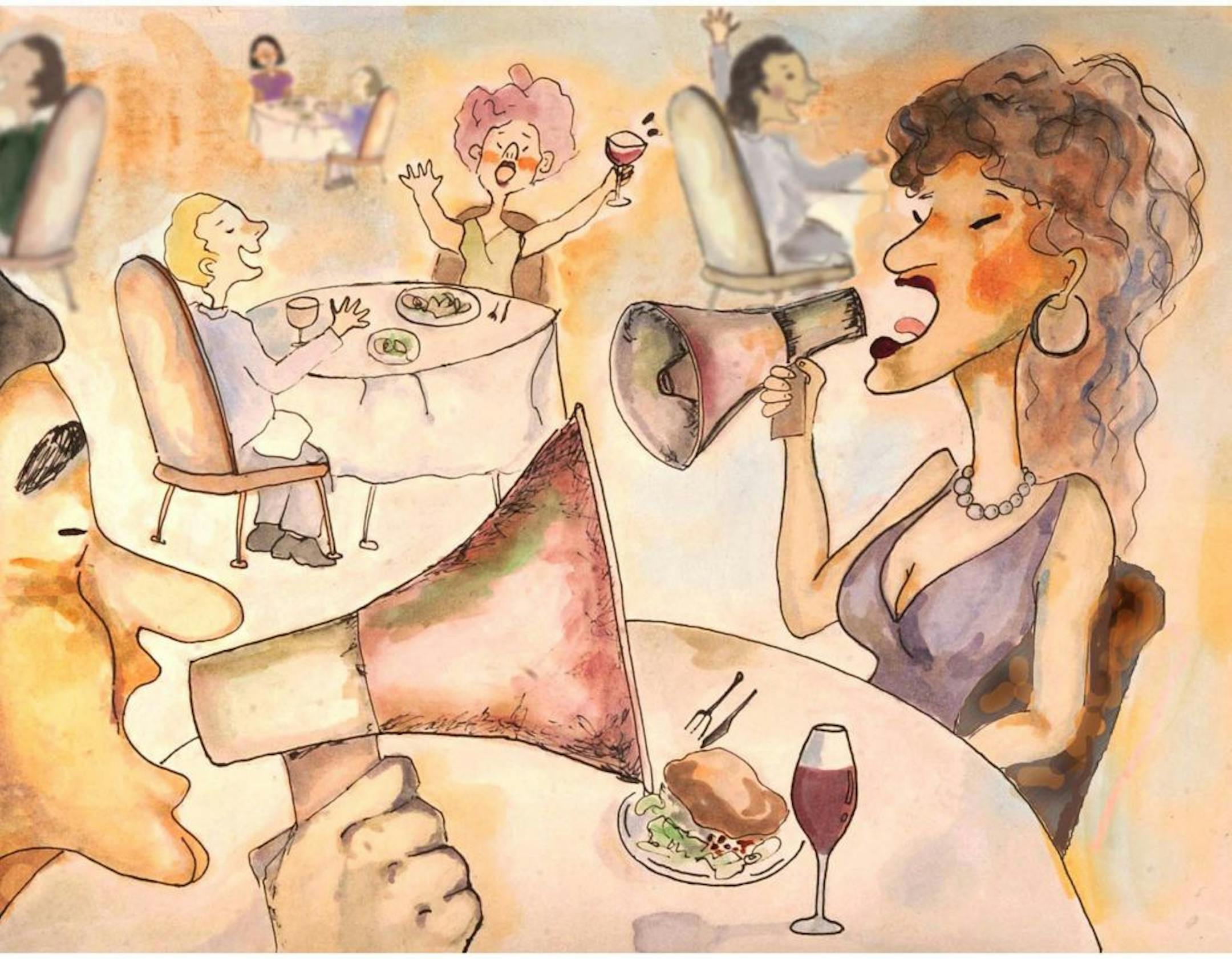
When they opened the original Heidi's in south Minneapolis, Stewart and Heidi Woodman offered super food, a stellar beverage list and a swell ambience. The packed houses they deservedly drew, however, became too much of a good thing for one reason:
Noise. And not just noise, but a cacophonous clamor that was forcing tablemates to bellow at one another between bites of braised lamb shanks and sips of syrah.
The Woodmans loved the tin ceiling -- "You really don't want to throw panels up there; you want to show it off as much as possible," Stewart said -- and needed to retain the tight quarters between tables. Enlisting the help of a close friend who works as a sound expert, they doubled up on tablecloths and installed leather banquettes, "so that people wouldn't have to scream at each other."
In an era in which restaurateurs seek out old spaces and share buildings with condo dwellers or hotel guests, this kind of sound judgment is as important as sourcing food and hiring the right people.
"You can hear each other at the table, can barely hear the music in the background and not hear people at other tables, that's the ideal vibe," said Richard D'Amico, CEO of D'Amico & Partners and a longtime proprietor of both casual and formal restaurants.
D'Amico and other industry veterans acknowledge that it's important for a restaurant to have "buzz," an ambient din provided by music and other patrons.
But it's a short trip from "Are we still working on that?" to "Can you hear me now?" being a room's most-asked question, especially for boomer-age patrons susceptible to hearing problems in places with heavy background racket. "There is a fine line," Woodman said, "and there are places that are too loud and older friends are turned off. This is going to stay with us."
Pacing the music


