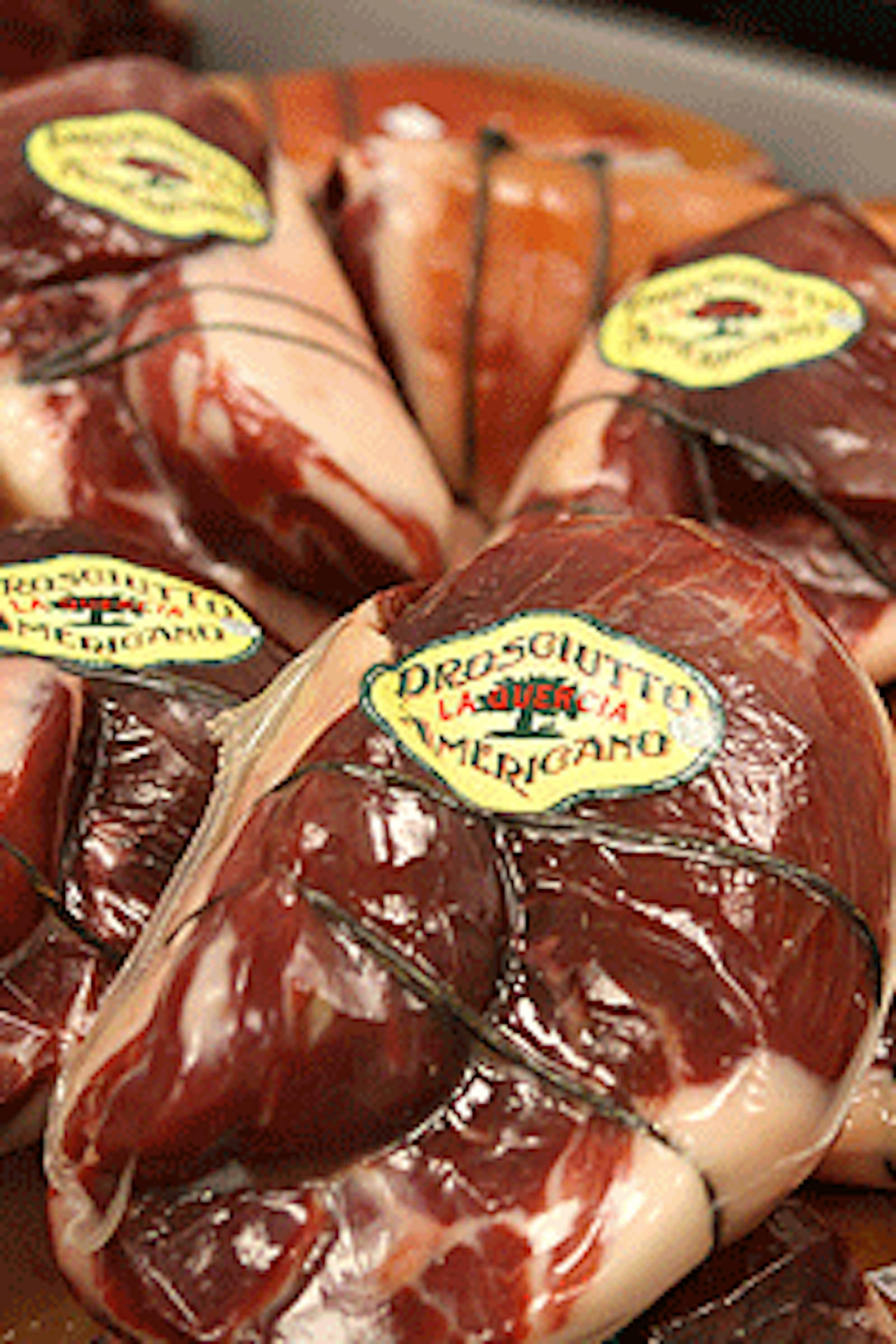
After spending three and a half years in Parma, Italy, Herb and Kathy Eckhouse returned to Iowa with dreams of making prosciutto. Their visions led them on a cured meat journey that started with Herb studying the art of prosciutto-making for five years and experimenting with making it in their home. In 2005 they moved their newly formed company, La Quercia (pronounced La Kwair-cha), to a production facility in Norwalk, Iowa. Their dreams began to pay off when La Quercia Prosciutto Americano caught the attention of food critics, soon after their first orders were shipped.
Intrigued by the magic behind what Vogue magazine food writer Jeffrey Steingarten called the "best prosciutto you can find in this country, imported or domestic," the Heavy Table took a trip to Norwalk to witness what Herb Eckhouse has called "assisting in a miracle."
La Quercia's facility is designed to mimic the seasons, respective to the origin of drying meat through the winter as a preservation method. Each Friday a shipment of pork arrives from Iowa suppliers: Becker Lane Organic Farm, Organic Valley, Niman Ranch, Heritage Acres and Eden Farms. The morning is dedicated to salting the legs -- the most important step in the process, according to the Eckhouses.
With Italian opera blasting from the stereo -- we're told that the hams like it -- a team of nine workers, including the Eckhouses, methodically works through pallet after pallet of hams. Each leg is trimmed, salted and quality-checked by Herb before being placed on a cart.
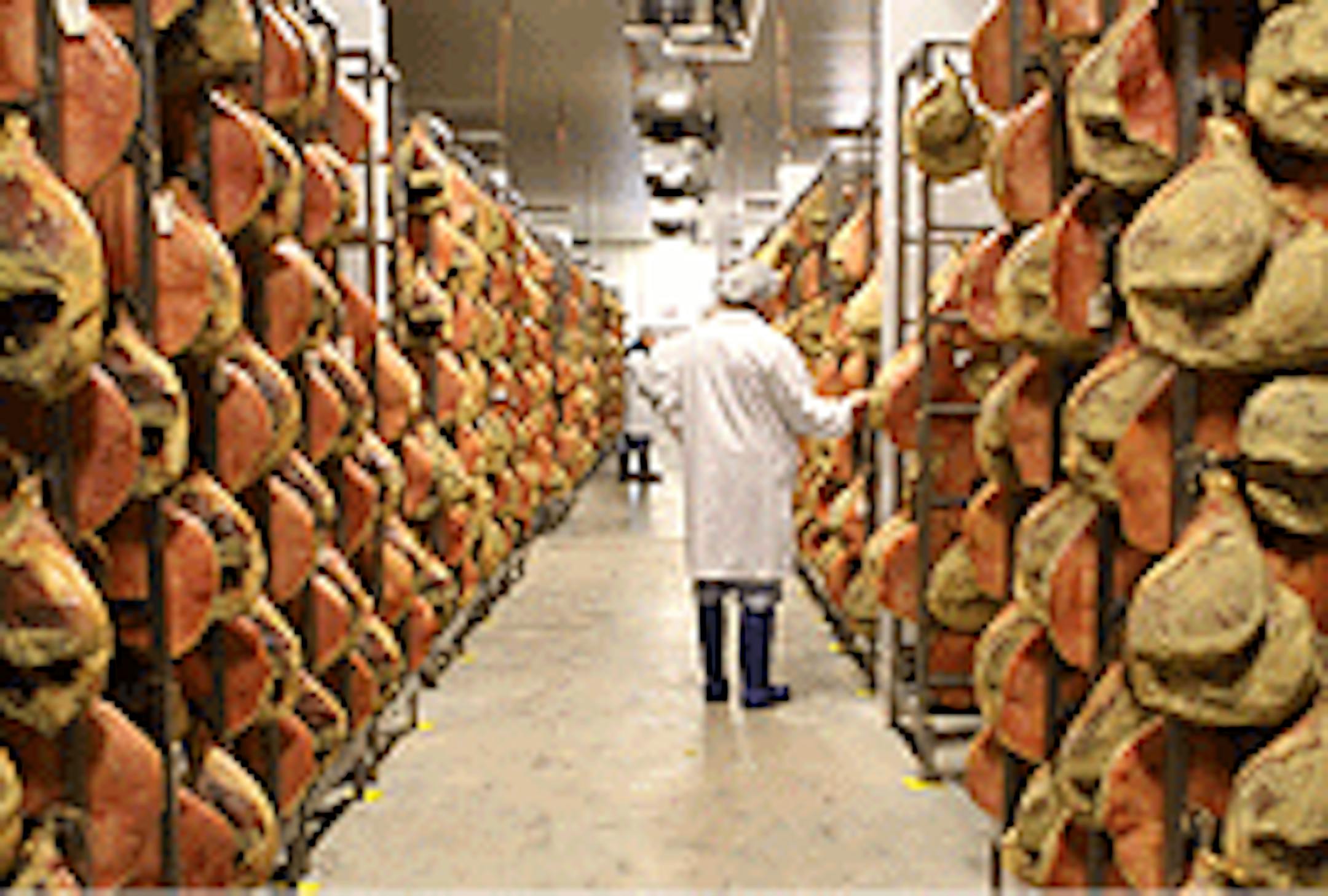
Once the carts are full, they are moved to the first of many rooms that parallel the conditions of the seasons. After two weeks in pre-riposo (pre-rest in Italian), which rapidly dries the meat, the carts are moved to the next season for a slow process of rest -- riposo.
Spring is a short season, so the room where the carts are moved is a small hallway, the purpose of which is solely to raise the temperature to about 60 degrees. Once at this desired temperature, the meat is moved to a virtual warehouse of wall-to-wall hams, where it continues to dry but, with the aid of the warm air, now also begins to age.
The last stage of prosciutto making includes a "physical barrier" applied to the meat to prevent further moisture loss. When it is time, the hams are trimmed and then sliced or packaged whole.
La Quercia products can be found locally at Surdyk's, Lunds & Byerly's, and at restaurants such as Broders' Pasta Bar, D'Amico & Sons, Lucia's, Rinata, Heartland, the Dakota and Manny's Steakhouse. Find more locations at www.laquercia.us.