

Opinion editor's note: Editorials represent the opinions of the Star Tribune Editorial Board, which operates independently from the newsroom.
•••
Russia's response this week to an attack on a critical Crimean bridge reflected the difference between the governments in Kyiv and Moscow.
The strike on the Kerch Strait Bridge, which the Ukrainian government has not officially claimed responsibility for, was strategic. It crimped a vital supply line to territory Russia illegally cleaved through force and a sham referendum — the same method Moscow used to annex Crimea itself in 2014.
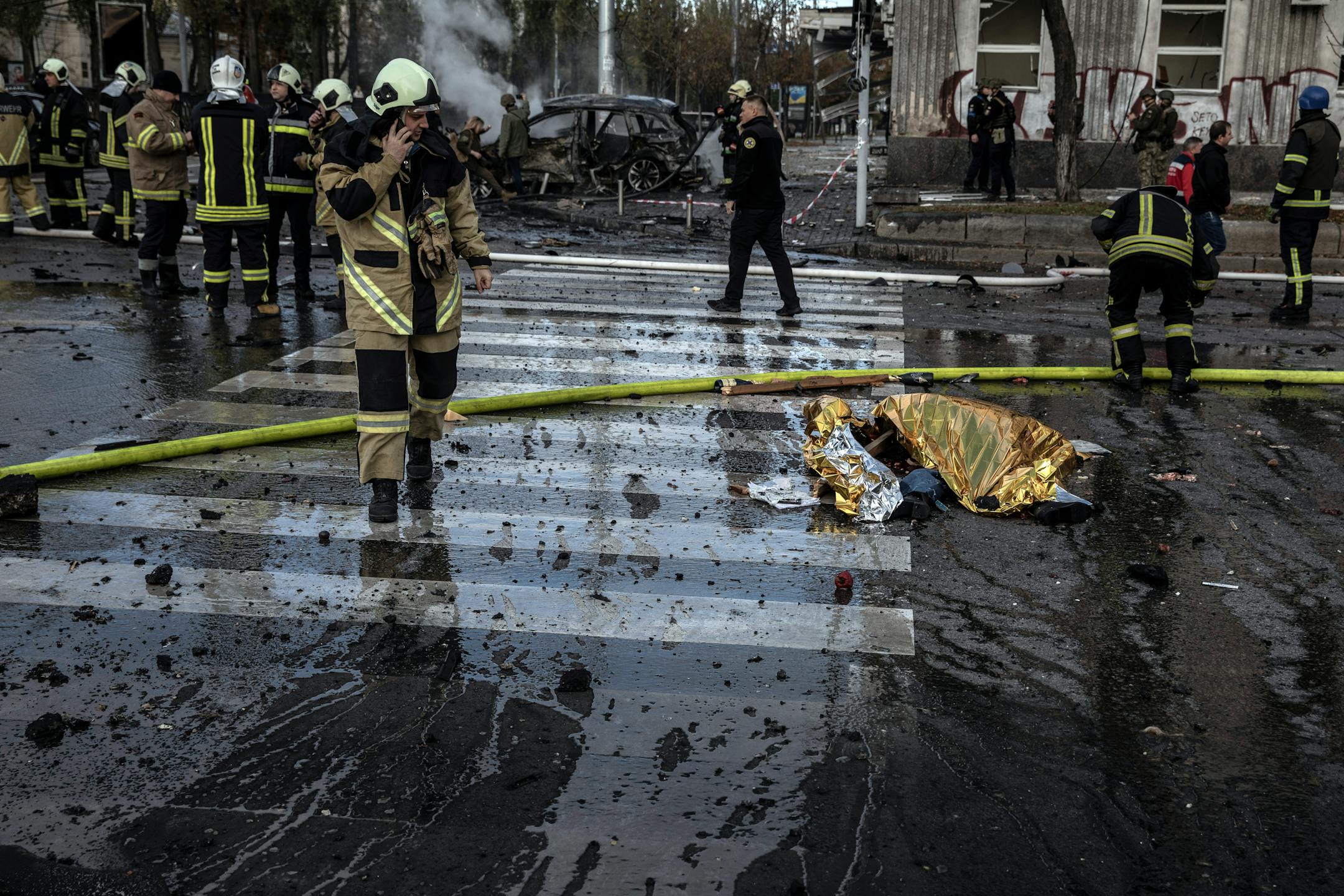
Conversely, the Kremlin's response — missile and drone attacks on noncombatants in multiple Ukrainian cities — wasn't militarily strategic, however tragic. It took at least 20 lives and injured scores more innocents, including women and children. But it did not demonstrably alter the course of a war in which Ukraine has more military momentum, methodically retaking territory from the invaders.
Russia's random strikes mean "Ukraine is winning, and Russia is reduced to strategically irrelevant war crimes, simply granting punishment on Ukrainian civilians," John Herbst, a former U.S. ambassador to Ukraine, told an editorial writer.
Herbst, now senior director of the Atlantic Council's Eurasia Center, characterized the Kerch Strait Bridge as a "perfectly legitimate target," given its use as an "essential logistical hub" for Russian troops. Russia's retaliatory strikes, he said, are "awful" and "evil," yet "also irrelevant, because Ukraine is not going to surrender because civilians are dying."
Neither are Ukraine's allies. In fact, at an emergency virtual G-7 meeting on Tuesday (of the Group of Seven leading industrialized nations), leaders pledged "undeterred and steadfast" financial and military aid, including expediting more missile-defense systems.


