Finding a home can get complicated when you're struggling with HIV/AIDS.
"The only place I could afford was a small studio out in the 'burbs," said Christopher Morris, a 6-foot-9 former college swimmer who no longer has the energy to work in restaurant management. He can't afford a car. Without one, getting to doctors and other medical resources was difficult. "It's very important to get to those appointments," he said.
When an apartment became available at Clare Midtown, a Minneapolis residence for low-income people with HIV/AIDS, Morris jumped at the opportunity. In June, he and Pickles, his elderly rescue spaniel, moved into their new home, which is conveniently located near a light-rail station.
"It's been a godsend," said Morris. "I love it. I've been through a rough road. My prayers definitely have been answered."
His new neighbors have also traveled rough roads. For many, Clare Midtown is a stable home after life on the streets or in and out of shelters, said Chuck Peterson, executive director of Clare Housing, a nonprofit that provides housing and support services for those living with HIV/AIDS and their families. Last year, 64 percent of Clare Housing residents came from a long-term homeless situation.
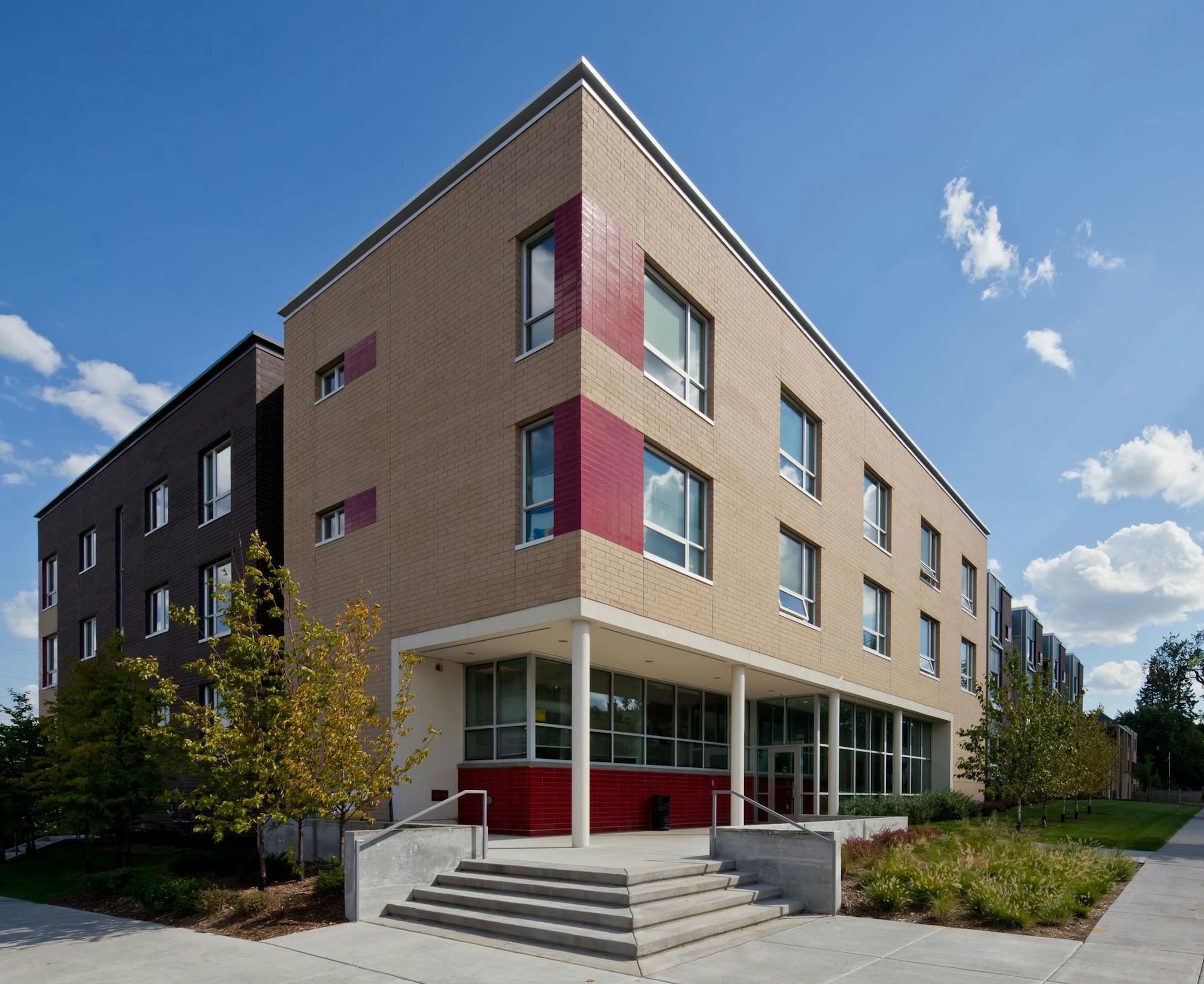
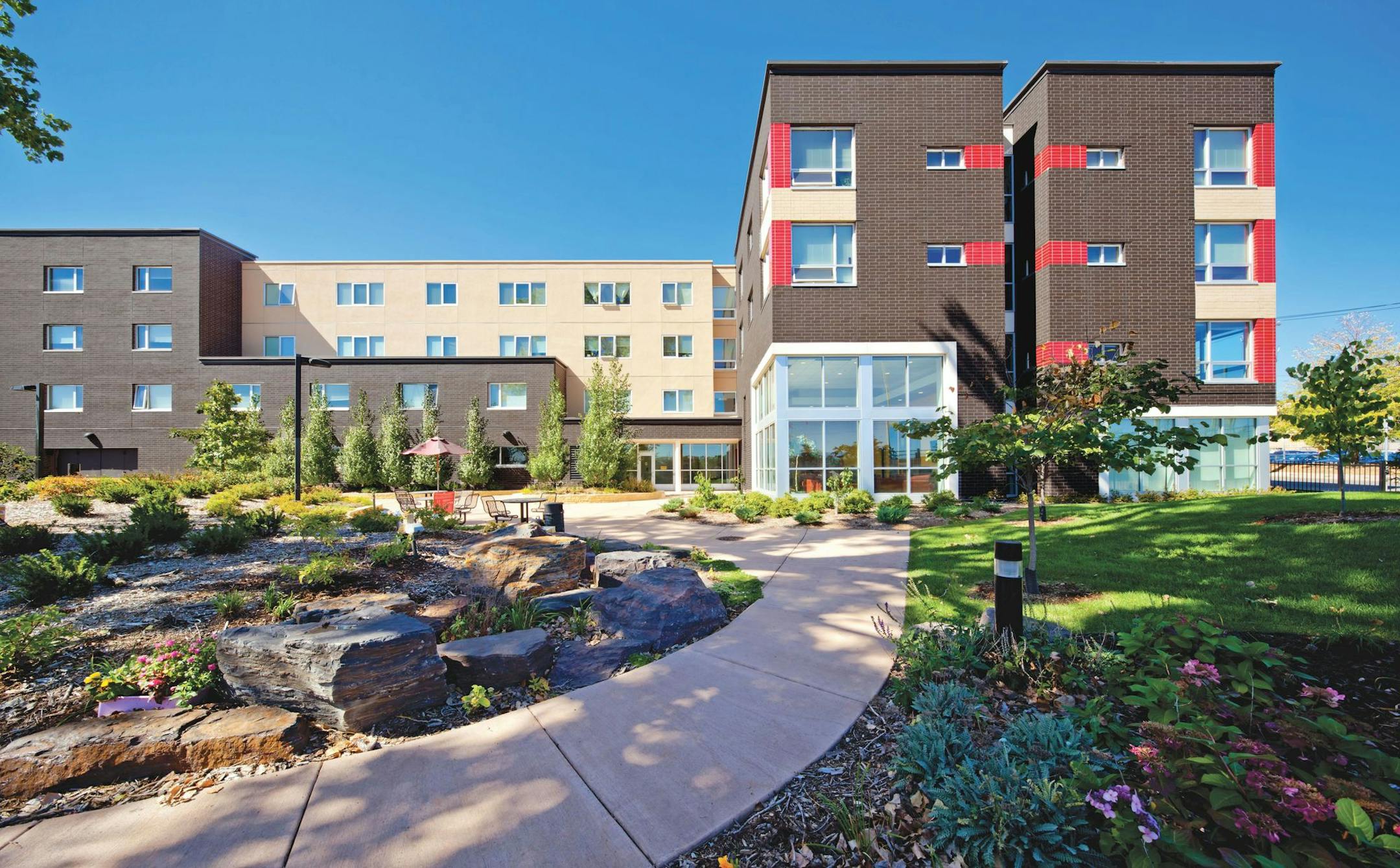
"This isn't what they expect to see. For some residents, it's overwhelming," said Peterson of the stylish modern building, which looks a lot like other desirable, new apartment complexes in the Twin Cities.
"Affordable housing" conjures up images of dreary, institutional structures, not prizewinning architecture. There's nothing dreary or institutional about Clare Midtown. In fact, it did win a prize: the 2014 Affordable Housing Design Award from AIA Minnesota and the McKnight Foundation, beating out 12 other entries. The awards program, now is in its third year, grew out of a McKnight initiative to assess the role of design in creating affordable housing that's good for residents and for the greater community.
"Nobody would drive by and think it's an affordable [housing] building," said architect Todd Rhoades of Cermak Rhoades Architects, St. Paul, which designed the project.