

For John Baker and Tim Griffis, the advent of gravel mining at UMore Park meant losing nearly a decade of research.
The University of Minnesota faculty members are among the many agricultural researchers working at the 5,000-acre Rosemount site, and some of the first to be affected by the mining operation. They had a year to leave behind one project and begin again elsewhere.
"It was enough time to move," Baker said. "But still, it was unfortunate that we lost the history of that previous field."
Although a new vision for UMore makes room for research, the U is still planning its eventual exit to make way for mining and development. For the researchers working there, a move means potentially losing years of work. For the U, it could put millions of dollars in research grants in limbo.
Moving an agricultural research operation isn't as simple as resettling on a new piece of land. It takes years to build a body of work, and uprooting it often means starting again from scratch.
In 2014, 43 researchers worked on more than 100 research trials at UMore Park. Data collected there are used by researchers throughout the U and around the world. The site's size, soil quality and proximity to campus make it stand out among the U's network of research and outreach centers across the state.
"The land base is really the place that we can take these things that we develop in theory in the laboratory and see how they work," said Greg Cuomo, associate dean for research and graduate programs in the College of Food, Agricultural and Natural Resource Sciences.
In October, U President Eric Kaler said he was concerned about UMore's future and directed a task force to put together recommendations for the site. The Board of Regents signed off Feb. 13 on a plan that moves away from a future residential community developed by the university. The idea is to maximize research, expand mining and then eventually sell the land.
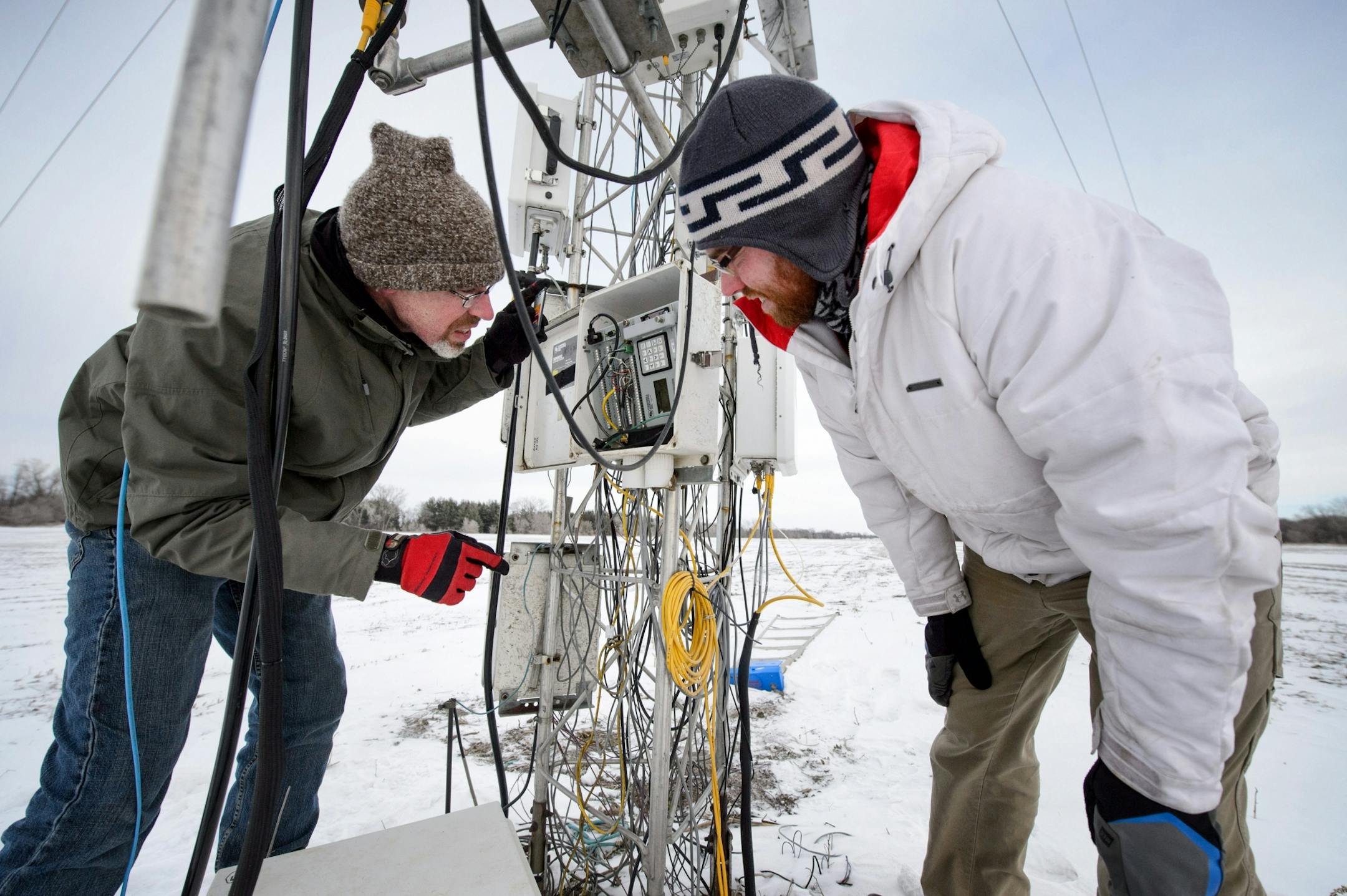
![University of Minnesota research assistants Bill Breiter and Jeff Wood gather data for their atmospheric science research at UMore Park in Rosemount. They are researching the carbon balance of agricultural systems there. ] GLEN STUBBE * gstubbe@startribune.com Monday, February 23, 2015](https://arc.stimg.co/startribunemedia/BNLM4Y7YO2MYGDJJABHAANQOMI.jpg?&w=1080)
![University of Minnesota research assistant Jeff Wood added liquid nitrogen to cool lasers used to analyze chemical components during their atmospheric science research at UMore Park in Rosemount. They are researching the carbon balance of agricultural systems there. ] GLEN STUBBE * gstubbe@startribune.com Monday, February 23, 2015](https://arc.stimg.co/startribunemedia/OWSULWLDBWCQIVUFCOJUP5G3TI.jpg?&w=1080)
![University of Minnesota research assistant Jeff Wood gathered data for their atmospheric science research at UMore Park in Rosemount. They are researching the carbon balance of agricultural systems there. ] GLEN STUBBE * gstubbe@startribune.com Monday, February 23, 2015](https://arc.stimg.co/startribunemedia/JMAYH6F2YTCDGXEOVQPITRDNMA.jpg?&w=1080)


