

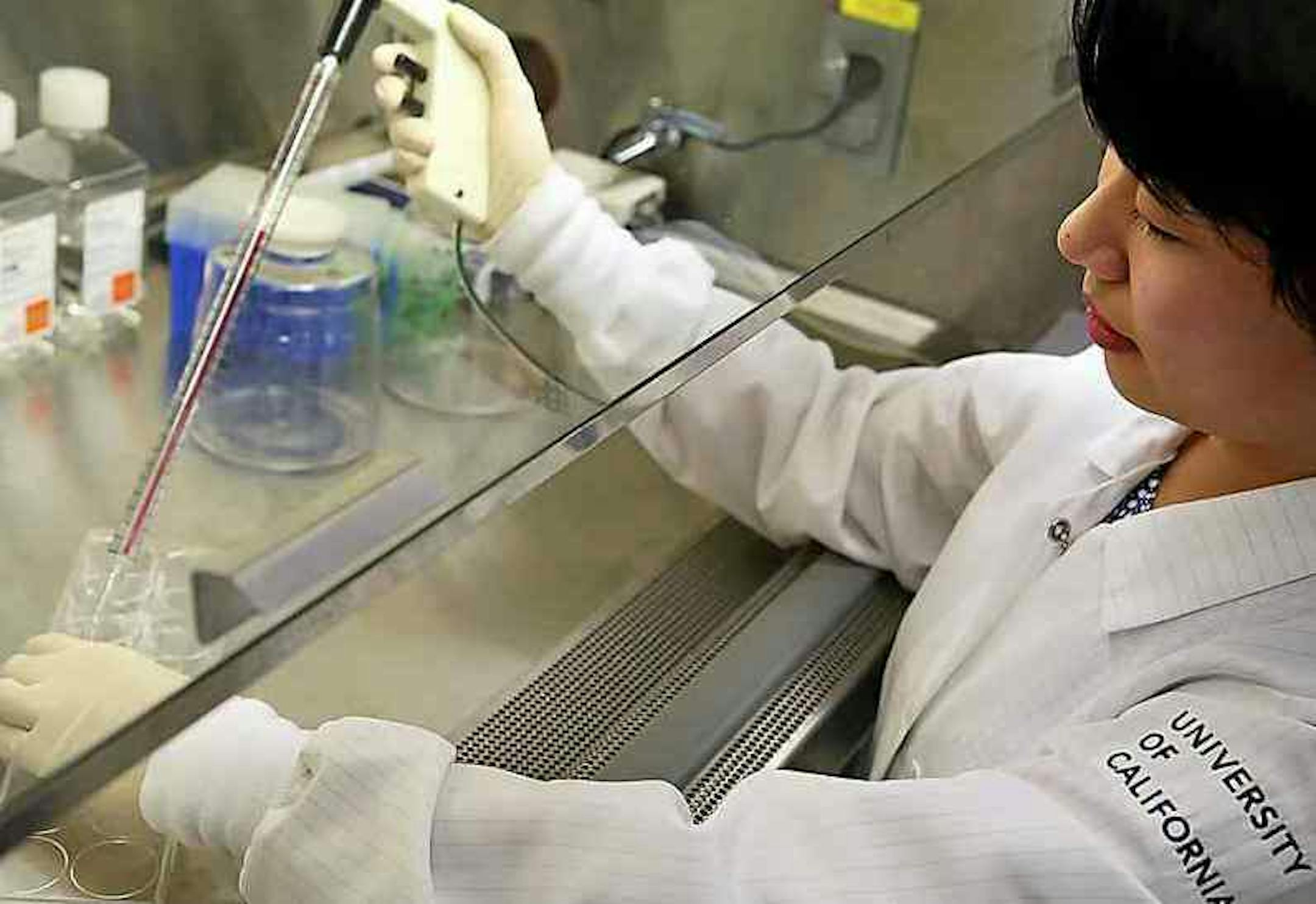
When biomolecular engineer Phil Berman began his postgraduate work in the 1980s, he had no idea he would spend the rest of his career searching for a way to stop a deadly virus that, seemingly from nowhere, was causing hundreds of people to die.
He has spent the past three decades looking for an effective vaccine against the AIDS epidemic that would claim more than 20,000 lives in the coastal metropolis alone.
"It was a plague," he said at the University of California, Santa Cruz. "People were dying left and right."
Berman and his team have been searching for a way to make HIV vaccine production faster and more affordable — and, he said, they've found it.
"We think the technology we developed will break that logjam and allow those brilliant ideas that have been mothballed, basically, because there hasn't been a way to produce them," he said.
The new method takes advantage of technologies to reduce the time, improve the yield and lower the cost of vaccine development. A process that used to take two years now takes about two months, while producing yields 100 or even 200 times higher.
A potential vaccine needs specific proteins to trigger an immune system response, Berman said. The proteins are produced by cell lines derived from the ovaries of Chinese hamsters, with many thousands of potential cell lines needing screening to find those with a high enough yield.
Screening the cell lines manually in the lab used to take months, Berman said, but the team spent most of the past two years customizing a colony-selection robot to do the job in a matter of days.


