

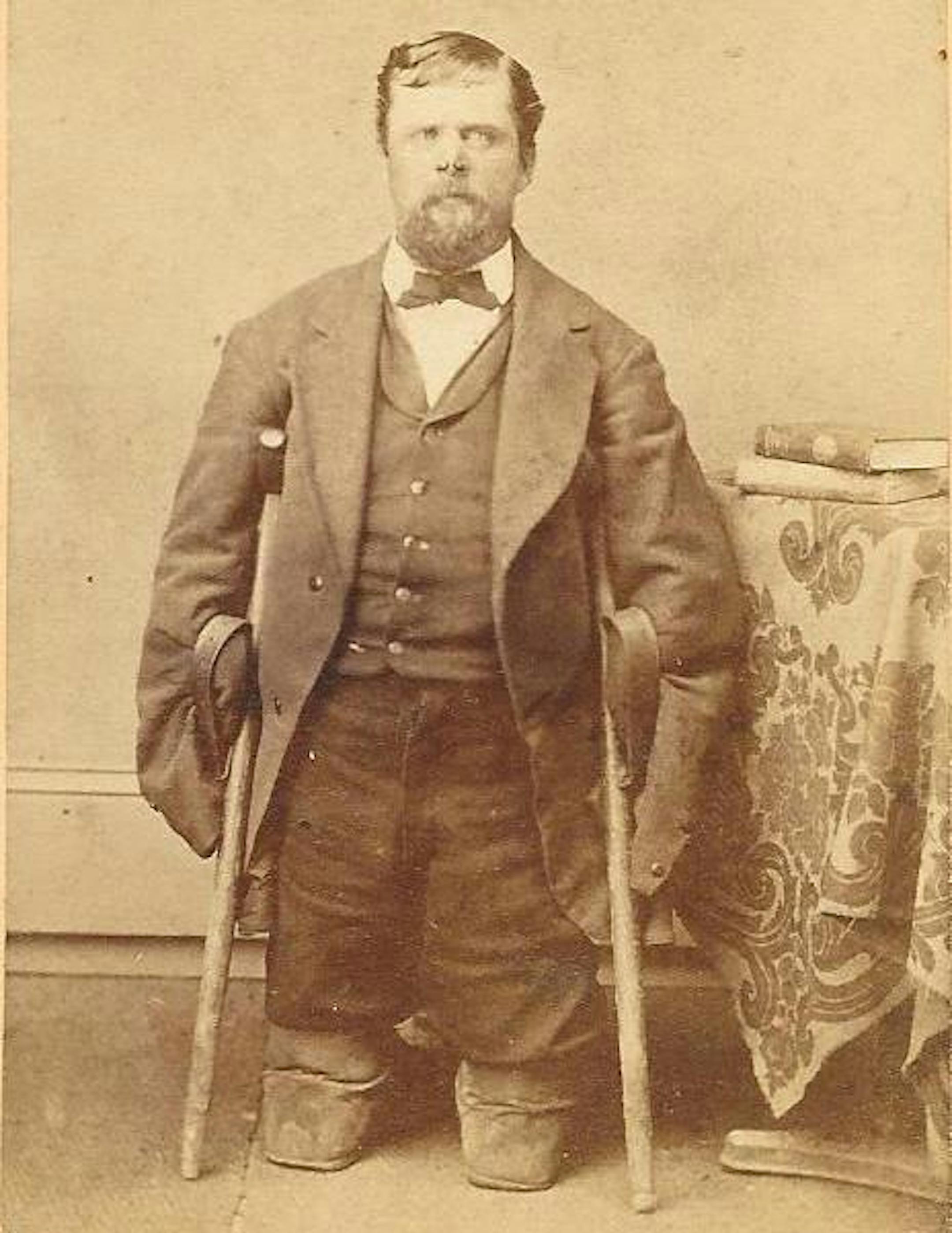
The stink of gangrene wafting from the infected patient must have made everyone wince inside the Fort Ridgely infirmary.
The frozen patient was barely alive when some Dakota men discovered him in a western Minnesota snowdrift and brought him to the military hospital on Christmas Eve, 1865.
Benjamin Franklin Work, 28, had dropped his given name and assumed the patriot's after a Civil War desertion following the Battle of Shiloh. He rejoined the army a few months later — as Ben Franklin — and went to battle with Minnesota soldiers staging punitive raids on Indian villages in the Dakota Territory.
On a 30-day furlough to visit his wife in Blue Earth, Franklin's stagecoach became stuck in the deep and blinding snow of a Minnesota blizzard near Ortonville. Another rider died.
Two weeks after his rescue, Franklin's putrid wounds foretold a painful recovery. "A most offensive smell was emitted, in spite of the liberal use of disinfectants," fort surgeon Alfred Muller recorded in his notes from Jan. 10, 1866. "Both hands and forearms were completely mortified by freezing, both feet and legs as far as the upper third, both knees … all presenting a dark, bluish appearance with some swelling."
Dr. Muller and his wife and nurse, Eliza, first had to thaw the clothing off the frozen man. Ten days later, Muller removed the frostbitten tip of Franklin's nose. When he broached the subject of amputating Franklin's infected limbs, "the patient and his wife obstinately opposed" what the doctor called "operative interference."
Finally, 20 days into his hospital stay, Franklin succumbed to the inevitable — refusing anesthetics but consenting to having his hands and wrists amputated at the forearms.
"The great relief afforded by this operation," the surgeon noted, "so changed his former aversion to be operated on, that on the next day, he begged to have both legs amputated."


