

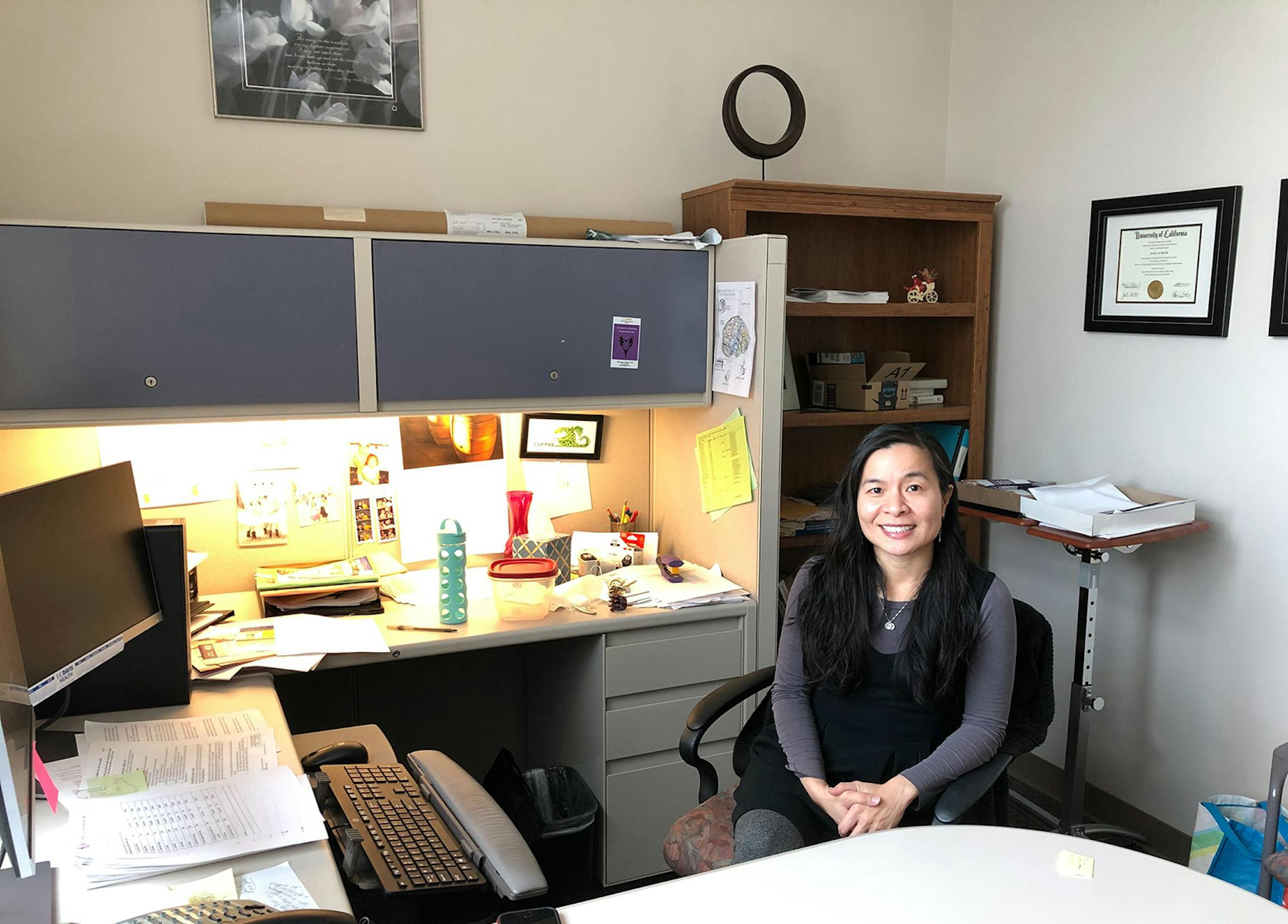
SACRAMENTO, Calif. – Oanh Meyer is no stranger to Alzheimer's disease. Her everyday life revolves around caring for those who suffer from the ailment.
Meyer's office is at the University of California-Davis Alzheimer's disease center in Sacramento. But her care goes beyond the clinic: Her mother was diagnosed with Alzheimer's, a progressive disease that commonly causes dementia and has no cure.
As a primary caregiver herself, the assistant adjunct professor understands the challenges, barriers and emotional burdens that come with that role — especially for newer immigrants — but are often ignored or dismissed.
One nightat around 3 a.m., Meyer was awakened by a sound in her bedroom. Someone was unplugging the night lights.
Wearing her usual black pants and a sweater as pajamas, her mother's silhouette began to register in the dark. Anh Le, 84, used to unplug the night lights, scared that the electricity would start a fire.
Another night, the garage alarm woke Meyer up. Le had wandered down to the garage, gone outside and left the door open. Meyer turned off the alarm and walked Le back to her room.
Sometimes she would have to stay outside of Le's room to make sure her lights didn't flip back on. Then she'd lie on her bed for an hour or more, taking deep breaths and scrolling through social media to try to fall asleep again to prepare for the upcoming day.
Meyer has always been interested in mental health issues among Asian immigrants. She even started a postdoctoral degree in 2011 at UC-San Francisco with a focus on mental health issues among Asian minorities.


