

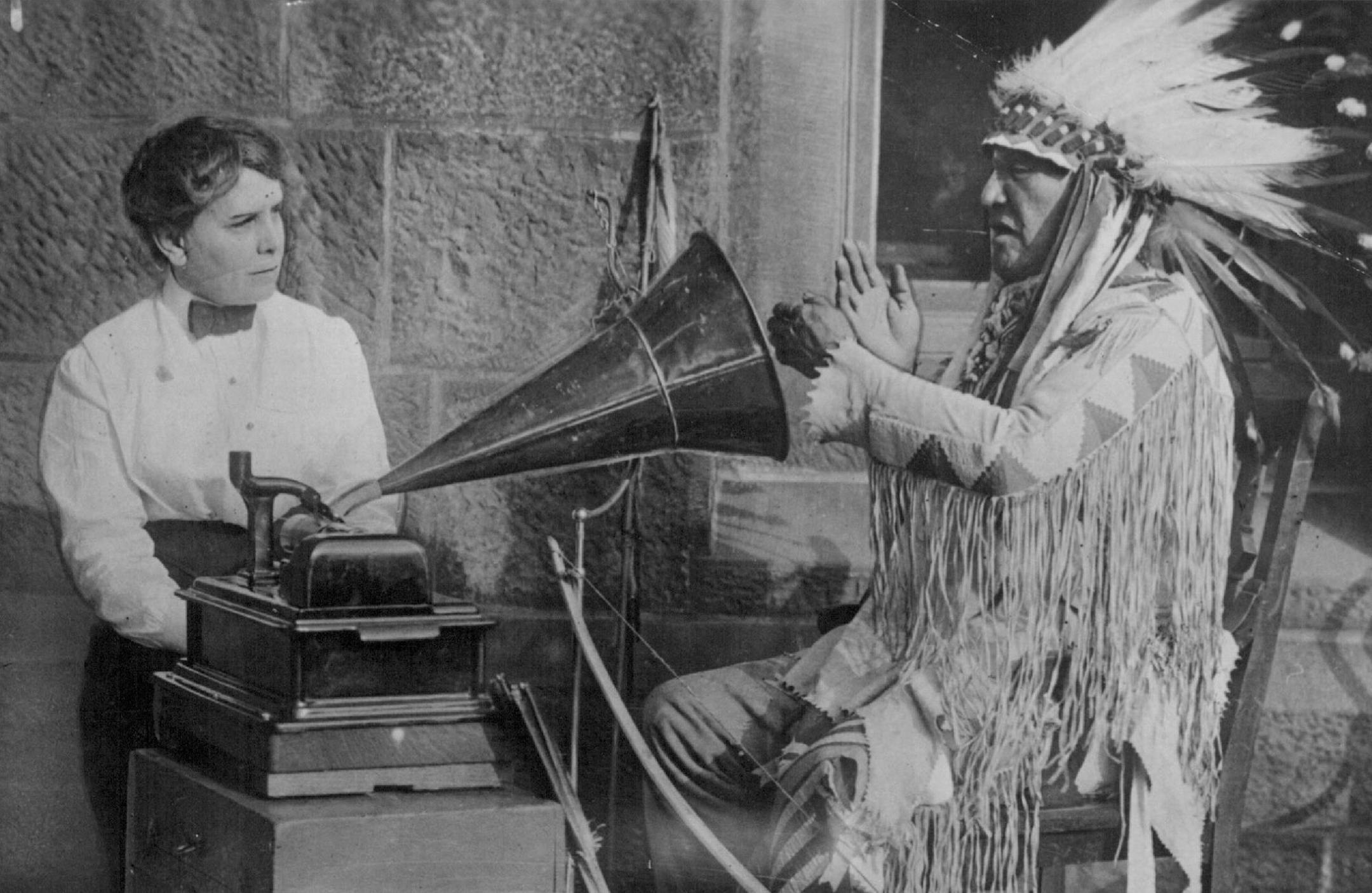
At a bustling St. Louis fair in 1904, a refined Minnesota music teacher from Red Wing in her mid-30s leaned in close to listen to an American Indian legend humming a tune.
Geronimo, the Apache warrior, was 75 and signing autographs — carefully printing his name on cards he sold to passersby at the Louisiana Purchase Exposition.
"I stood behind him," Frances Densmore later recalled, "and noted down a melody that he hummed."
She was just getting started. Densmore spent the next 50 years on a quest to preserve Indian music — lugging bulky recording equipment, notebooks and tripod cameras to remote Indian villages from Minnesota's North Woods to Arizona's painted desert.
When she was done with her last recordings, capturing Seminole songs in the Florida Everglades in 1954 at age 87, Densmore had collected more than 2,500 Indian songs on wax cylinders for the Smithsonian Institution's Bureau of American Ethnology. Updated versions of her fieldwork now live on in the Library of Congress.
In 1905, a year after crossing paths with Geronimo, Densmore found herself among Ojibwe at White Earth in northwestern Minnesota. She noted the excellent singers, the picturesque costumes and the feverish dancing on the green, mid-June prairie.
"Hour after hour I sat beside the dance circle, becoming more and more impressed with the idea that I must record Chippewa songs," she later wrote.
By 1907, using a primitive Edison home phonograph machine borrowed from a Detroit Lakes music shop, Densmore recorded music sung by an Ojibwe man named Big Bear and his friends. Soon she was visiting the Leech Lake Reservation village of Onigum — one of many places she traipsed that seldom saw unaccompanied white women.


