

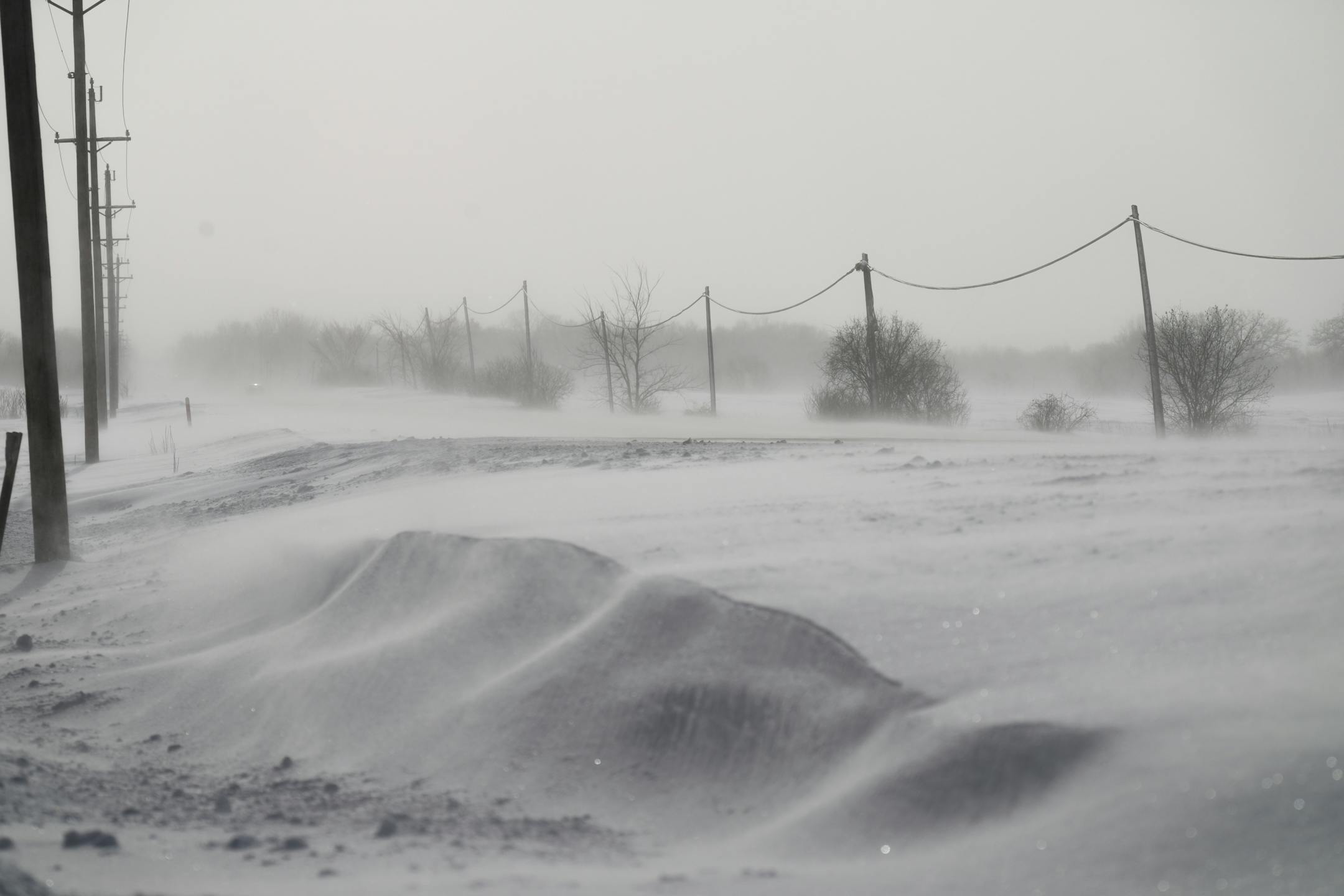
Growing research argues that as the planet warms through climate change, it's getting easier for polar air to escape and plunge across the United States.
The bitter cold snap that descended this week across much of the state "has always been a part of our climatology in Minnesota," said Kenneth Blumenfeld, a climatologist with the state Department of Natural Resources.
But leading research, he said, suggests that the atmospheric currents that usually keep this icy air locked in the Arctic are weakening, letting polar air reach farther south.
"Something about the way the climate is warming — that likely has a link to the Arctic region itself — does promote the destabilization of the polar air mass, which then sends it occasionally spiraling into the continental U.S. and a little more deeply than you might expect," Blumenfeld said.
A study published last year in the journal Science suggested that changing snow and ice cover in the Arctic was helping to push cold into southern bursts.
The bitter cold is "for us maybe not so much a surprise, but for farther south, definitely a surprise," said Ryan Dunleavy, a meteorologist with the National Weather Service in Chanhassen.
Temperatures approaching freezing are forecast in Florida though Saturday. In Texas, many are bracing to see whether the state's energy grid will hold up, nearly two years after a cold snap in early 2021 led to widespread blackouts. That freeze led to at least 246 deaths, according to the Texas Tribune.
Forecasters in Minnesota have warned of blowing snow, poor travel conditions and wind chills dipping to 30 to 45 below zero.


