

Beetle wings are often hidden. Nestled behind armored shields on the beetle's back, they unfurl in whirring sheets, whisking their clumsy owners from danger. Beetles don't have more than two sets of wings — unless they're in Yoshinori Tomoyasu's lab.
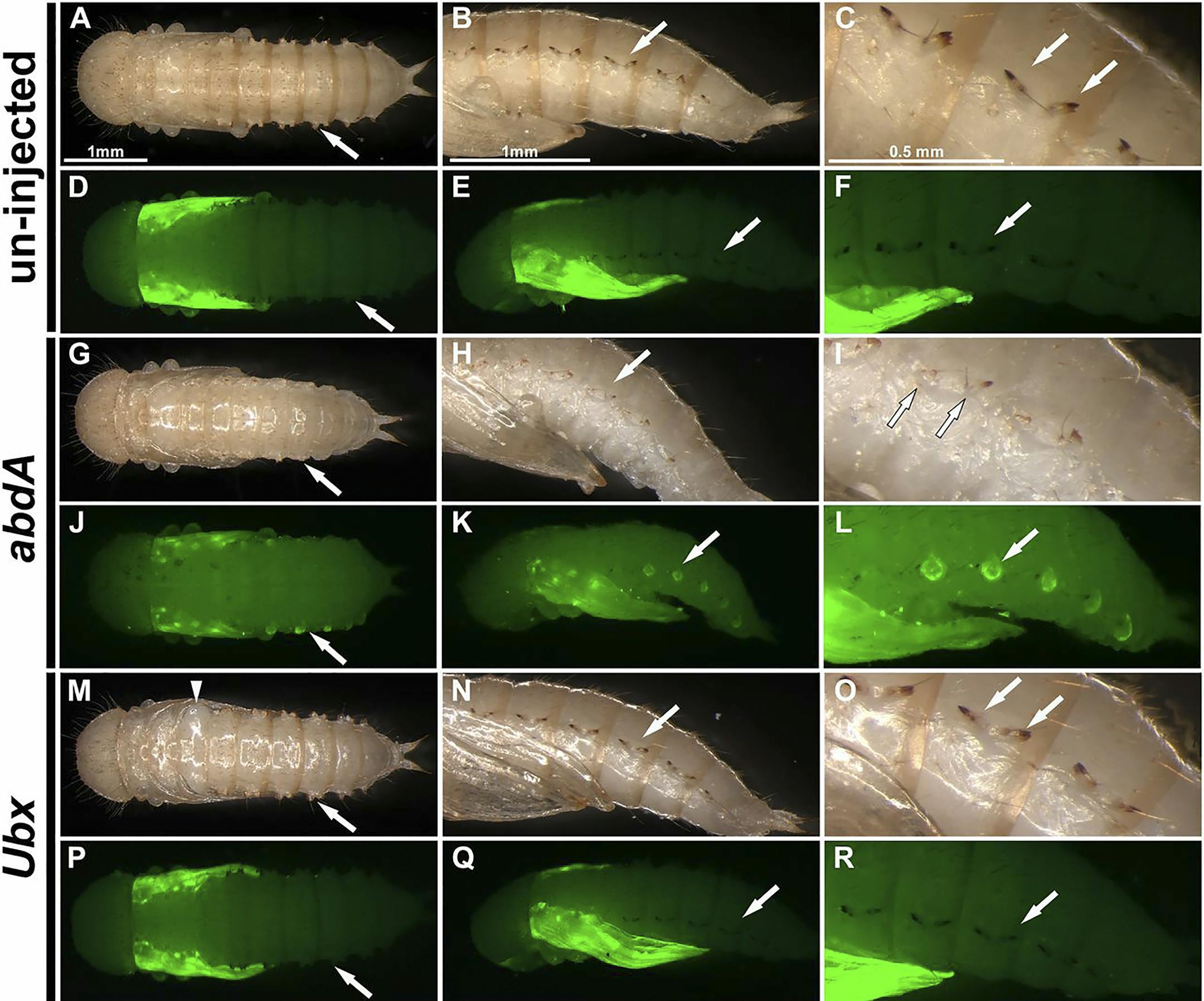
In research published in the Proceedings of the National Academy of Sciences, Tomoyasu and his co-author, David Linz, genetically engineered beetle larvae with wings on their abdomens, part of an attempt to unpack one of evolution's greatest mysteries: how insects gained the ability to fly.
Insects took to the empty skies between 300 and 360 million years ago, long before birds, bats or pterosaurs. Wings allowed them to conquer new habitats and ecological niches, and establish themselves as one of the most diverse and successful animal classes.
The vast majority of living insects either have wings or evolved from flying ancestors, said Linz, an evolutionary biologist now at Indiana University. "When the average person thinks about an insect wing, they think about a dragonfly — these two pairs of really pretty, long wings," he said. "But it's different in different lineages."
There's a frustrating lack of fossil evidence from the period when insect flight evolved, said Tomoyasu, an evolutionary biologist at Miami University.
"With the flight wing in vertebrates, there's a clear origin," he said. But insect wings evolved so long ago, "it's hard to tell what happened."
According to Floyd Shockley, an entomologist at the Smithsonian's National Museum of Natural History, there have long been two competing hypotheses. The "tergal hypothesis" suggests that wings originated on the tergum — the top of the insect body wall — perhaps as gliding membranes. The "pleural hypothesis" argues that wings were created from ancient leg segments.
The rise of evolutionary developmental biology, along with advances in genetics, has lent weight to a third possibility, Linz said. Originally proposed in 1974, the "dual origin" hypothesis suggests that insect wings began with a fusion of the two separate tissues: the dorsal body wall provided the membrane, while its articulation arose from leg segments.

