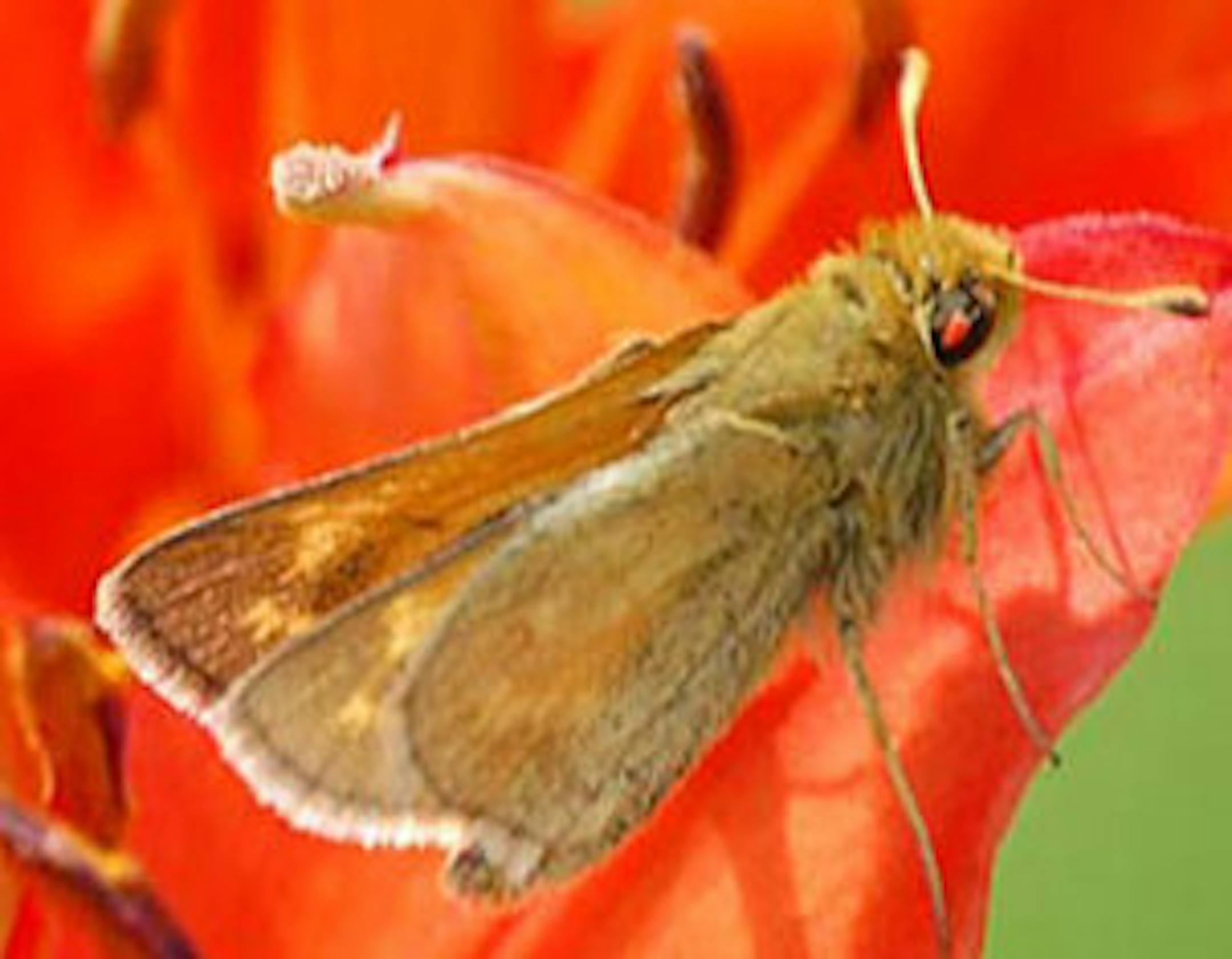
The future of an imperiled Minnesota butterfly may depend on how it handles life inside a Sanyo cube refrigerator. That's where more than 300 Dakota skipper caterpillars will spend the winter, snuggled in paper towel beds inside plastic cups, to simulate their normal home clinging to snow-covered prairie grasses.
The Minnesota Zoo's experiment to create an "insurance population" of Dakota skippers represent a small but heroic effort to counterbalance whatever is killing them in the wild.
On Oct. 23, the U.S. Fish and Wildlife Service announced that the Dakota skipper is now a threatened species. Another prairie butterfly that's even worse off, the Poweshiek skipperling, has been added to the endangered list.
The populations of these butterflies have collapsed over the past 15 years, and they have disappeared from 75 to 96 percent of the places where they were known to flutter and crawl. No one knows whether habitat disturbance, pesticides, climate change or something else is blame, but they may be a memory by the time we find out.
Once so common that no one bothered counting it, the Poweshiek skipperling was last seen in Minnesota in 2008. Maybe 500 hang on in isolated spots in Michigan, Wisconsin and Manitoba.
"It's a catastrophic decline that has to rank it as one of the most endangered species on earth," said Erik Runquist, a biologist who runs the zoo's prairie butterfly conservation program.
Biologists say the Earth is experiencing the sixth mass extinction in its history. Unlike the asteroids, volcanoes and other impersonal phenomena implicated in previous die-offs, this one is on us.
Minnesota's contribution to this tragedy is happening on its prairie, a rich and diverse ecosystem that has been nearly plowed into oblivion. Only 1 percent of native prairie survives, in patches between acres and acres of corn and soybeans.