

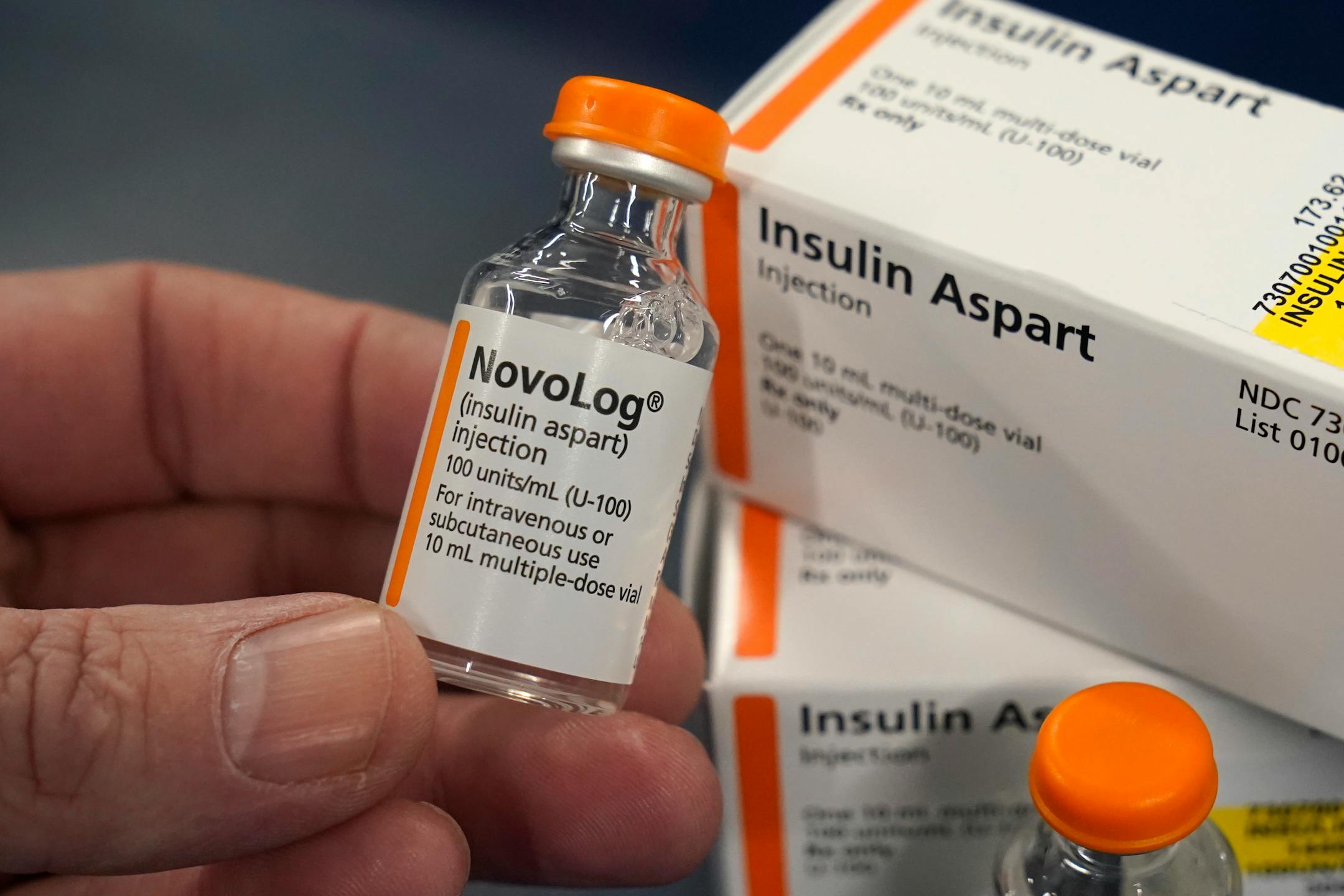
WASHINGTON – Republican lawmakers on Sunday successfully stripped a $35 price cap on the cost of insulin for many patients from the ambitious legislative package Democrats are moving through Congress this weekend, invoking arcane Senate rules to jettison the measure.
The insulin cap is a long-running ambition of Democrats, who want it to apply to patients on Medicare and private insurance. Republicans left the portion that applies to Medicare patients untouched but stripped the insulin cap for other patients. Bipartisan talks on a broader insulin pricing bill faltered earlier this year.
The Senate parliamentarian earlier in the weekend ruled that part of the Democrats' cap, included in the Inflation Reduction Act, did not comply with the rules that allow them to advance a bill under the process known as reconciliation — a tactic that helps them avert a GOP filibuster. That gave the Republicans an opening to jettison it.
"Republicans have just gone on the record in favor of expensive insulin," said Sen. Ron Wyden, D-Ore. "After years of tough talk about taking on insulin makers, Republicans have once against wilted in the face of heat from Big Pharma."
Some Republicans did support the price cap in the 57-43 vote for the measure, but not enough joined Democrats in support of it to meet the threshold for passage.
More than 1 in 5 insulin users on private medical insurance pay more than $35 per month for the medicine, according to a recent analysis from the Kaiser Family Foundation.
Some 7 million Americans require insulin daily. A Yale University study found that 14% of those insulin users are spending more than 40% of their income after food and housing costs on the medicine.
Despite an adverse ruling from the chamber's parliamentarian, Democrats opted to keep the full price cap provision in the bill anyway. That gave Republicans, led in debate by Sen. Lindsey Graham, R-S.C., an opening for a challenge on the Senate floor. Democrats would have needed 60 votes — their entire caucus plus the support of 10 GOP members — to beat back that challenge. They came up short.


