

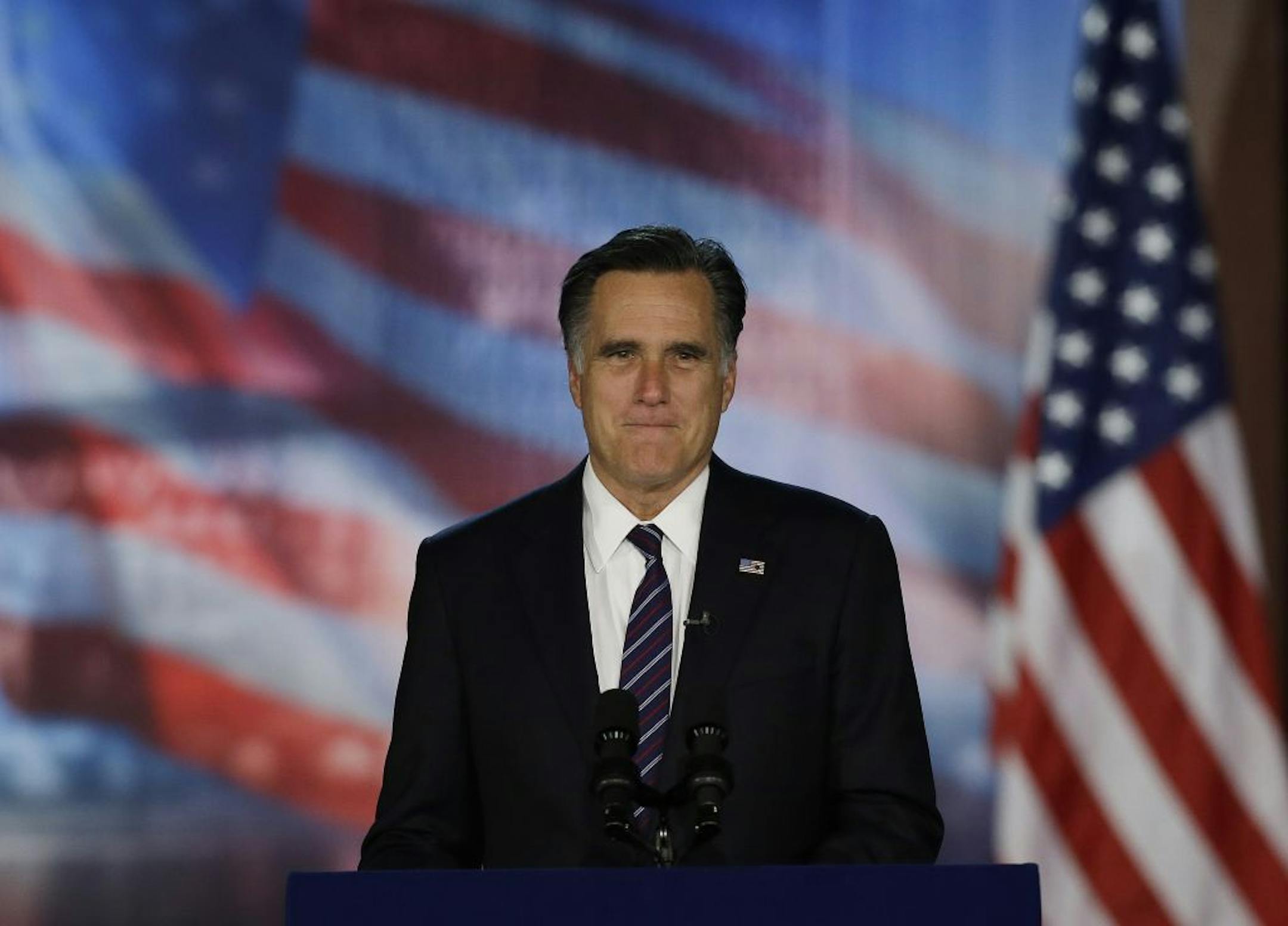
For four years, the leader most capable of unifying the fractious Republican Party has been Barack Obama.
Now they find their divisions newly revealed in the raw. By exposing the party's vulnerability to potent demographic shifts, the 2012 results have set the stage for a struggle between those determined to re-brand Republicans in a softer light and those yearning instead for ideological purity.
The party's first challenge, it seems, is to find common ground simply in diagnosing the problem. While some leaders argued that basic math dictates that the party must find new ways to talk about such issues as immigration, abortion and gay marriage, others attributed GOP losses to poor candidate choice, messaging missteps and Obama's superior political operation.
"We continually crank out moderate loser after moderate loser," said Joshua S. Trevino, who works for the Texas Public Policy Foundation. He said Mitt Romney was part of a "pattern" of GOP nominees, including John McCain, Bob Dole and George H.W. Bush, who were rejected because of "perceived inauthenticity."
By contrast, longtime GOP strategist Ralph Reed said he would redouble efforts to recruit women, Latinos and young people.
"I certainly get the fact that your daddy's Republican Party cannot win relying singularly on white voters and evangelicals alone -- as critical as I believe those voters are to a majority coalition," Reed said. "The good news for conservatives is there are many of those who have not always felt welcome in our ranks who share our values."
The re-election of Obama left questions that Republicans may sort out only over time, starting with the direction set by the party's majority in the House and the run-up to the 2016 campaign.
Can the Republicans shore up their weaknesses purely with tonal changes on such issues as abortion, immigration and same-sex marriage, along with a repackaging of conservative fiscal policy? Will it require real moderation on social and economic positions that the Tea Party movement considers inviolate?


