

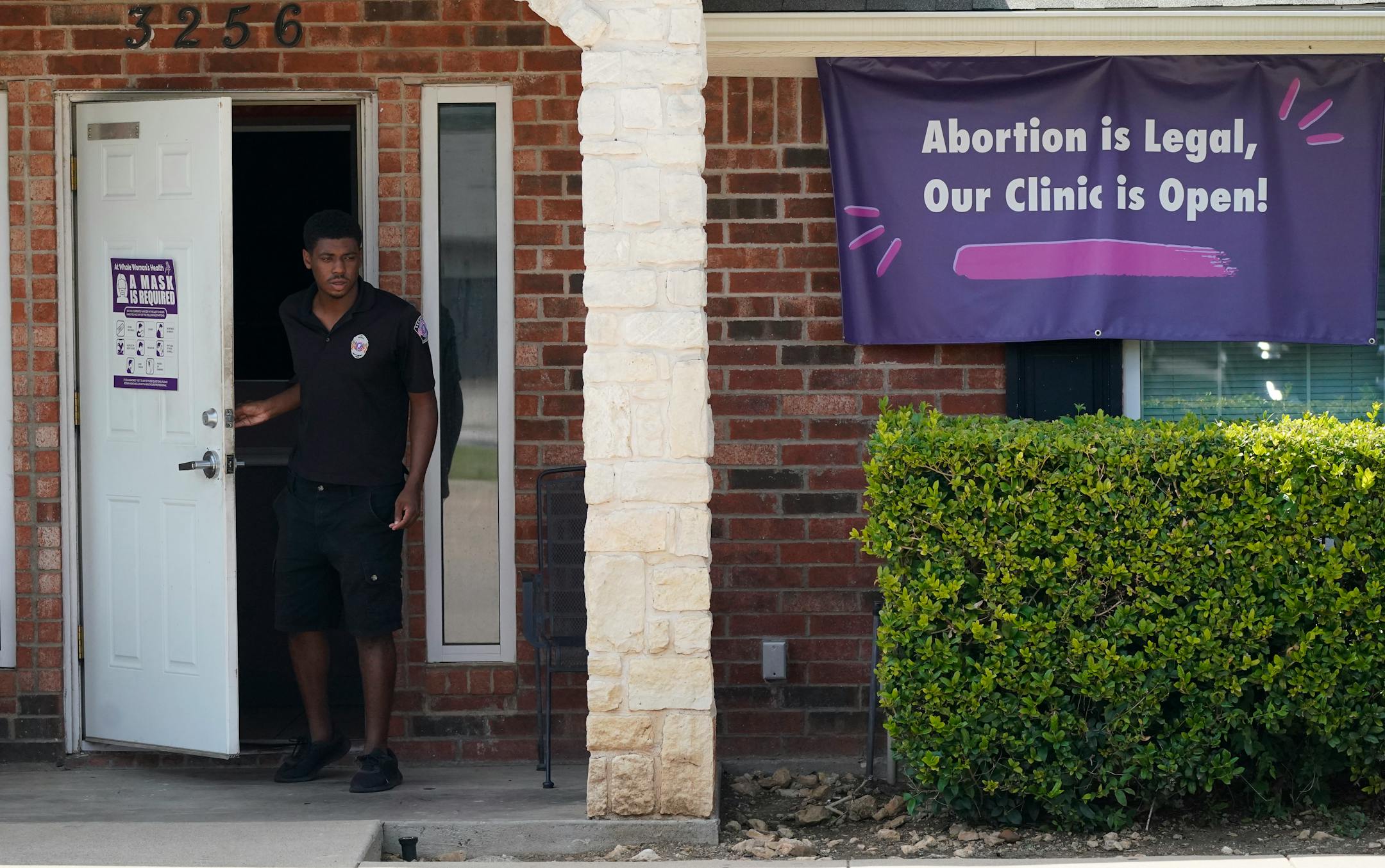
Republican officials in more than a half-dozen states across the country moved this week to replicate Texas's restrictive abortion ban after the Supreme Court declined to step in and stop the law from taking effect.
GOP officials in at least seven states, including Arkansas, Florida, South Carolina and South Dakota, have suggested they may review or amend their states' laws to mirror Texas's legislation, which effectively bans abortions after six weeks. Kentucky, Louisiana, Oklahoma, Ohio and more are expected to follow, after a year abortion activists have deemed "the worst legislative year ever for U.S. abortion rights."
"It's something we're already working on," Florida Senate President Wilton Simpson told local news station WFLA-TV when asked about copying the Texas law, which empowers private citizens to report and sue providers who offer the procedure after six weeks.
Announcing he planned to introduce a copycat bill, Arkansas state Sen. Jason Rapert, a Republican, the founder and president of the National Association of Christian Lawmakers, shared a template of legislation lawmakers in other states could fill in the blanks on and reproduce.
In South Dakota, where just two facilities in the state provide abortions, Gov. Kristi Noem, a Republican, said Thursday she's directing lawyers in her office to review Texas's latest abortion law and the state's current laws "to make sure we have the strongest pro life laws on the books."
A quarter of states will likely introduce legislation that mirrors Texas's ban, according to the Guttmacher Institute, a research organization that supports access to reproductive health. More abortion restrictions, an estimated 97, have been enacted in 2021 than any year since Roe v. Wade was decided in 1973. Elizabeth Nash, a state policy analyst for the group, expects the number to break 100 in the days after the ban became law in Texas.
"This has been a seismic change," Nash told The Washington Post. "Other states are clearly going to pay attention."
Though most state legislatures are out on summer recesses, Nash said she expects to see Texas-style abortion bills filed before their next sessions begin. These bills will likely be high on the agenda next year, she said.

