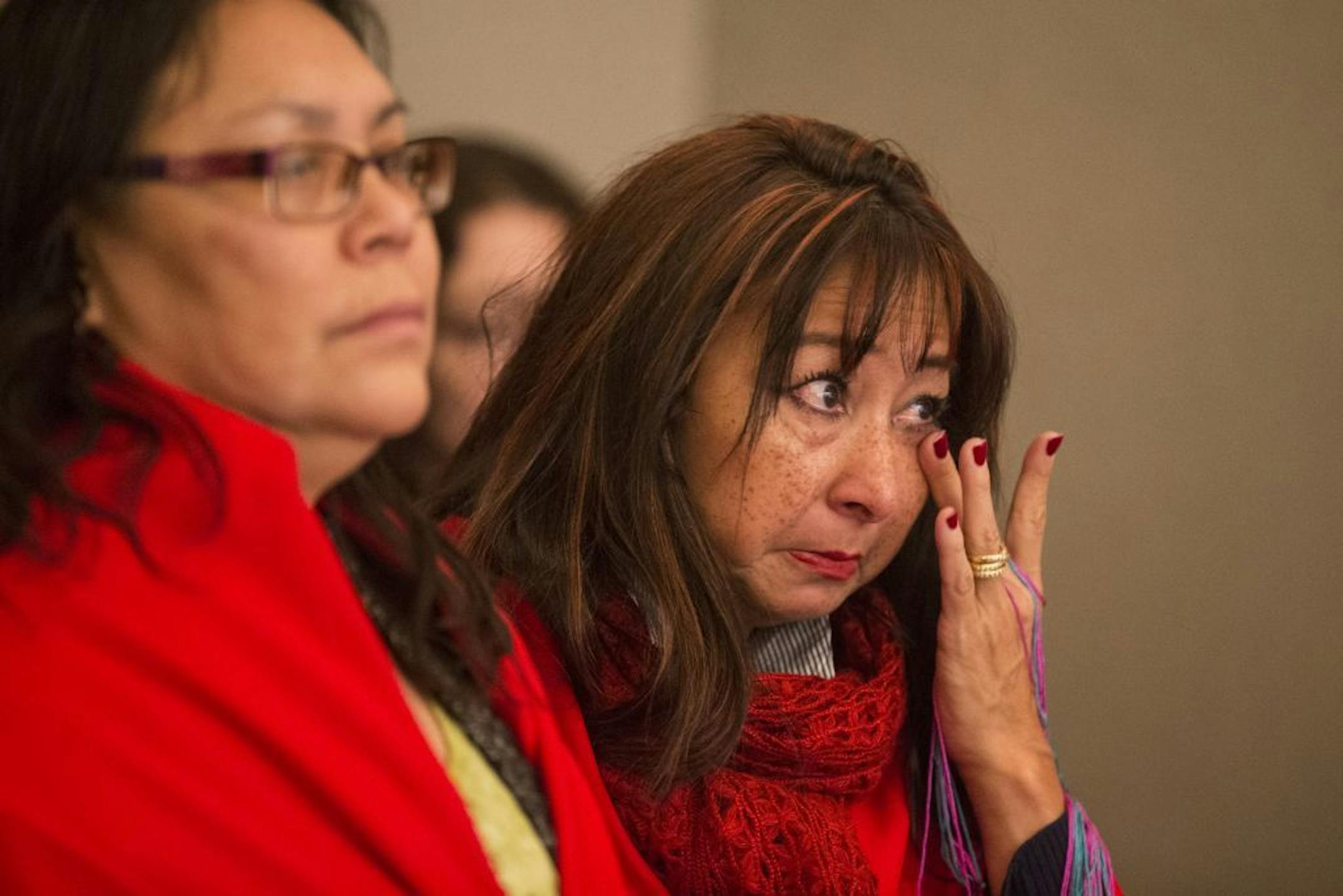
![Debra Poitra of the Minnesota Indian Women's Sexual Assault Coalition (MIWSAC) gets a hug from Victoria Fineday who works at the women's shelter Equaywiigamig in Red Lake during a press conference held by the Minnesota Coalition for Battered Women at the State Office Building in St. Paul on Tuesday, January 26, 2016. ] (Leila Navidi/Star Tribune) leila.navidi@startribune.com BACKGROUND INFORMATION: The Minnesota Coalition for Battered Women released the "Femicide Report." The report includes an](https://arc.stimg.co/startribunemedia/7WNNXNIOEU5YNJE5Y6SKFYZWJI.jpg?&w=1080)
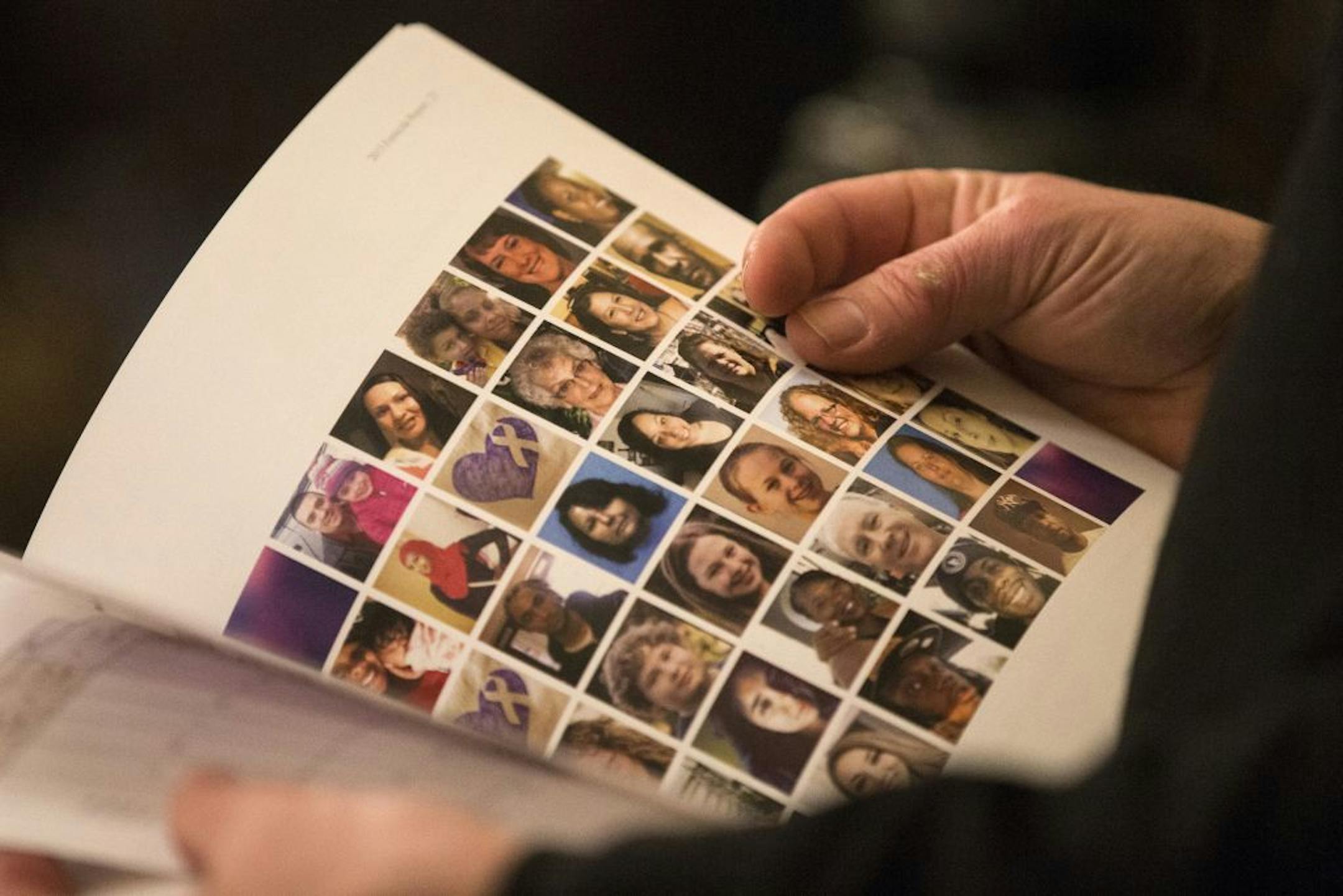
They looked on silently in the dark as 34 faces of the dead flashed, one by one, on a projector screen.
The victims represented more than just a troubling jump in the number of people killed by domestic violence in 2015. They were loved, and are missed.
"They are more than just names on a page," Safia Khan, Minnesota Coalition for Battered Women program manager, told a group of advocates at a Tuesday memorial service honoring the victims. "They are sisters, mothers, brothers, fathers."
It was a stark 33 percent rise over 2014 — the year that recorded the lowest number of deaths since the coalition began tracking domestic violence homicides in its annual Femicide Report. It's not just the increase that worries advocates — it's also a sign of a violent trend that doesn't seem to be abating.
"Over the past 27 years, the numbers have consistently maintained double-digits status," said Becky Smith, program manager in public awareness for the coalition. "We see that. We are absolutely horrified by that."
The coalition suggests that while the abusers bear ultimate responsibility for the deaths, some systemic changes could one day lower the numbers, including more thorough data-sharing among law enforcement agencies, investing more resources in intervening with batterers with a court record, and enhancing economic stability by working with landlords and housing-assistance providers to help victims of abuse find places to live.
Last year's victims include 22 women, three men, and nine children and friends or family members who intervened in a domestic-violence situation, according to the report. The victims range in age from 14 to 76.
The killings left 17 children motherless. Nearly 60 percent of the killers had a documented history of abuse in criminal or civil court. Those 13 perpetrators had a total of 76 domestic-violence-related charges among them.